
Authorized Penguin Water Systems Dealer · Cook County, IL
Penguin Water Systems in Cook County, IL
GSHA crews serve suburban Cook County and parts of Chicago from our Woodstock headquarters and our Lake Bluff office. As an authorized Penguin Water Systems dealer and installer, we install Penguin undersink and whole-house reverse osmosis, carbon filters, softeners and specialty cartridges, with our own plumbers and licensed electricians doing the work.
Most of the Cook County homes we visit are on Lake Michigan water treated by the City of Chicago, either directly or through a regional water agency. Hanover Park’s 2025 report is typical: Chicago-treated lake water delivered through a joint action water agency, chlorinated, with sodium under 9 ppm. The water is consistent; what varies is the house. Cook County kitchens, basements and utility rooms come in every age and size, and fitting Penguin equipment into them is where an experienced installer earns its keep.
Communities we serve in Cook County
GSHA’s ZIP-code list covers a large part of Cook County. In the northwest suburbs it includes Arlington Heights, Palatine, Rolling Meadows, Mount Prospect, Prospect Heights, Wheeling, Des Plaines, Park Ridge, Elk Grove Village, Schaumburg, Hoffman Estates, Streamwood, Hanover Park and Barrington. Along the North Shore and north suburbs it includes Glenview, Northbrook, Golf, Morton Grove, Niles, Skokie, Lincolnwood, Evanston, Wilmette, Kenilworth, Winnetka and Glencoe. To the west it includes Franklin Park, Schiller Park, River Grove, Elmwood Park, Harwood Heights, Oak Park, River Forest, Forest Park, Melrose Park, Maywood, Bellwood, Hillside, Berkeley, Westchester, Broadview, La Grange, Western Springs and Brookfield, and to the southwest Oak Lawn, Orland Park, Tinley Park, Oak Forest, Palos Heights, Palos Hills, Bridgeview and neighboring towns.
Many City of Chicago ZIP codes, mostly on the north, northwest and west sides, are also on the list. If your town or neighborhood is not named here, call (224) 220-3660 and we will confirm coverage. The full list is on our service area page.
Cook County water and what it means for treatment
Hanover Park’s 2025 report as an example
Hanover Park’s 2025 water quality report describes a common suburban arrangement. The village buys all of its water from the Northwest Suburban Municipal Joint Action Water Agency, which gets it from the City of Chicago, which draws from Lake Michigan and treats it at the Jardine and Sawyer plants. The village keeps four groundwater wells for emergency backup only. Chlorine is the disinfectant, reported at 1.4 ppm at the agency and Chicago level and 0.9 to 1.3 ppm in the village system, and sodium is listed at 8.81 ppm.
Chicago water chemistry and hardness
The City of Chicago data published in the DuPage Water Commission’s 2025 report lists sulfate at 26.8 to 27.2 ppm and sodium at 8.67 to 9.10 ppm. Hanover Park’s report gives no hardness figure. Elmhurst, which also receives Chicago-treated lake water, reports about 144 mg/L, or about 8 grains per gallon, and Highland Park, which treats lake water itself, reports 7.3 to 8.2 grains per gallon.
| Item | Published figure | What it means for Penguin equipment |
|---|---|---|
| Source | Lake Michigan, treated by the City of Chicago (Jardine and Sawyer) | Consistent surface water across most of suburban Cook |
| Disinfectant | Chlorine, 0.9-1.3 ppm in the village system | Penguin’s carbon stages and whole-house carbon filters are listed for chlorine |
| Sodium and sulfate | 8.81 ppm sodium (Hanover Park); 26.8-27.2 ppm sulfate (Chicago data) | Low dissolved solids; undersink RO membranes see a light load |
| Hardness | About 8 grains per gallon for Chicago-sourced water (Elmhurst) | Moderate; softening is optional |
Some Cook County municipalities run their own plants or buy water through other agencies, and their annual reports are the authority for your address. We did not find a published figure for the share of Cook County homes on private wells.
Penguin guidance for Cook County homes
Drinking water at the kitchen sink
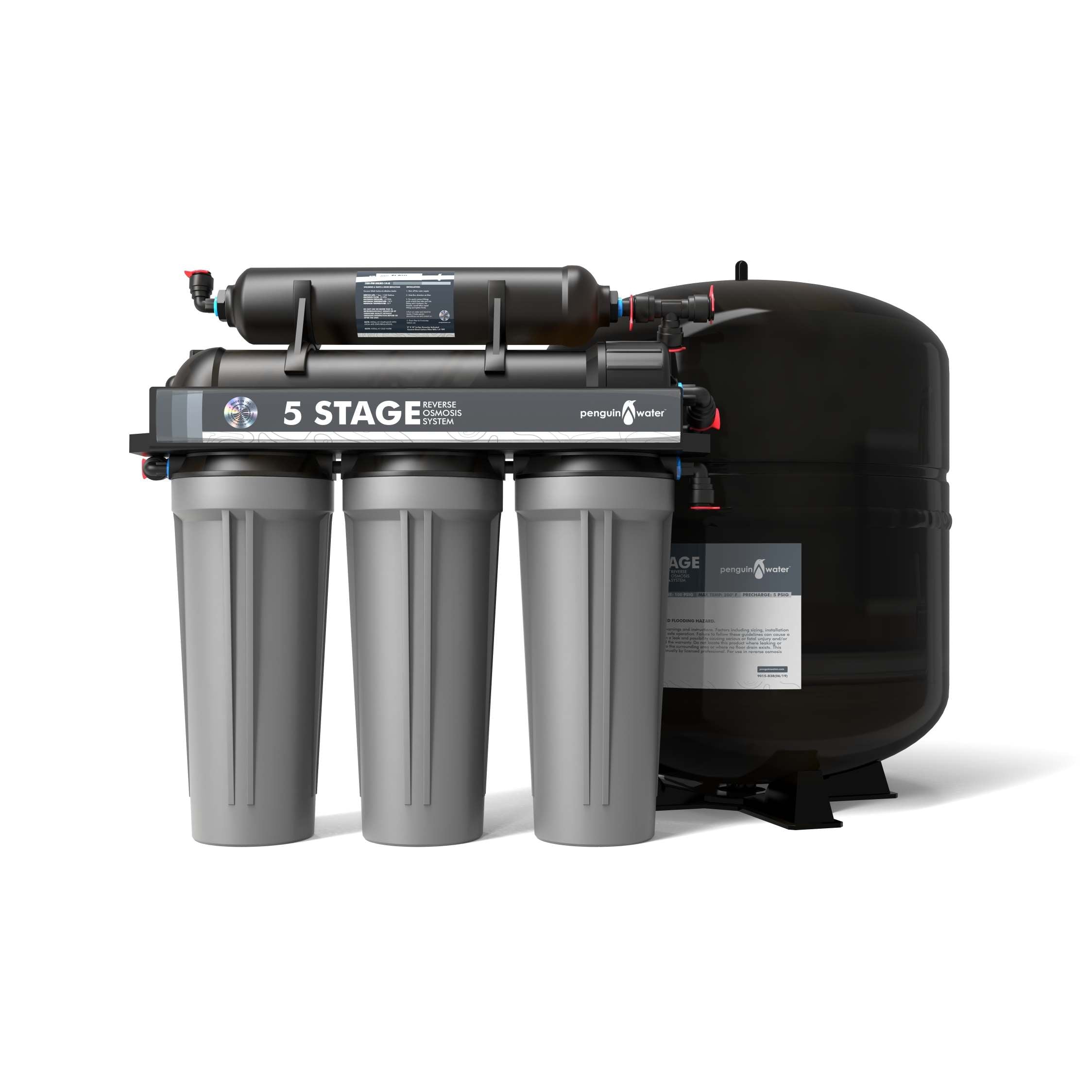
On Chicago-sourced water, Penguin’s undersink RO is the system we install most. Five stages (5-micron sediment, carbon block, 1-micron special blend, a 50 or 100 GPD membrane and a carbon post-filter) feed a 4.5 gallon steel bladder tank and a lead-free ceramic disc faucet made in the USA. An optional sixth stage adds calcium, potassium and magnesium after the membrane. Penguin includes a TDS meter and lists a 5-year warranty on the tank and valves plus a one-year satisfaction guarantee.
Chlorine at every tap
For chlorine smell in showers and laundry, a Penguin whole-house carbon filter covers the whole house. The Bluetooth backwashing version uses granular activated and catalytic carbon and comes in 5 to 20 GPM sizes; the non-electric upflow version adds KDF 55 and needs no outlet or backwash drain, which can be the deciding factor in a small utility space. Penguin recommends installing it before the water heater.
Softening Lake Michigan water
At about 8 grains per gallon, softening is a preference. Penguin’s Bluetooth Smart Softener, the single-tank Hybrid Softener with catalytic carbon, and the compact Bluetooth Spacesaver softener cover most situations. The Salt-Free Conditioner is an option for homeowners who want to address scale without salt; Penguin describes it as using NAC crystallization technology.
Whole-house RO
Penguin’s whole-house RO is the biggest commitment: a 140 gallon storage tank, a delivery pump, pre-treatment that Penguin says is required for warranty compliance, a drain for reject water and, per Penguin’s diagram, a dedicated 220-volt, 20-amp circuit. In Cook County homes it is usually limited by floor space more than by water chemistry. We measure first and tell you plainly if the space will not work.
Fitting Penguin equipment into Cook County homes
From bungalows and two-flats to split-levels and newer construction, the homes we work in vary more in Cook County than anywhere else we serve. These are the practical questions we answer at the estimate.
Kitchens
- Cabinet space. The RO module and 4.5 gallon tank need room under the sink. Where a disposal, pull-out bins or older plumbing crowd the cabinet, the tank can often go in an adjacent cabinet or the basement below.
- Faucet hole. The dedicated faucet needs a hole in the sink deck or countertop; an unused sprayer or soap-dispenser hole often works.
- Drain connection. The RO drain saddle goes on the sink drain above the trap. Older drain lines are inspected before we connect to them.
- Refrigerator line. An icemaker or refrigerator dispenser can be fed from the RO system; Penguin offers an optional non-electric permeate pump that it says adds pressure.
Basements and utility rooms
- Where the water enters. Whole-house equipment goes after the meter and before the water heater. In many older homes the meter sits in a front corner of the basement, and we plan the bypass and piping around it.
- No basement. In slab homes and many condos, whole-house equipment may go in a utility closet or garage. The non-electric upflow carbon filter and single-tank Hybrid Softener are common choices there.
- Drains. Softeners and backwashing filters need a drain with an air gap. If there is no floor drain or standpipe nearby, we plan one.
- Power. Bluetooth valves need a receptacle. Our licensed electricians add one, or a dedicated circuit for whole-house RO.
Permits and power
Permits
Cook County municipalities each set their own permit rules, and the City of Chicago’s Department of Buildings runs its own permit programs. Whether a water treatment installation needs a permit depends on the work, for example re-piping or a new electrical circuit, and on the jurisdiction. GSHA confirms with the building department for your address and pulls any permit the job requires.
Power
Penguin’s Bluetooth valves need a nearby receptacle; the non-electric upflow carbon filter and basic undersink RO system need none. Penguin’s whole-house RO brochure shows a dedicated 220-volt, 20-amp circuit. Our licensed electricians handle all of it under the same job as the plumbing.
Condos and multi-unit buildings
In condominiums and two-flats, whole-house equipment may affect shared plumbing, and associations often have rules about plumbing work. Undersink RO usually stays within your unit. We are happy to work with your association’s requirements.
Penguin systems we install most in Cook County
Full specifications are on the main Penguin Water Systems page.
Undersink RO
Five stages, optional alkaline stage, 4.5 gallon tank.
50 or 100 GPD membrane
Undersink RO page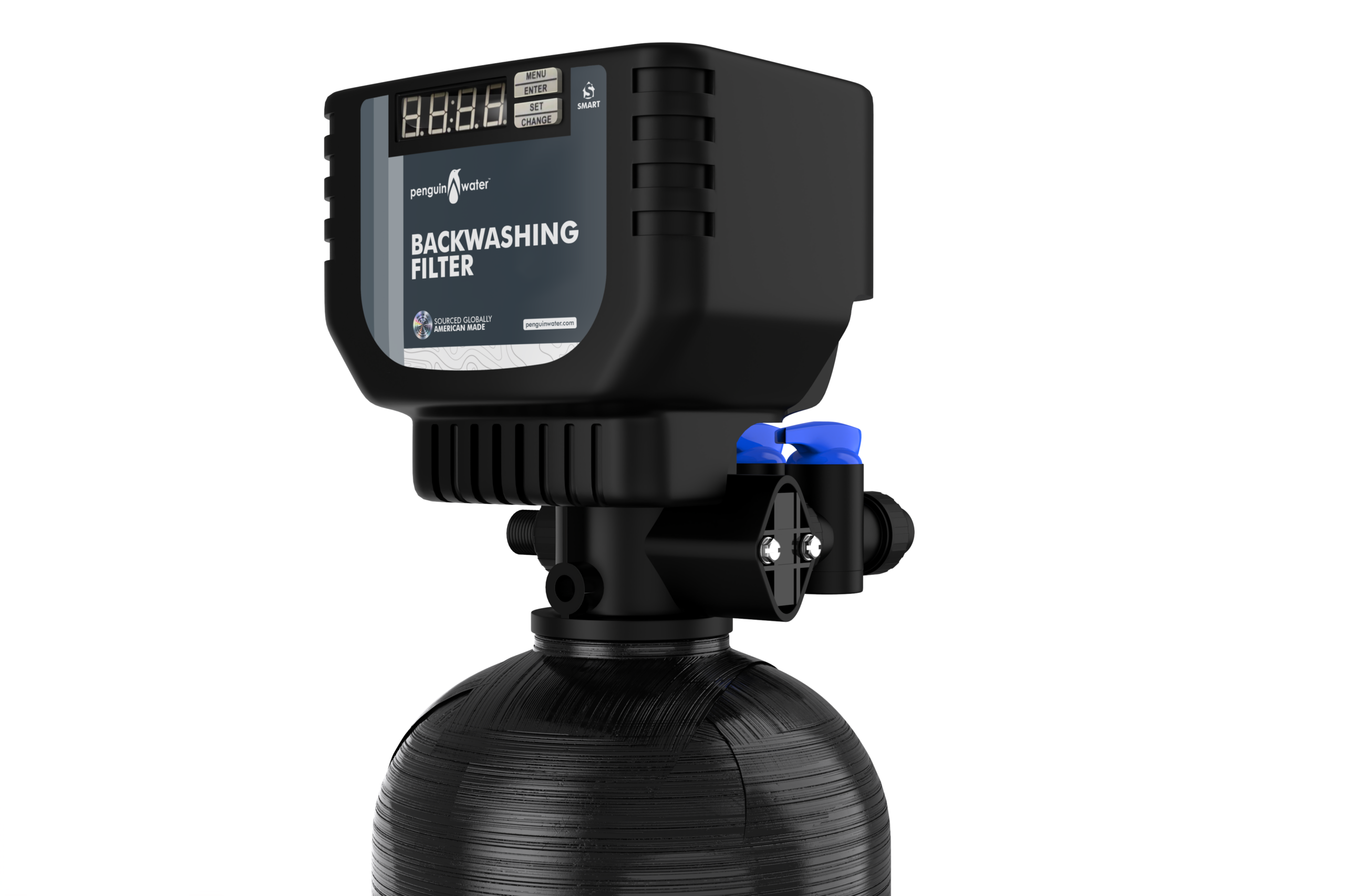
Whole-house carbon
Backwashing Bluetooth or non-electric upflow.
5-20 GPM
Product page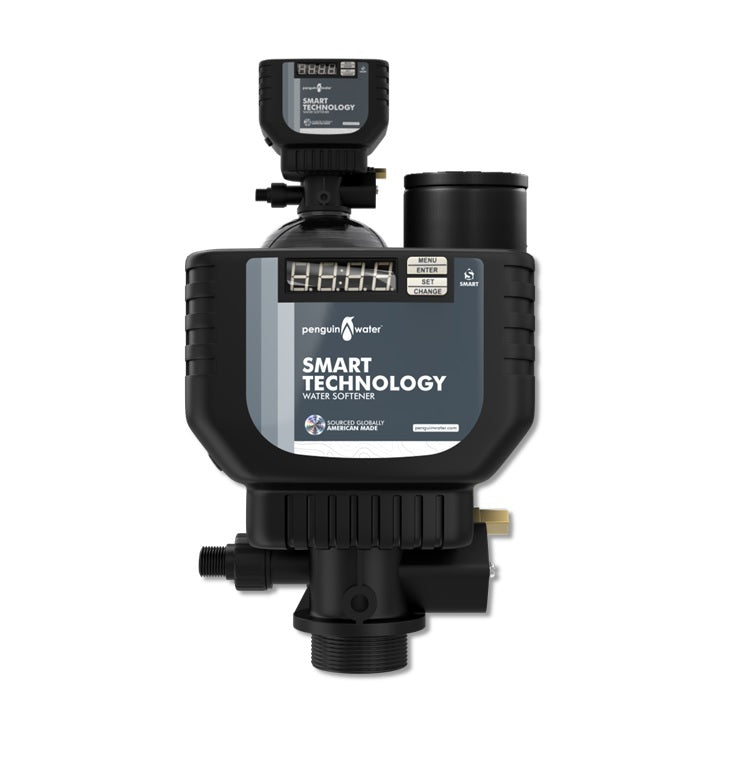
Spacesaver softener
Compact Bluetooth softener for small utility spaces.
Bluetooth Spacesaver
Product page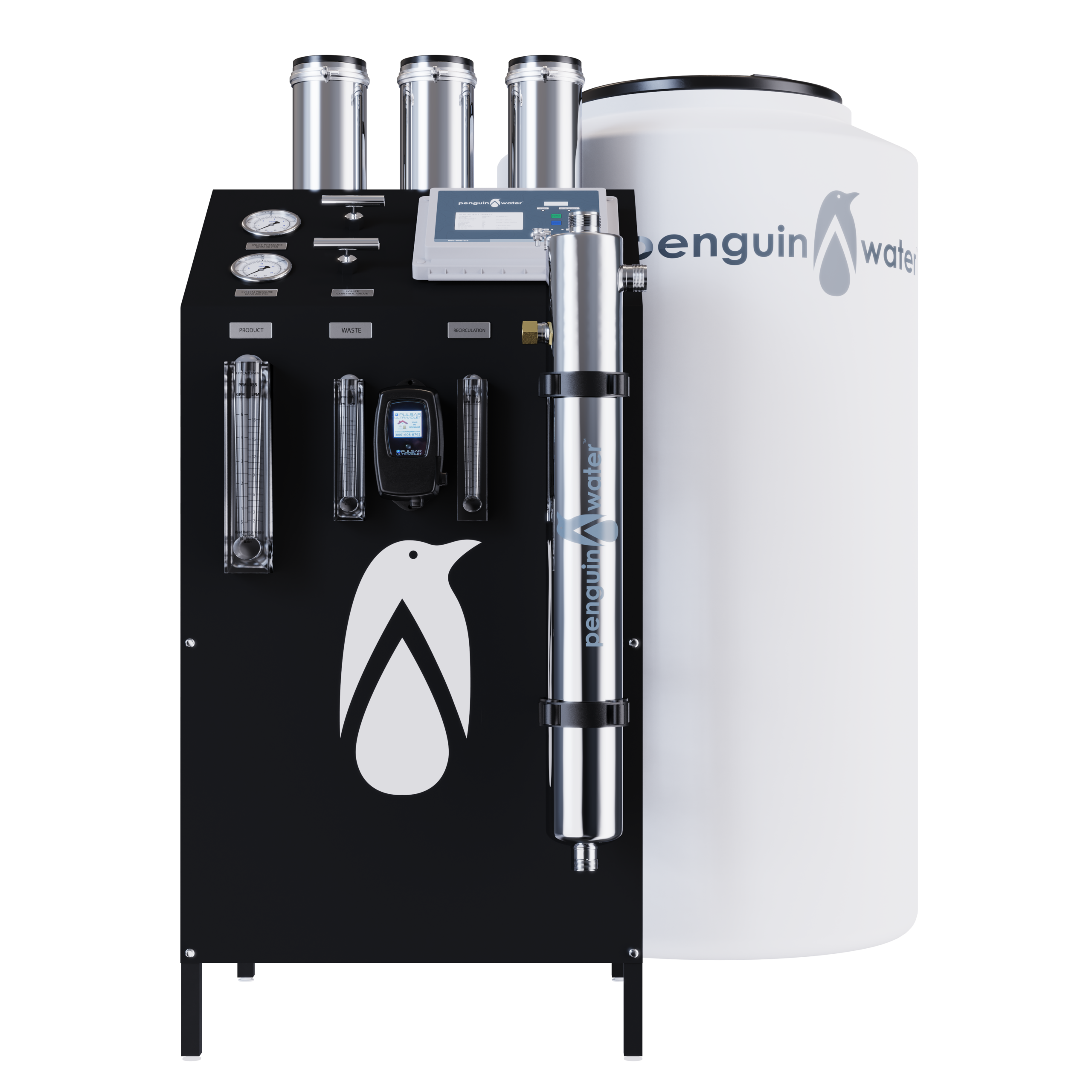
Whole-house RO
140 gallon storage, delivery pump; space and power checked first.
Up to 8,000 GPD (option)
Whole-house RO pagePenguin offers in Cook County
Ask GSHA about current Penguin offers.
No Penguin promotion was confirmed current on both penguinwater.com and gshaservices.com when this page was checked on 2026-10-23, so none is listed. GSHA’s financing programs are on our financing page.
Cook County questions and answers
Do you install Penguin systems in Chicago?
Many Chicago ZIP codes, mostly on the north, northwest and west sides, are on our service list. Call (224) 220-3660 with your address and we will confirm.
Our kitchen cabinet is small. Can undersink RO still fit?
Usually. If the 4.5 gallon tank does not fit under the sink, it can often go in a neighboring cabinet or the basement below. We check at the estimate.
Is Cook County water hard?
Chicago-sourced Lake Michigan water is moderately hard: about 8 grains per gallon as reported by Elmhurst, and 7.3 to 8.2 grains per gallon at Highland Park. Softening is optional.
We live in a condo. What can we install?
Undersink RO stays within your unit and is the most common choice. Whole-house equipment depends on where the water enters your unit and on association rules.
Do we need a permit?
It depends on the municipality and the work. GSHA confirms with your building department and handles any permit required, especially for new circuits or re-piping.
What maintenance should we expect?
Penguin lists undersink RO sediment and carbon filters every 6 to 12 months and membranes every 2 to 3 years. Softeners need salt. GSHA keeps a record of what we install and reminds you when service is due.
More Penguin and water treatment pages
Penguin Water Systems Authorized Dealer in Illinois (main page) · Penguin Water Systems — Authorized Dealer · Penguin undersink reverse osmosis · Penguin city water options · Water treatment installation
Other counties
Request a free Penguin water treatment estimate
Tell us where you are in Cook County, the type of home (house, condo, two-flat) and what you would like to change. We will follow up to schedule a free, no-obligation visit.
Send the form or call
Use the form here, book online, or call (224) 220-3660.
Water and site check
A GSHA technician reviews your utility report, and checks space, drain and power.
Written quote
You receive an itemized quote for the Penguin equipment, installation and any electrical work. No obligation.
If the form does not load, email info@gshaservices.com or call (224) 220-3660.
About GSHA Services, LTD
GSHA Services, LTD is a licensed and insured heating, cooling, electrical, plumbing and generator contractor and an authorized Penguin Water Systems dealer and installer. Offices: 1257 Cobblestone Way, Suite A, Woodstock, IL 60098 and 11 N Skokie Hwy, Lake Bluff, IL 60044. Phone (224) 220-3660. Email info@gshaservices.com. GSHA Services is an independent dealer, not Penguin Water Systems; product warranties are provided by the manufacturer. See the full service area by ZIP code. Contact us · Financing · All products and brands
Sources
- Village of Hanover Park, 2025 Water Quality Report — https://www.hpil.org/327/Water-Quality-Report (accessed 2026-10-23)
- DuPage Water Commission, 2025 CCR Report (City of Chicago data) — https://dpwc.org/wp-content/uploads/2026/03/2025-DuPage-Water-Commission-CCR-Report.pdf (accessed 2026-10-23)
- City of Elmhurst, Water Quality Report 2025 — https://cms3.revize.com/revize/elmhurst/Document%20Center/Services/Public%20Works/Utility%20Division/Water%20Quality%20Report%202025%20FINAL%20.pdf (accessed 2026-10-23)
- City of Highland Park, Water Hardness Information — https://www.cityhpil.com/government/city_departments/public_works/water_treatment_plant/hardness_information.php (accessed 2026-10-23)
- Penguin Water, Reverse Osmosis (undersink) — https://www.penguinwater.com/pages/reverse-osmosis (accessed 2026-10-23)
- Penguin Water, 5- and 6-stage RO brochure (PDF) — https://www.penguinwater.com/cdn/shop/files/Brochures_S5S6WEB.pdf (accessed 2026-10-23)
- Penguin Water, Whole House Carbon Filter — https://www.penguinwater.com/pages/city-water-filter (accessed 2026-10-23)
- Penguin Water, City Water (softener, Hybrid and salt-free overview) — https://www.penguinwater.com/pages/city-water (accessed 2026-10-23)
- Penguin Water, Whole House Reverse Osmosis brochure (PDF) — https://www.penguinwater.com/cdn/shop/files/RoDefenderBrochureWEB.pdf (accessed 2026-10-23)
- GSHA service area page (ZIP-code list) — https://gshaservices.com/about-gsha-services/service-area/ (accessed 2026-10-23)
- GSHA financing page — https://gshaservices.com/financing/ (accessed 2026-10-23)