
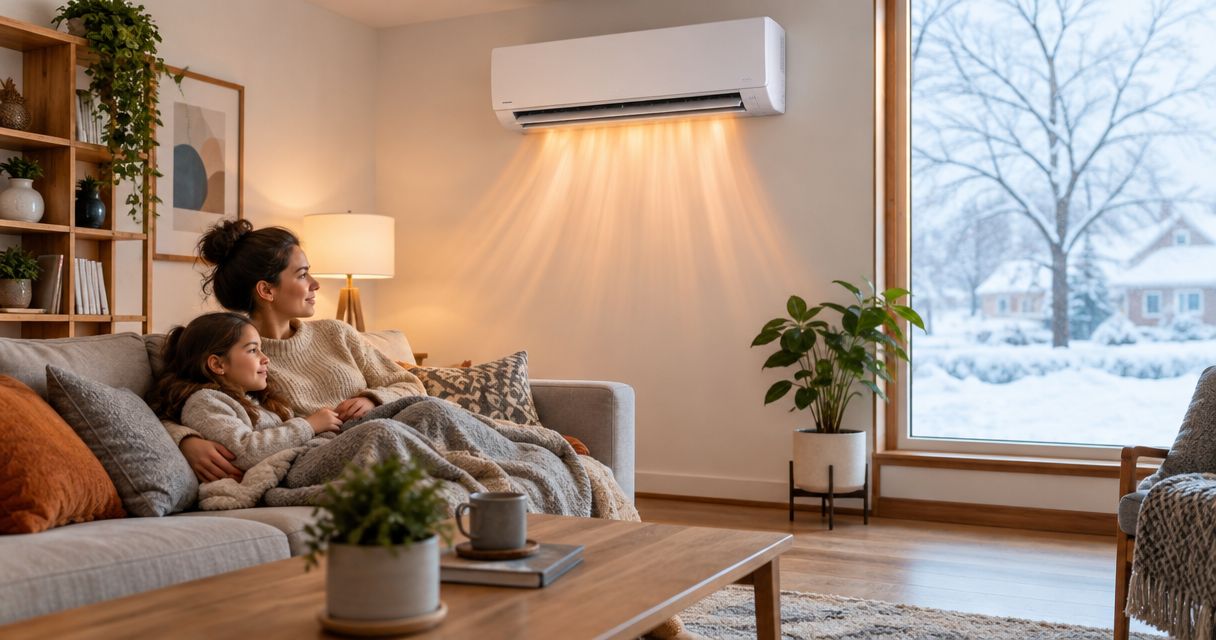
Yes—a cold-climate ductless mini split heat pump can heat a whole house through Illinois winters when its low-temperature output matches the home's heating load and every room has a planned heat-delivery path. That does not mean every mini-split can replace a furnace: equipment selection, closed bedrooms, defrost operation, and backup heating all need attention before you remove an existing system.
- A cold-climate ductless mini split heat pump can provide whole-house heating when capacity and room coverage match the home.
- Compare low-temperature heating output, not just advertised capacity or the lowest operating temperature.
- Closed bedrooms need a designed heat-delivery path; a hallway unit is not a whole-house plan.
- GSHA Services, LTD provides heating installation and repair for homeowners in Woodstock, Lake Bluff, and surrounding areas.
Why this matters
Replacing a furnace is a different decision from adding comfort to a sunroom. A system that heats an open living area successfully does not automatically serve bedrooms, bathrooms, and a finished basement.
For a 2026 replacement plan, start with the building and its rooms—not an equipment brochure. GSHA Services, LTD provides ductless mini-split and other heating services, so the discussion can address both equipment selection and the existing heating system.
Whole-house heating is a design requirement, not a label on the outdoor unit. You need enough heat during cold weather and a way to deliver it wherever the house loses heat.
Can ductless mini splits heat a whole house in Illinois winters?
Yes, provided the selected equipment meets the home's calculated heating demand at the outdoor design temperature used for its location. The installation must also distribute that heat throughout the house with doors in their normal positions.
There are several ways to approach that requirement. None is automatically right for every floor plan.
| Heating approach | Best for | Main benefit | Main limitation |
|---|---|---|---|
| All-ductless whole-house system | Homes where indoor units can serve all occupied rooms | Room-level temperature control without a central duct network | Closed rooms require deliberate coverage; indoor units and piping need suitable locations |
| Ductless heating with an existing furnace or boiler | Homes keeping another heating source | Another system can cover a documented cold-weather capacity gap | Controls and operating responsibilities must be coordinated |
| Ductless heating for selected rooms | Additions or rooms with a separate comfort problem | Targets the space that needs heating | Does not replace the heating plan for the rest of the house |
For a 2026 proposal, require a room-by-room load calculation and equipment performance data for the exact indoor and outdoor combination. An estimate based only on floor area does not establish winter performance.
All-ductless whole-house heating
An all-ductless design uses indoor units to serve the home's heating zones without relying on a central furnace duct system. It works only when the design accounts for the rooms between and beyond those units.
A living-room head is not a reliable substitute for a bedroom heating plan. With bedroom doors closed, the warm air has a restricted path into those rooms. Bathrooms, remote offices, and rooms over garages deserve separate attention.
Best for: homes where the proposed indoor-unit locations can serve every required room. The advantage is targeted temperature control; the limitation is the need to accommodate indoor units, refrigerant piping, condensate drainage, and service access.
Ask how the system operates when only a small zone calls for heat. Equipment that meets the coldest-day load still needs to operate appropriately during milder weather, when the house needs less heat.
Ductless heating with a furnace or boiler
Keeping an existing heating system gives the design another source of heat. That source can cover rooms outside the ductless zones or a capacity shortfall during colder conditions, depending on the plan.
The key is coordination. Establish which system responds first, what triggers the other system, and whether the controls support that sequence. Separate thermostats without a documented strategy leave you managing the interaction yourself.
Best for: homes where retaining the existing system serves a defined heating need. The benefit is another heat source; the limitation is maintaining and controlling separate systems.
Backup heat is not automatically mandatory, and removing it is not automatically appropriate. Make that decision from the calculated load, published capacity, room coverage, and your tolerance for heating-system interruptions.
Why whole-house mini-split performance varies
Two houses with similar floor area can require different heating designs. These factors explain why:
- Heat loss: Insulation, air leakage, windows, and exposed surfaces affect how much heat the house needs.
- Local design temperature: Equipment selection needs a location-specific winter design condition, not a statewide assumption.
- Low-temperature capacity: Heating output changes with outdoor temperature; nominal capacity does not describe every condition.
- Room layout: Closed doors, separate floors, and isolated rooms affect heat delivery.
- Equipment combination: Multi-zone performance depends on the approved outdoor-unit and indoor-unit combination, including simultaneous demand.
- Installation and controls: Airflow, refrigerant piping, outdoor-unit placement, and control settings affect system operation.
Air sealing and insulation improvements can reduce the heating load. If you plan that work, tell the heating contractor before equipment selection so the design reflects the intended building condition.
How do you check whether a mini-split has enough winter capacity?
Use a documented sequence rather than choosing a system from an advertised coverage area. For your 2026 equipment review, request the following:
- Calculate heat loss. Use a room-by-room residential load calculation, such as ACCA Manual J, with building details that reflect your home.
- Set the design condition. Identify the outdoor winter design temperature used for the property and the indoor temperature assumed.
- Verify equipment output. Compare the heating load against published capacity for the exact equipment combination at the relevant outdoor temperature.
- Check room coverage. Show which indoor unit or other heat source serves each room when doors are closed.
- Document shortfalls. Explain how any capacity or distribution gap will be addressed before removing existing heat.
Do not accept a minimum operating temperature as proof of adequate heating. A unit can remain operational while producing less heat than the house requires.
Which temperature ratings should you compare?
Look for heating-capacity data at 47°F, 17°F, and 5°F, where published. These are useful equipment-rating reference points, not a declaration that any one temperature is the correct design condition for your Illinois home.
The colder reference points help reveal performance that a mild-weather rating does not show. If the project's design temperature falls below the published reference point, request manufacturer data appropriate to that condition.
For a 2026 comparison, the AHRI Directory helps verify certified equipment matches, while the Northeast Energy Efficiency Partnerships cold-climate product list provides low-temperature performance information for listed systems. Use the exact model combination, not a similar product name.
What does heating efficiency tell you?
Efficiency describes the relationship between energy input and heat delivered. Capacity describes how much heat the equipment can deliver. You need both.
HSPF2 is a seasonal heating-efficiency rating; it does not prove that a system meets your home's coldest-weather load. Likewise, strong low-temperature capacity does not establish which heating source will have the lowest operating expense under your utility rates.
Where should the outdoor unit go in snowy weather?
The outdoor unit needs the clearances, support, and drainage specified by its manufacturer. Snow accumulation and roof runoff must be considered before choosing the location.
An air-source heat pump moves air through its outdoor coil during heating. Blocked airflow interferes with that process, and defrost water needs somewhere to drain without creating a recurring ice problem around the equipment.
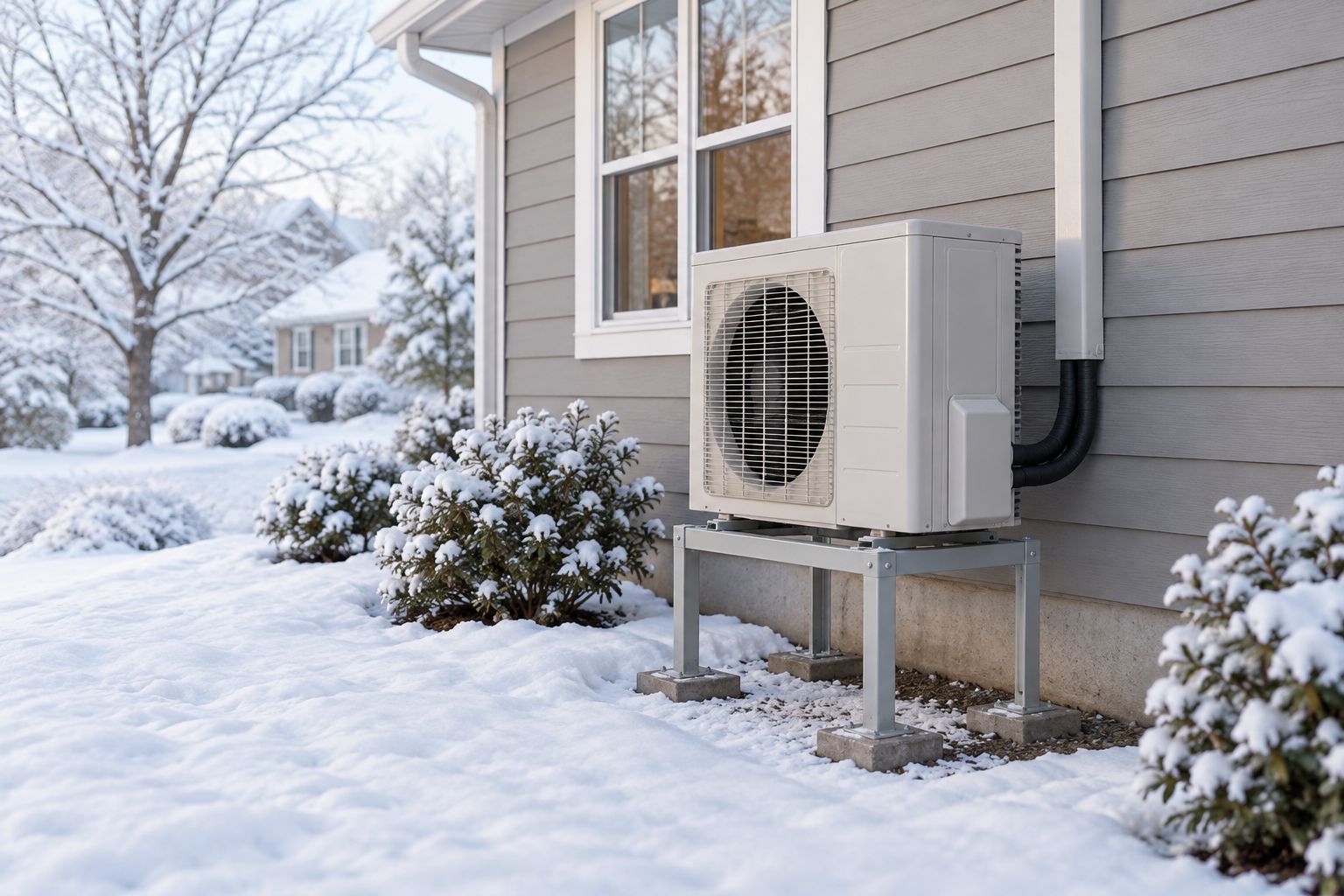
Do not improvise a cover or enclosure around an operating outdoor unit. Follow the equipment instructions for snow protection and clearances, and keep access available for service.
During defrost, the system temporarily changes operation to clear frost from the outdoor coil. Ask what occupants should expect and how the selected equipment manages indoor comfort during that cycle.
What should your heating proposal include?
A useful proposal connects the building's requirements to the selected equipment. It should identify the indoor and outdoor models, their locations, the areas they serve, and the assumptions behind the heating design.
Ask for electrical requirements to be checked as part of the project. An electrician must assess the relevant circuits, equipment requirements, and available electrical capacity rather than assuming every existing panel needs replacement—or that none does.
Before approving a 2026 heating replacement, get clear answers to these questions:
- Which rooms receive direct heating, and how are the remaining rooms served?
- What output is available at the project's winter design temperature?
- What happens during defrost and during colder-than-design weather?
- Will the furnace or boiler remain, and how will it be controlled?
- What maintenance and filter access will each indoor unit require?
GSHA Services, LTD is a fit for Woodstock and Lake Bluff homeowners seeking ductless mini-split heat pump installation and repair services. Request a home-specific assessment rather than treating a single-room installation as a template for the whole house. Call (224) 220-3660 to discuss your heating needs and confirm service for your address.
Discuss your whole-house heating plan
Ask about room coverage, cold-weather capacity, and whether to retain your existing heating system.
Will a mini-split heat closed bedrooms?
A mini-split heats a closed bedroom reliably only when the design provides an adequate heat-delivery path for that room. Heat from a hallway or living room does not establish bedroom coverage.
Ask the contractor to explain the bedroom plan with doors closed. If the answer depends on leaving doors open, that is a limitation you need to accept explicitly—not discover during winter.
Do you need backup heat for an Illinois mini-split?
Backup heat is necessary when the selected system cannot meet the required heating load or serve all required spaces under the design plan. A properly selected system does not need a furnace simply because it is ductless.
Distinguish capacity backup from outage backup. An electrically powered furnace, boiler, or heat pump still needs electrical power to operate; keeping another heating appliance does not by itself solve an electrical outage.
FAQ
Can a ductless mini split heat pump replace my furnace in Illinois?
Yes, a cold-climate ductless mini split heat pump can replace a furnace when its low-temperature capacity and room coverage meet the home’s heating requirements. Verify the load calculation and exact equipment performance before removing the furnace.
Will one mini-split head heat my entire house?
One indoor head is not proof of whole-house coverage. The floor plan, room loads, closed doors, and airflow paths determine whether additional heat delivery is needed.
What temperature is too cold for a mini-split?
There is no single cutoff temperature for every mini-split. Check the specific model’s operating limits and heating capacity at your home’s winter design condition.
Should I leave my mini-split running during cold weather?
Use the manufacturer’s operating guidance and the control strategy established for your system. Large temperature setbacks can create a recovery demand that needs to be considered in the heating plan.
Does a mini-split stop heating while it defrosts?
A mini-split temporarily changes operation during defrost, and indoor heat delivery depends on the equipment’s design. Ask how the proposed model handles indoor airflow and comfort during that cycle.
Is a multi-zone mini-split automatically better than separate systems?
No, a multi-zone configuration is not automatically better. Compare simultaneous heating capacity, room loads, minimum output, installation constraints, and the consequences of an outdoor-unit failure.
Can GSHA Services, LTD help with ductless heating in Woodstock or Lake Bluff?
GSHA Services, LTD provides ductless mini-split installation and repair services for homeowners and businesses in Woodstock, Lake Bluff, and surrounding areas. Call (224) 220-3660 to discuss your property and confirm service for your address.
One last thing
Before you approve a whole-house design, mark every normally closed door on the floor plan. Then ask the contractor to trace how heat reaches the room behind it.
That check exposes a limitation that total system capacity alone cannot answer. Enough heat at the outdoor unit is not the same as enough heat in every room.


