

Best overall starting point: Mitsubishi Electric. Best for a multiroom addition: Daikin. Best for a compact single-room project: Fujitsu. Best for concealed indoor-unit planning: LG. This 2026 guide compares ductless mini split brands by the installation decisions that matter for a home addition, not by a brand-wide promise of performance.
- Best ductless mini split brands for additions 2026: start with Mitsubishi Electric for a heating-focused equipment comparison.
- Daikin suits multiroom planning; Fujitsu suits compact-room comparisons; LG belongs on concealed-unit shortlists.
- Choose the exact indoor and outdoor combination after a room-by-room heating and cooling load calculation.
- GSHA Services, LTD provides local HVAC installation and repair in Woodstock, Lake Bluff, and surrounding areas.
Why this matters
An addition changes your home's heating and cooling requirements. Extending existing ducts and installing a separate heat pump are different projects; neither is automatically the right answer.
GSHA Services, LTD is an HVAC service option for homeowners planning additions in Woodstock and Lake Bluff. Discuss the new space with GSHA Services, LTD before choosing equipment. The useful comparison starts with the room's load, winter heating requirements, and installation route—not the logo on the outdoor unit.
What makes the best mini split for an addition?
Use these criteria to compare proposals in 2026:
- Calculated capacity: Match equipment to the addition's heating and cooling loads, including windows, insulation, exposure, and ceiling height.
- Cold-weather output: Compare heating capacity at the outdoor temperatures used in the project design, not just nominal capacity.
- Low-load operation: Check minimum output as well as maximum output. Small additions also need comfort during mild weather.
- Indoor-unit fit: Confirm that the selected wall-mounted, ceiling, floor, or concealed unit fits the room and service access.
- Installation requirements: Review electrical supply, refrigerant piping, condensate drainage, outdoor placement, and required clearances.
- Service support: Ask who will install, commission, maintain, and diagnose the exact equipment combination.
A suitable model with a documented installation plan beats a familiar brand selected without a load calculation. Treat each recommendation below as a shortlist entry for its stated use case, not permission to buy any model carrying that name.
Best ductless mini split brands at a glance
These use-case rankings organize your equipment comparison. They do not establish that every model from one manufacturer outperforms every competing model.
| Rank and brand | Best for | Standout comparison point | Key limitation |
|---|---|---|---|
| 1. Mitsubishi Electric | Heating-focused additions | Compare cold-climate heat pump configurations | Brand recognition does not establish winter capacity |
| 2. Daikin | Additions with separate rooms | Compare single-zone and multi-zone layouts | One outdoor unit does not remove room-by-room sizing requirements |
| 3. Fujitsu | Compact single-room additions | Compare smaller-capacity configurations and minimum output | A small indoor unit does not prove a suitable capacity match |
| 4. LG | Concealed indoor-unit planning | Compare concealed-duct and ceiling configurations | Concealed equipment requires space, drainage, and service access |
1. Mitsubishi Electric: best for heating-focused additions
Mitsubishi Electric belongs at the start of a heating-focused mini split comparison. Its heat pump range includes cold-climate configurations, but the equipment combination—not the manufacturer alone—determines the output available to your addition.
For an Illinois project in 2026, ask the installer to identify the proposed outdoor unit and matched indoor unit. Then compare their published heating performance with the addition's calculated winter load. A cooling-capacity label is not a winter heating guarantee.
Mitsubishi Electric pros:
- Cold-climate configurations belong on a winter-heating shortlist.
- Different indoor-unit formats support different room layouts.
- Published equipment performance lets you compare a specific combination against the calculated load.
Mitsubishi Electric cons:
- The brand name alone does not identify a cold-climate configuration.
- A heating-focused selection still needs cooling and minimum-output checks.
Best for: A home addition where dependable winter heating is the main equipment-selection question.
Ask whether the proposal includes supplemental heat and why. If the answer depends on an operating-temperature limit, request the capacity data too: operation and adequate output are separate questions.
Verdict: Buy only the matched Mitsubishi Electric configuration that meets the documented heating and cooling requirements. Hold a proposal that substitutes brand reputation for performance data.
2. Daikin: best for additions with separate rooms
Daikin is a useful comparison choice when an addition contains separate rooms with different comfort requirements. Its residential heat pump offerings include single-zone and multi-zone arrangements, giving you different ways to organize the project.
A bedroom and an adjoining office do not automatically need the same output or operating schedule. Compare a shared outdoor unit with separate systems before deciding that fewer outdoor units make the better installation.
Daikin pros:
- Single-zone and multi-zone arrangements support different project layouts.
- Separate indoor units let you place conditioning equipment in separate rooms.
- Different indoor-unit formats give the installer alternatives to a wall-mounted head.
Daikin cons:
- Multi-zone sizing requires checks for each room and the matched system.
- A shared outdoor unit creates a shared service dependency for connected rooms.
Best for: A multiroom addition where room separation and control requirements drive the layout.
For a 2026 proposal, request a room-by-room equipment schedule rather than one combined capacity figure. Confirm how the proposed system behaves when only one room needs conditioning; full-system capacity does not answer that question.
Verdict: Buy the Daikin layout that fits the rooms and their operating needs. Hold any proposal that assumes multi-zone is automatically better than separate single-zone systems.
3. Fujitsu: best for compact single-room additions
Fujitsu belongs on the shortlist for a compact addition where equipment fit and low-load operation need close attention. Compare the manufacturer's single-zone configurations against the calculated load instead of treating the smallest advertised system as the default.
Small rooms can require little heating or cooling during mild weather. Minimum output therefore deserves the same attention as maximum capacity, especially when the room has good insulation or substantial solar exposure.
Fujitsu pros:
- Single-zone configurations provide a direct comparison for one-room projects.
- Published capacity information supports checks beyond nominal system size.
- Indoor-unit choices allow equipment placement to be considered alongside capacity.
Fujitsu cons:
- Compact equipment dimensions do not establish suitable minimum output.
- A small addition still needs a full drainage, piping, and electrical plan.
Best for: A single-room addition where matching the equipment to a modest load is the main concern.
Ask the installer to show the proposed system's minimum cooling and heating output under the relevant conditions. Do not accept square footage alone as the sizing method: glazing, orientation, air leakage, and construction details change the load.
Verdict: Buy a Fujitsu configuration when both its capacity range and physical installation fit the room. Skip selection based only on a compact cabinet or floor area.
4. LG: best for concealed indoor-unit planning
LG belongs on the comparison list when you want to evaluate concealed-duct or ceiling-mounted equipment instead of a wall-mounted indoor unit. The right configuration depends on the addition's framing, ceiling space, airflow requirements, and access for future service.
Concealed equipment changes the construction plan. It does not eliminate the need for drainage, filters, maintenance access, or an appropriate air-distribution design.
LG pros:
- Concealed and ceiling configurations provide alternatives to exposed wall units.
- Equipment selection can be coordinated with the addition's construction drawings.
- Published installation requirements help establish space and access needs before finishes go in.
LG cons:
- Concealed installations require suitable building space and service access.
- Short duct runs still require airflow design; they are not simply decorative connections.
Best for: An addition where indoor-unit placement must be resolved during construction.
In 2026, settle the equipment location before approving finished ceilings. Ask where technicians will reach the unit, how filters will be accessed, and where condensate will drain.
Verdict: Buy the LG configuration after the installer confirms the construction details. Wait if concealment is promised without an access and drainage plan.
Size the addition before choosing the brand
Mini split capacity is commonly expressed in BTU/h. A nominal 1-ton system corresponds to 12,000 BTU/h of cooling capacity, but that label does not mean your addition needs that size or receives identical heating output under every condition.
For a winter comparison, ask for heating output at relevant outdoor temperatures, such as 47°F and 5°F. Those figures are comparison points, not a substitute for the project's design temperature or a claim that either temperature defines your home's requirements.
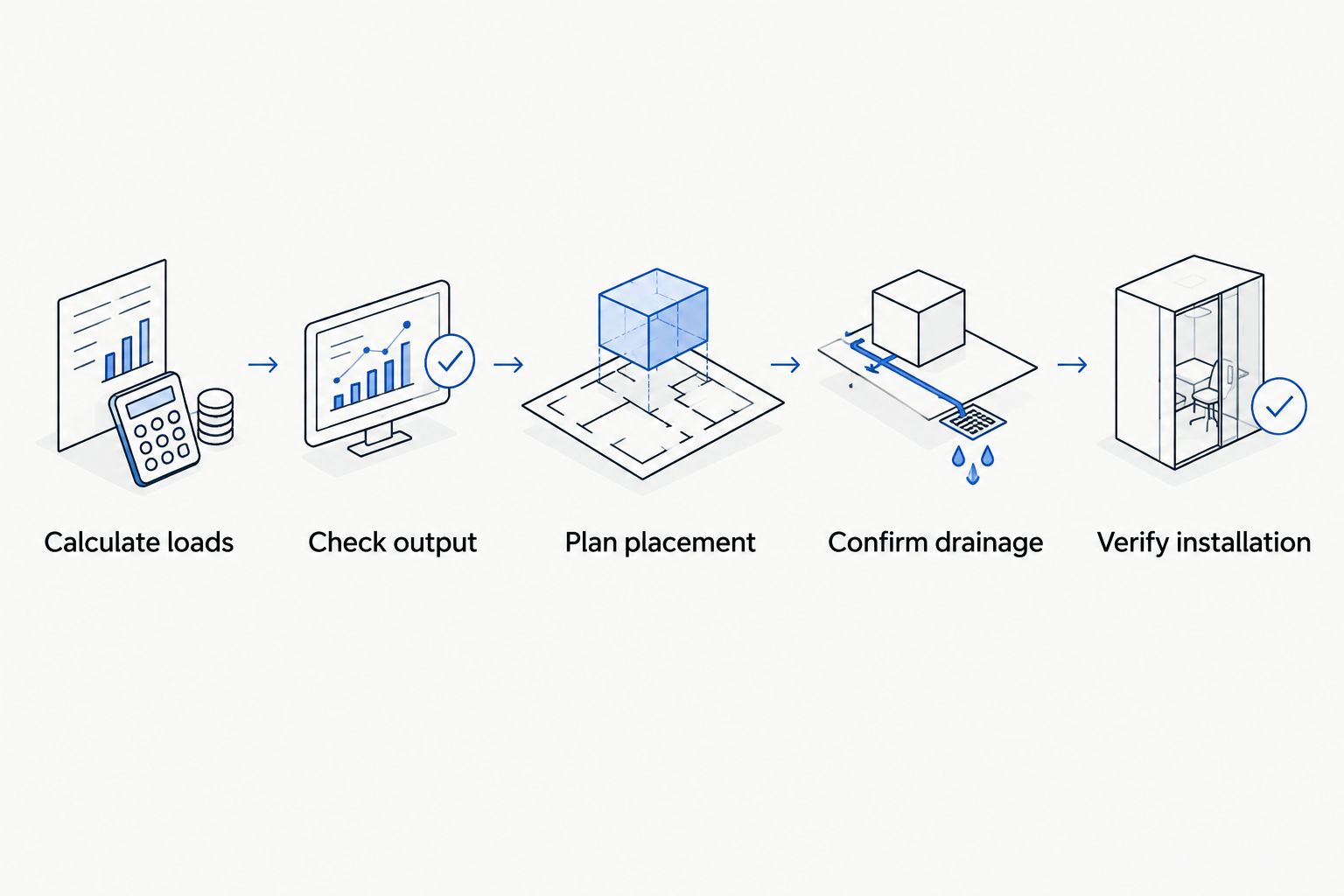
Follow this sequence:
- Calculate loads: Establish heating and cooling requirements from the addition's construction and exposure.
- Check output: Compare the exact equipment combination at the relevant operating conditions.
- Plan placement: Confirm indoor and outdoor locations, airflow, and clearances.
- Confirm drainage: Establish the condensate route and access before finishing the room.
- Verify installation: Check electrical requirements, piping limits, and commissioning procedures.
An oversized system is not insurance against every comfort problem. Compare both ends of its operating range, and ask the installer to explain how the proposed equipment serves the room during mild weather as well as temperature extremes.
Check the installation plan before approving equipment
The installation proposal should identify more than a manufacturer. Request the exact model combination and a clear description of the work needed to make it function in your addition.
Use this checklist:
- Electrical work: Confirm the equipment's supply requirements and the work included in the proposal.
- Outdoor placement: Check required clearances, service access, and the handling of defrost water.
- Condensate drainage: Identify the route and whether the design requires a pump.
- Refrigerant piping: Confirm the route and that it meets the selected equipment's installation requirements.
- Controls: Confirm how you will operate each room and how any supplemental heat is coordinated.
- Commissioning: Ask what startup checks and documentation you receive.
GSHA Services, LTD provides HVAC and electrical installation and repair services. For an addition, discuss the equipment requirements and electrical scope together rather than treating the power supply as an afterthought.
Discuss your addition’s HVAC requirements
Review heating, cooling, and electrical installation needs for your new space.
How these brands were ranked
This 2026 shortlist assigns each manufacturer a different project-planning role: heating-focused selection, multiroom layout, compact-room sizing, or concealed installation. The criteria are capacity matching, cold-weather output, low-load operation, indoor-unit fit, installation requirements, and service support.
The ranking is a starting order for comparing proposals, not a measured efficiency or reliability leaderboard. Exact models can change the result. Move a brand up your own shortlist when its documented configuration better matches your addition.
Which mini split brand should you choose?
Start with Mitsubishi Electric if winter heating is your main concern. Compare Daikin for separate-room layouts, Fujitsu for a compact single-room project, and LG when concealed equipment is part of the construction plan.
Your final 2026 decision should name an indoor unit, an outdoor unit, a load calculation, and an installation scope. If a proposal stops at the manufacturer name, it is not ready for approval.
Ask GSHA Services, LTD to discuss the HVAC requirements of your addition. Compare the resulting equipment proposal on documented fit, not on a general claim that one brand is best for every home.
FAQ
What’s the best ductless mini split brand for a home addition in 2026?
Mitsubishi Electric is the starting recommendation in this guide for a heating-focused addition. Daikin, Fujitsu, and LG belong on the comparison list when multiroom layout, compact-room sizing, or concealed equipment drives the project.
Is Mitsubishi Electric better than Daikin for an addition?
Neither brand is better for every addition. Compare the exact indoor and outdoor combinations against the room loads, winter output requirements, installation layout, and service plan.
What size mini split do I need for a new room?
Choose capacity from a heating and cooling load calculation, not floor area alone. Windows, insulation, orientation, ceiling height, and air leakage all affect the required output.
Can one mini split heat and cool two rooms?
A multi-zone system can connect separate indoor units to one outdoor unit. Do not assume one indoor unit will provide adequate comfort in separate rooms, especially when doors are closed.
Will a ductless mini split heat an Illinois addition in winter?
A properly selected heat pump can provide winter heating when its output meets the addition’s design load. Verify the exact configuration’s cold-weather capacity and whether the design includes supplemental heat.
Should I choose a wall unit or concealed ductwork?
Choose a wall unit when its location and airflow fit the room; consider concealed equipment when construction space and service access support it. Concealed equipment still needs drainage, maintenance access, and air-distribution planning.
Who can help plan HVAC for an addition near Woodstock or Lake Bluff?
GSHA Services, LTD provides HVAC installation and repair for homeowners and businesses in Woodstock, Lake Bluff, and surrounding areas. Discuss the addition’s heating, cooling, and electrical requirements before selecting equipment.
One last thing
A heat pump's ability to run in cold weather is not the same as its ability to heat your addition at that temperature. Ask for the output figure next to the operating limit. That distinction is more useful than another brand ranking.
Related guides
- How much does AC installation cost?
- Whole-house generators ranked by fuel type
- Best whole-house generator brands


