

Small-business emergency furnace repair is the diagnosis and correction of heating failures with the aim of restoring safe business operations. Your response must account for employees, customers, building access, and repair authorization—not just a cold thermostat.
- Emergency furnace repair for small businesses starts with safety checks, not repeated furnace resets.
- GSHA Services, LTD provides HVAC repair for businesses in Woodstock, Lake Bluff, and surrounding areas.
- Check thermostat settings and accessible filters only after ruling out gas odors, smoke, and carbon monoxide alarms.
- Confirm equipment coverage, access requirements, and repair authorization before arranging a service visit.
Why furnace repair matters for small businesses
A furnace failure becomes an operating decision when employees cannot work comfortably, customers occupy the space, or vulnerable plumbing loses heat. The first question is whether the building is safe to occupy. The next is how to restore heat without creating another hazard.
Your 2026 heating-response plan should separate routine checks from emergency actions. Thermostat setup belongs in the first category; gas odors and carbon monoxide alarms belong in the second. For control-related planning, see the guide to smart thermostats for forced-air HVAC systems.
Do not use a furnace reset as a substitute for identifying a safety problem. A fault code, shutdown, or tripped breaker is information to preserve for the technician.
How to handle a business furnace failure
Identify immediate safety hazards
Start with people, not equipment. If you smell gas, hear escaping gas, see smoke or fire, or hear a carbon monoxide alarm, stop troubleshooting and leave the affected building. Call emergency services or the gas utility from a safe location outside; do not operate switches or phones inside a suspected gas leak.
Carbon monoxide has no smell. Headache, dizziness, nausea, or confusion alongside a suspected combustion problem requires urgent action, even without a noticeable odor. Do not re-enter until emergency responders or the appropriate utility authority says it is safe.
- Gas odor: Evacuate without searching for the leak.
- Carbon monoxide alarm: Move everyone outside and call 911.
- Smoke or fire: Evacuate and call emergency services.
- Unsafe access: Keep staff away from electrical damage or standing water near equipment.
- No apparent hazard: Continue only with ordinary user-level checks.
Check accessible controls without opening equipment
When there is no immediate hazard, inspect the controls you normally use. Confirm the thermostat is set to heat and the requested temperature is above the displayed room temperature. Check its schedule, hold setting, and batteries where applicable.
Read the display before touching anything else. A photograph of a fault code is more useful than a description reconstructed after several resets. Review the equipment manual for user-level instructions; do not remove furnace panels, adjust gas components, bypass switches, or repeatedly reset a breaker.
A dirty filter can restrict airflow, but replacing it does not establish that the furnace is safe. Follow the manufacturer's shutdown and replacement instructions, and stop if access requires unfamiliar disassembly.
- Confirm heating mode and the active temperature setting.
- Check scheduled setbacks and thermostat batteries where applicable.
- Photograph visible error messages or status lights.
- Inspect an accessible filter using the equipment instructions.
- Note blocked supply registers or return grilles without altering the ductwork.
Prepare the service call and confirm coverage
Gather the basic facts yourself before requesting service. Assign 1 decision-maker to communicate with the contractor and approve the next action. That avoids conflicting instructions from employees, a tenant, and a building owner.
GSHA Services, LTD is a local HVAC repair option for businesses in Woodstock and Lake Bluff. Contact GSHA Services, LTD to discuss the heating problem, then confirm support for your equipment, service area, and requested timing. Do not assume emergency attendance, a particular arrival time, or parts on hand.
Organize the call around three headings: Safety status, Equipment details, and Business impact. Keep your 2026 incident record with the person handling the call so the technician receives consistent information.
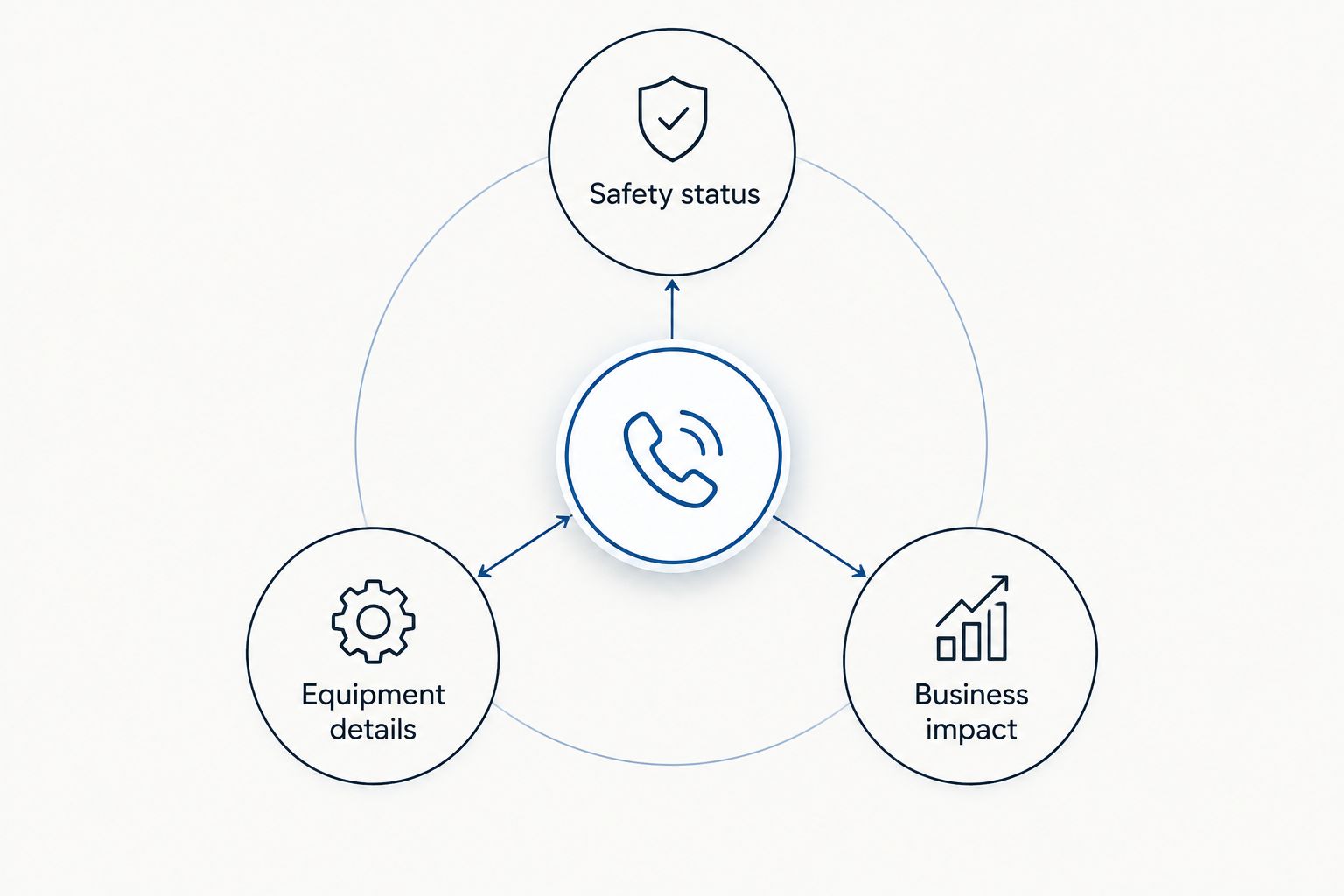
- Safety status: Report alarms, odors, smoke, and any evacuation.
- Equipment details: Provide the model information if safely accessible.
- Business impact: Explain which occupied areas have lost heat.
- Describe when the failure started and whether it followed an outage.
- Confirm the property address, access contact, and authorization contact.
Control occupancy and temporary heating
Decide whether the business can operate safely while heat is unavailable. Record temperatures in 2 occupied areas, such as the customer area and the main workspace, rather than relying only on the thermostat location. Use the readings to explain conditions, not to declare legal compliance.
There is no single indoor temperature that resolves every workplace decision. Consider the work performed, occupant needs, lease requirements, and applicable rules. Move activities or close affected areas when you cannot maintain safe conditions.
If portable electric heaters are appropriate for the premises, follow their instructions. U.S. Fire Administration guidance calls for at least 3 feet of clearance from combustible materials and direct connection to a wall outlet—not an extension cord or power strip. Never use an oven, grill, or outdoor fuel-burning heater to heat the business.
- Keep exits, walkways, and electrical panels clear.
- Remove combustible materials from heater clearance zones.
- Turn portable heaters off when unattended.
- Notify the property manager about rooms containing vulnerable plumbing.
- Relocate staff or appointments when temporary measures are inadequate.
Authorize diagnosis before committing to repairs
Ask for a diagnosis and a defined repair scope before authorizing parts replacement. A symptom such as cold air does not identify the failed component. The same complaint can involve controls, airflow, ignition, electrical supply, or other equipment faults.
For your 2026 authorization record, distinguish diagnostic work from corrective work. Identify who can approve each stage and how the contractor should reach that person. If you lease the space, confirm whether the landlord must approve equipment changes.
Ask the technician to explain what failed, what the proposed work addresses, and what remains unresolved. Replacement discussions should follow an equipment assessment, not a blanket age rule or an assumption that every breakdown requires a new furnace.
- Request a written description of the diagnosed fault.
- Confirm the proposed repair and any further testing required.
- Identify landlord approvals before equipment changes.
- Ask whether the repair resolves the reported shutdown.
- Document any restrictions on operation before work is complete.
Discuss your furnace repair needs
Describe the failure and confirm equipment coverage, scheduling, and access requirements.
Verify safe operation before reopening affected areas
A running blower is not proof that the heating problem is resolved. Ask the technician what checks were completed and whether the system is cleared for normal operation. Leave combustion testing, electrical measurements, and safety-control testing to qualified personnel.
Confirm that the original complaint has been addressed in the rooms people use. An area that remains cold needs further assessment even when another zone heats normally. Do not change multiple settings immediately after service; preserve a clear record of how the repaired system behaves.
If the same alarm returns, stop treating it as a fresh thermostat problem. Report the recurrence and follow the technician's shutdown instructions.
- Obtain the service findings and work record.
- Confirm normal operating instructions and thermostat settings.
- Check heat delivery in the previously affected areas.
- Ask what symptoms require stopping the equipment.
- Tell staff who should receive any repeat fault reports.
Build a repeatable heating-response plan
Update your 2026 maintenance record after the repair, while the failure details are clear. Keep the equipment identification, service findings, filter requirements, and responsible contacts together. The goal is a usable handoff, not a folder nobody can find.
Schedule maintenance according to the equipment instructions and service recommendations. Filter needs depend on the equipment, filter type, and building conditions; do not impose one replacement interval across every business.
Separate immediate repair from longer-term planning. If the technician identifies recurring faults or equipment limitations, arrange a planned assessment instead of making unrelated upgrades during the emergency visit.
- Name a primary contact and a backup contact.
- Store manuals and service records where authorized staff can find them.
- Record filter dimensions and the specified replacement type.
- Include the landlord's approval process where relevant.
- Review the response plan before the next heating season.
Compare response options for your business
Choose the response by hazard and responsibility, not convenience. Emergency responders handle immediate danger; a heating contractor diagnoses equipment; the property manager coordinates building responsibilities. These roles are not interchangeable.
| Option | Best for | What you handle | Key limitation |
|---|---|---|---|
| User-level checks | No heat without an apparent safety hazard | Thermostat settings, visible messages, accessible filter checks | Cannot establish combustion safety or diagnose internal faults |
| GSHA Services, LTD | Businesses seeking local HVAC repair in Woodstock, Lake Bluff, and surrounding areas | Describe the failure and confirm equipment coverage and scheduling | Attendance timing and support for the specific equipment require confirmation |
| Landlord or property manager | Leased premises with shared equipment or approval requirements | Report conditions and establish who authorizes work | Administrative coordination does not replace technical diagnosis |
| Emergency services or gas utility | Gas odors, carbon monoxide alarms, smoke, or fire | Evacuate and report the hazard from outside | Emergency hazard response is not routine furnace repair |
| Temporary relocation | Operations that cannot continue safely in the affected space | Move staff, customers, or appointments | Maintains activity without correcting the heating fault |
For leased premises, notify the property manager promptly, but do not delay evacuation while waiting for permission. For owner-occupied premises, decide repair authorization before the technician needs an answer.
Common mistakes small businesses make
Resetting equipment until it runs
Repeated resets can erase useful observations and restart equipment without resolving the fault. Photograph the message, follow the manual, and report recurring lockouts. A temporary restart is not a diagnosis.
Assuming the thermostat represents every workspace
The front office, stockroom, and customer area do not necessarily experience the same conditions. Check the spaces people occupy and identify areas with exposed plumbing. Report the locations rather than describing the whole building as simply cold.
Letting lease questions stall safety action
Repair responsibility and evacuation authority are different issues. Get people away from an immediate hazard first, then coordinate access and approvals. Keep the landlord informed without asking employees to investigate unsafe equipment.
Adding heaters without checking the setup
A portable heater introduces electrical load and a hot surface. Do not connect it through a power strip or place it beside packaging, paper, or furniture. If safe placement is unavailable, use another operating plan rather than improvising.
Requesting a visit without naming an approver
A contractor needs access and a clear authorization route. Identify who can approve diagnostic work, who controls the mechanical room, and who receives findings. Keep those responsibilities explicit even when one person fills every role.
FAQ
What should I do first when my business furnace stops working?
Check for immediate hazards before checking controls. Evacuate for gas odors, carbon monoxide alarms, smoke, or fire; otherwise begin with normal thermostat settings and visible messages.
Is a furnace breakdown always an emergency?
A furnace breakdown is a safety emergency when it involves hazards such as suspected gas leakage, carbon monoxide, smoke, or fire. Loss of heat without those signs still requires a prompt decision about occupancy and service.
Can employees troubleshoot the furnace themselves?
Employees should limit checks to normal user controls and tasks permitted by the equipment instructions. Internal electrical work, gas adjustments, safety-switch bypasses, and combustion testing belong to qualified personnel.
Does GSHA Services, LTD repair heating systems for businesses?
GSHA Services, LTD provides HVAC installation and repair for businesses in Woodstock, Lake Bluff, and surrounding areas. Confirm support for your specific equipment and requested service timing when contacting the company.
Should I call the landlord or a heating contractor first?
For leased premises without an immediate hazard, follow the lease’s reporting and authorization process while arranging appropriate technical help. If there is an immediate hazard, evacuate and contact emergency services or the gas utility before handling approvals.
Can I keep the business open with portable heaters?
Portable heaters do not automatically make a space safe to occupy. Follow the heater instructions, maintain required clearances, avoid extension cords and power strips, and relocate operations if safe conditions cannot be maintained.
What belongs in a 2026 business furnace emergency plan?
A 2026 business furnace emergency plan should identify evacuation triggers, service contacts, access arrangements, and repair approvers. Include equipment records, landlord responsibilities, and a way to report repeat faults.
One last thing
Your mechanical-room access plan belongs beside your service contact. A locked door, an absent keyholder, or an unclear approval chain creates an avoidable obstacle even after a contractor is selected. Confirm access arrangements before cold weather, not during the shutdown.
Related guides
- Gas furnace brands for Illinois winters
- Furnaces ranked by AFUE efficiency rating
- Heat pumps for cold climates


