

Choose GSHA Services if you need HVAC installation or repair in Woodstock, Lake Bluff, or surrounding Illinois communities; choose HVACDirect if your goal is to shop for HVAC equipment online and you have a plan for equipment selection and installation. This 2026 comparison separates hiring a local service provider from buying equipment, so you compare the work you need—not just the unit you want.
- GSHA Services vs HVACDirect is a choice between local HVAC service and online equipment shopping.
- Choose local installation and repair when your project requires work at your Illinois property.
- Choose HVACDirect for equipment shopping after confirming sizing, compatibility, and installation responsibility.
- Compare complete project scopes, not an equipment order against an installation proposal.
Why this matters
GSHA Services is the better fit for homeowners seeking local HVAC installation and repair in Woodstock and Lake Bluff. HVACDirect serves a different buying task: researching and purchasing equipment online.
The distinction matters before you request a quote. A furnace or air conditioner is equipment; a working heating or cooling system also requires correct selection, compatible components, installation, and startup.
For a 2026 replacement project, separate three project stages: selection, installation, and startup. Assign responsibility for each before you approve an equipment order or service proposal. An equipment comparison cannot settle questions about ductwork, electrical connections, or the condition of your existing system.
At a glance
| Dimension | GSHA Services | HVACDirect |
|---|---|---|
| Best for | Local homeowners and businesses needing installation or repair | Buyers shopping for HVAC equipment online |
| Standout distinction | HVAC service alongside electrical, generator, plumbing, and indoor air quality services | Equipment-focused online shopping |
| Installation needs | Direct fit for a local installation request | Equipment selection must be coordinated with the installation plan |
| Repair needs | Direct fit for diagnosing and repairing an existing system | Equipment shopping is a different task from an on-site repair |
| Equipment research | Start with the property's service requirements | Start with equipment options and product information |
| Project control | Service-led route for work at the property | Purchase-led route for buyers coordinating the project |
| Technical suitability | Requires property-specific checks | Requires the same property-specific checks |
| Purchasing model | Request a proposal for the required service scope | Separate the equipment purchase from other project responsibilities |
Local service wins for work; online retail wins for shopping
Best for local service: a homeowner with an aging furnace, a failed air conditioner, or an installation project in the stated Illinois service area. Your starting point is a property problem, not necessarily a specific replacement model.
Best for online equipment shopping: a buyer who knows what equipment the project requires and wants to review it online. HVACDirect is the more relevant starting point for that shopping task.
Neither route replaces the other automatically. Buying a unit does not establish that the unit fits your property, and requesting local service does not require you to arrive with a model already selected.
Before choosing either route, write down the outcome you need. “Restore heating” calls for a different first step from “purchase the equipment already specified by my installer.” That distinction prevents you from solving a purchasing problem when you actually have a repair problem.
Local service offers broader trade coordination
The local service offering covers HVAC, electrical, generators, plumbing and water heaters, and indoor air quality. That breadth is relevant when your project involves more than replacing a heating or cooling unit.
For example, ask whether an HVAC replacement requires electrical work or whether a comfort complaint needs an indoor air quality assessment. These are questions to resolve in the project scope—not reasons to add unrelated equipment.
HVACDirect's equipment-shopping role is a better match when your task is already narrowed to purchasing HVAC equipment. Keeping that task focused can suit a buyer whose contractor has established the requirements.
The tradeoff: a broader service offering does not mean every trade belongs in your proposal. Request separate descriptions of required work and optional work. For either route, approve only the scope that addresses your property and your stated goal.
GSHA Services wins for a local installation request
A local HVAC installation project needs someone responsible for the work at your property. That makes the service-provider route the direct match when you need equipment installed rather than simply purchased.
Before accepting a 2026 installation proposal, ask for the equipment identification, included labor, necessary connection work, and startup responsibilities in writing. Also ask who handles any required permit and inspection process.
An online equipment order can form part of an installation project, but the order itself is not an installation plan. If you intend to buy equipment separately, obtain your installer's written acceptance of the exact equipment before ordering.
The limitation of the local route: you still need to evaluate the proposal. A service-provider relationship does not remove the need for a clear scope, identified equipment, and documented responsibilities.
The limitation of the equipment-first route: you must resolve the installation arrangements alongside the purchase. Do not assume that a contractor will install equipment you selected independently; ask first.
Local repair wins when replacement is not yet justified
If your existing system has stopped heating or cooling, start by identifying the fault. A replacement product listing cannot establish why equipment at your property is malfunctioning.
Local HVAC repair is the better fit for that immediate need. Describe the symptoms, when they started, and any displayed fault information when you request service. Leave electrical, gas, and refrigerant work to appropriately qualified professionals.
HVACDirect becomes relevant to equipment shopping if replacement is the chosen path. It is not a substitute for deciding whether replacement addresses the original problem.
The important distinction is diagnosis before purchase. Ask the service provider to explain the fault, the proposed repair, and the reason for recommending replacement if that is the recommendation. You need a decision tied to the condition of your system—not merely its age or a product's advertised features.
HVACDirect wins for an equipment-first shopping task
When you already have equipment requirements, an online HVAC retailer is the more direct place to conduct an equipment-shopping task. Your objective is to examine the proposed purchase, not book an assessment of the property.
Build the comparison around exact model identifiers and the components included in each proposed configuration. Similar product names do not establish that two orders contain equivalent equipment.
For a 2026 purchase, save the product documentation and the written scope your installer accepted. Those records give you a common reference when discussing the equipment and its intended application.
The benefit: you can keep equipment research separate from choosing who performs the installation. The drawback: you must bring those decisions back together before ordering.
A local service proposal remains useful as a complete-project reference. Compare what each route requires you to arrange, not just how straightforward the shopping process feels.
HVACDirect suits buyers who want separate purchasing control
Some buyers want to select equipment and arrange installation as distinct decisions. HVACDirect fits that purchase-led workflow, provided the equipment specification and installation arrangements are settled together.
Other buyers want to begin with a service request and have the property's needs define the equipment discussion. The local-service route fits that workflow more directly.
Neither workflow guarantees clearer accountability. Written responsibility matters more than the purchase channel. Identify who answers equipment-selection questions, who performs the work, and who handles a problem discovered during startup.
Use these three responsibility checks before committing:
- Equipment selection: Who confirms that the exact configuration suits the property?
- Installation: Who accepts responsibility for the physical work and necessary connections?
- Startup: Who checks operation and records the completed work?
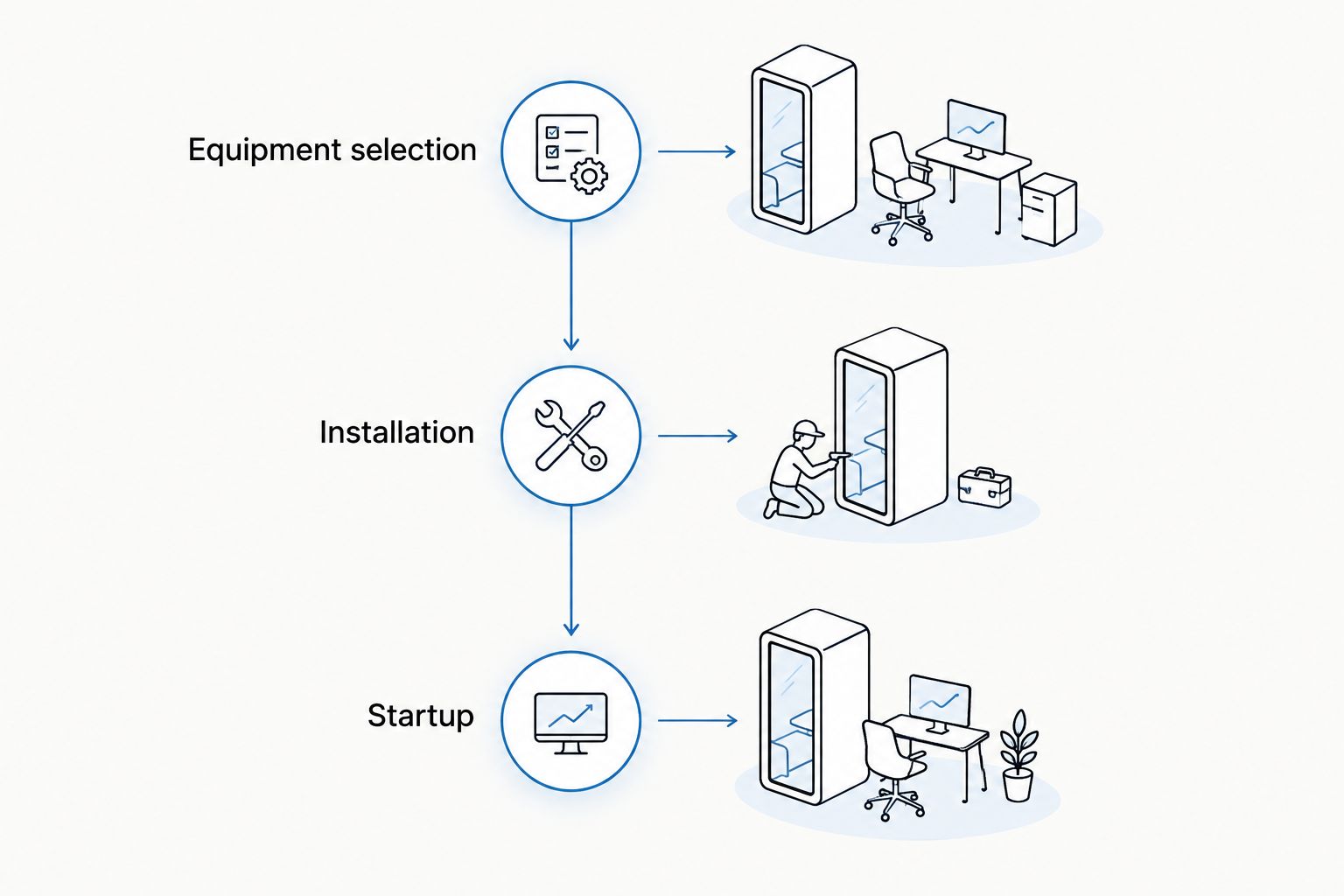
Treat unanswered responsibility questions as unfinished project planning. Resolve them before choosing between a service proposal and a separate equipment purchase.
Both routes require correct sizing and compatibility
Neither buying route wins on technical suitability by itself. Equipment must match the property's heating and cooling requirements and work with the intended system components.
For replacement equipment, ask how the proposed capacity was selected. Do not assume that copying the old unit's capacity establishes the correct choice. Building changes and existing system issues belong in the assessment.
Compatibility also deserves a written check. Depending on the project, that includes indoor and outdoor equipment, controls, electrical requirements, and the distribution system. The relevant checks vary by equipment type.
If you are considering a different heating approach, the guide to heat pumps for cold climates provides a related equipment topic to review before discussing your property's requirements.
For your 2026 comparison, apply the same technical questions to both routes. A service proposal and an online product selection should be evaluated against the same intended installation—not against different assumptions.
Purchasing models: compare scope before committing
The practical difference is a service proposal versus an equipment purchase. Request a written description of what each transaction covers, then identify the work you must arrange separately.
For the local-service route, ask whether the proposal includes equipment, installation labor, removal of existing equipment, connection changes, and startup. These are scope questions, not assumed inclusions.
For the equipment-purchase route, confirm exactly what the order contains and obtain a separate installation scope where needed. Review the applicable purchase terms and equipment documentation before committing.
The planning tradeoff is predictability versus purchasing flexibility. A clearly defined service scope helps you see the work being proposed together. Separating equipment and installation gives you distinct purchasing decisions but also creates coordination responsibilities.
Compare two written scopes side by side: one for the local installation proposal and one for the equipment-plus-installation route. Mark anything excluded or unresolved. For background on the work involved, read the AC installation cost guide.
Final verdict: match the provider to your next task
Choose GSHA Services if you need local HVAC work
Best for: a homeowner or business in Woodstock, Lake Bluff, or surrounding areas seeking HVAC installation or repair. Choose this route when your next step requires work at the property, a repair assessment, or discussion of related electrical or indoor air quality needs.
Bring your symptoms, existing equipment information, and project goals. Ask for a written scope rather than assuming that every part of the job is included.
Choose HVACDirect if you need to shop for equipment
Best for: a buyer whose equipment requirements are defined and whose installation responsibilities are arranged. Choose this route when the next task is purchasing equipment rather than finding someone to diagnose or perform local work.
Confirm the exact configuration with the installer before ordering. Keep the purchase documentation and installation agreement together.
| Dimension | Winner |
|---|---|
| Local installation and repair | Local service |
| Broader service needs | Local service |
| Equipment-first research | HVACDirect |
| Separate purchasing control | HVACDirect |
| Correct sizing and compatibility | Tie: both require property-specific checks |
| Clear project accountability | Tie: written responsibilities decide |
Discuss Your HVAC Project
Explain your installation or repair needs in Woodstock, Lake Bluff, or surrounding Illinois communities.
FAQ
Is GSHA Services or HVACDirect better for replacing my furnace?
GSHA Services is the better fit when you need local furnace installation service in its stated Illinois service area. HVACDirect fits the equipment-shopping stage when you have confirmed the required equipment and arranged installation responsibility.
Should I buy HVAC equipment online before finding an installer?
Arrange installation responsibility and confirm the exact equipment with the installer before ordering. A product purchase does not establish compatibility or confirm that a contractor accepts the proposed installation.
Can I compare an equipment order with a complete installation proposal?
Compare them only after separating their scopes. Identify equipment, labor, connection work, removal, and startup so that each route accounts for the same project requirements.
Which option is better if my air conditioner needs repair?
A local HVAC repair provider is the direct fit for diagnosing an existing air conditioner. Equipment shopping becomes relevant if replacement is the selected solution.
Does buying a more efficient system solve uneven room temperatures?
An efficiency rating alone does not explain uneven room temperatures. Ask for an assessment of equipment sizing, airflow, controls, and the distribution system before choosing replacement equipment.
What should I check before approving an HVAC project in 2026?
Confirm the exact equipment, installation scope, and startup responsibility in writing. Also establish who handles required permits, inspections, and questions discovered during the work.
Who should handle a problem after the equipment is installed?
Establish the responsible contacts before purchase and installation. Keep the equipment documentation and service agreement together so you can identify which party handles the specific issue.
One last thing
Match the equipment identifiers across your documents. The selected equipment, accepted installation scope, and completed-work record should describe the same configuration.
Before approving your 2026 project, ask who will document startup and explain normal operation. That question moves the decision beyond buying a box and toward the working system you actually need.
Related guides


