
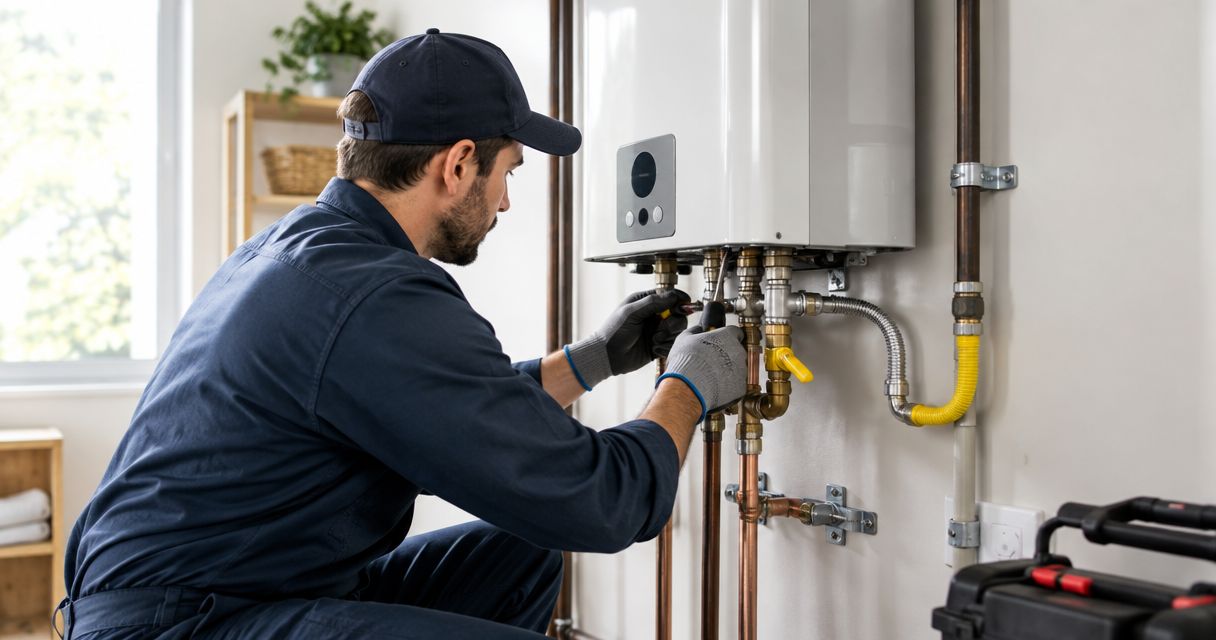
Gas water heater installation time depends on whether you are replacing an existing tank in place or changing the location, venting, gas supply, or water connections. Get a job-specific completion estimate rather than treating a standard replacement estimate as a promise for every installation. The appointment also includes draining, removal, connection checks, and startup; finishing the connections does not mean hot water is immediately ready.
- How long does it take to install a gas water heater? The scope, access, venting, and startup determine the schedule.
- GSHA Services provides water heater installation services for homeowners and businesses in Woodstock and Lake Bluff.
- Separate the installation appointment, hot-water interruption, and tank recovery when planning your day.
- Ask whether the estimate includes removal, required corrections, startup checks, and inspection coordination.
How long does it take to install a gas water heater?
A replacement using suitable existing connections has a narrower scope than an installation requiring new piping, venting, or a different location. Your installer needs to evaluate those conditions before giving you a useful duration. A photo of the tank alone does not establish the full job.
For a 2026 installation, ask for separate estimates for the work appointment and the period without usable hot water. GSHA Services provides water heater installation and repair services to homeowners and businesses in Woodstock, Lake Bluff, and surrounding areas.
| Installation scope | Best fit | What simplifies the work | What adds work |
|---|---|---|---|
| In-place tank replacement | Replacing a tank without changing its location | Suitable existing gas, water, and vent connections | Correcting connections that cannot be reused |
| Tank replacement with alterations | Replacing equipment where the existing setup needs changes | Keeping the equipment in an accessible location | Piping, venting, drainage, or electrical alterations |
| Relocation or tankless conversion | A planned change to the water-heating system | Defining the full scope before installation | New connection routes, mounting requirements, and system-specific checks |
The useful estimate describes the work included, not just the time on site. A shorter appointment that excludes necessary corrections is not equivalent to a complete installation.
Why this matters
You need to know when showers, laundry, dishwashing, and business operations can resume. An arrival window does not answer that question. Neither does the moment the old tank leaves the building.
When planning in 2026, distinguish the appointment date, the water shutoff, and the return of usable hot water. Ask whether cold water elsewhere in the building will remain available during the work; that depends on the isolation valves and piping arrangement.
For a business, identify activities that depend on hot water before agreeing to the schedule. Tell the installer about occupied work areas, restricted access, and operating hours so those conditions become part of the plan.
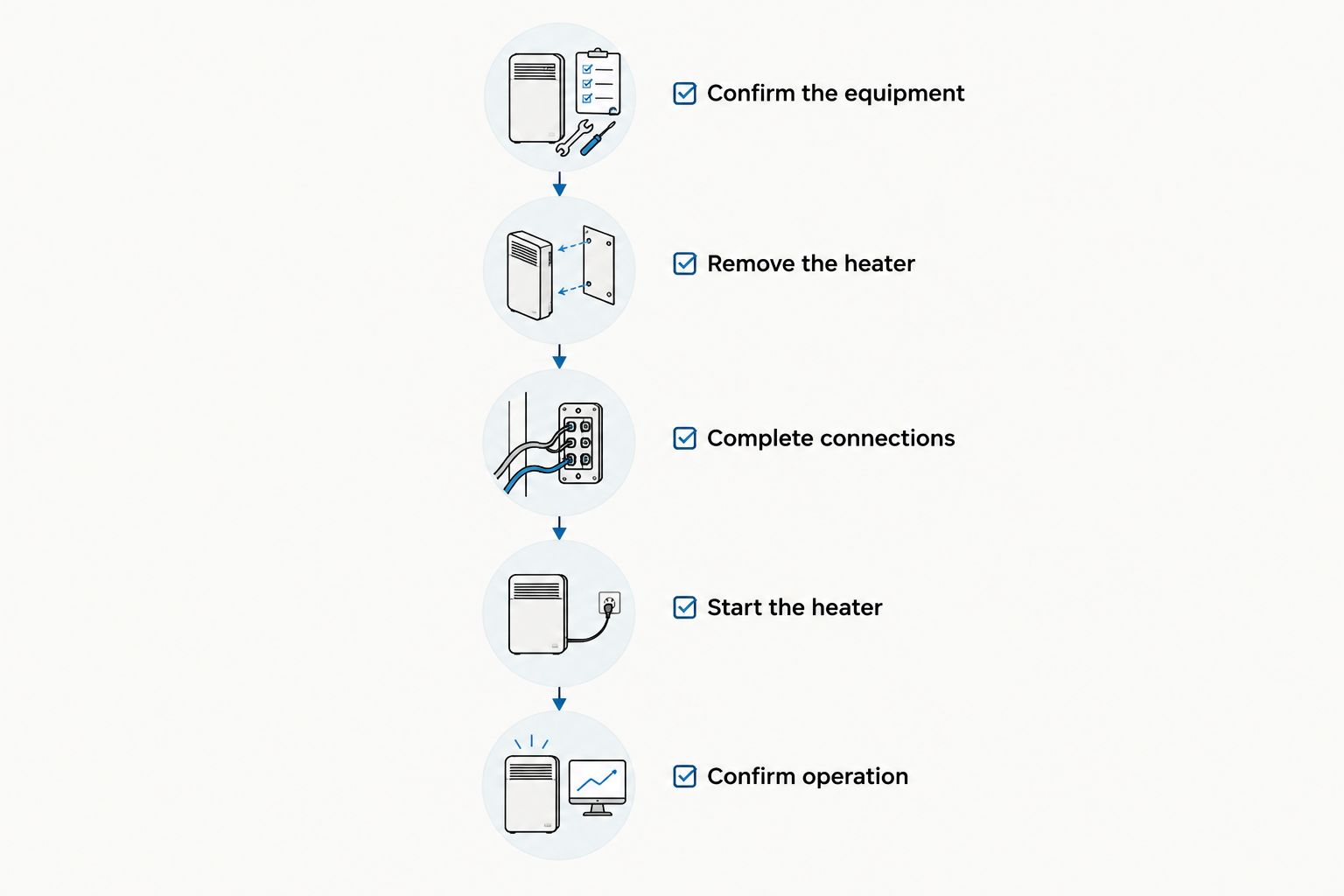
What happens during gas water heater installation?
The following sequence explains the work, not instructions for performing gas connections yourself. The installer must follow the equipment instructions and applicable local requirements.
1. Confirm the equipment and site conditions
The installer checks that the replacement equipment suits the installation location and planned connections. Relevant conditions include access, venting, combustion air, gas supply, water piping, and the route for removing the old tank.
Confirm the scope before the existing heater is disconnected. Discovering that the replacement needs different venting after removal creates a different job from the one you expected.
2. Isolate, drain, and remove the existing heater
The existing heater must be safely taken out of service before removal. Draining and moving a tank are separate tasks from installing its replacement, and both belong in the appointment estimate.
Stairs, narrow doorways, finished flooring, and limited working room affect the removal process. Tell the installer about these conditions when booking rather than waiting until arrival.
3. Position the replacement and complete connections
The replacement must be positioned with the access and clearances its instructions require. Gas, water, venting, and safety-related connections must suit the equipment and the installation.
Existing connections are not automatically reusable because they served the previous heater. A different connection position or venting requirement changes the work even when the new tank occupies the same general space.
4. Fill, check, and start the heater
For a storage-tank heater, the tank must be filled before firing according to its instructions. The installer checks the completed connections and performs the startup procedure for that equipment.
Do not shorten the appointment by skipping leak checks or operating checks. Gas appliances require attention to fuel connections and combustion exhaust, not just confirmation that the water gets warm.
5. Confirm operation and explain the handover
The handover should cover normal operation, the temperature setting, shutoff locations, and what to do if a problem appears. Ask what documentation you should retain and whether an inspection remains outstanding.
The tank also needs to heat its incoming water. Ask when you can expect usable hot water under your actual starting conditions, rather than assuming it is ready when the installer completes the connections.
In-place gas tank replacement: confirm what stays unchanged
An in-place replacement keeps the heater in its current location. That reduces the scope only when the existing installation is suitable for the replacement equipment.
Ask the installer to identify which water connections, gas connections, and vent components will remain. Also ask what happens if a component cannot be reused after closer inspection.
The advantage is a more limited project when the existing setup is suitable. The limitation is that an apparently similar tank does not establish compatibility. Plan around the confirmed connection requirements, not the appearance of the old and new heaters.
Replacement with alterations: define the extra work
A tank replacement becomes a broader project when piping, venting, or other installation details need correction. Those alterations belong in the written scope and scheduling discussion.
Ask whether the work requires access beyond the heater itself. Opening an enclosed area, changing a pipe route, or coordinating electrical work affects how the appointment is organized.
This approach addresses the installation requirements rather than forcing new equipment into an unsuitable setup. Its drawback is a less predictable schedule until the affected components and access conditions have been assessed.
Relocation or tankless conversion: plan a separate project
Moving a heater changes the route between the equipment and its connections. Converting from a tank to tankless equipment also changes the installation requirements; it is not simply a smaller appliance placed where the tank stood.
The installer must assess the proposed equipment's gas, venting, water, and electrical requirements. Do not assume the existing gas line or vent serves the replacement without that assessment.
The advantage is the ability to plan a different equipment arrangement. The trade-off is additional design and connection work. Request a separate project schedule for a relocation or conversion rather than applying an in-place replacement estimate.
Why gas water heater installation time varies
For your 2026 installation, these are the practical conditions to discuss before booking:
- Removal access: Stairs, doorways, and working space affect how the old heater comes out and the replacement goes in.
- Water connections: Connection positions, isolation valves, and piping condition determine whether reconnection also involves alterations.
- Gas supply: The equipment's fuel requirements and existing supply arrangement determine what the installer must verify or change.
- Venting and combustion air: The replacement must use an appropriate exhaust arrangement and receive the air its installation requires.
- Electrical and drainage needs: Requirements differ by equipment; confirm any power, condensate, or other drainage work in advance.
- Permits and inspection: Local requirements affect project coordination. Confirm the process with the installer and the authority responsible for your address.
Ask which conditions are already confirmed and which still require an on-site assessment. That distinction explains whether the duration is a working estimate or a schedule based on a defined scope.
How long will you be without hot water?
The hot-water interruption covers the work that takes the existing heater out of service and the replacement's startup and heating period. It is different from the installer's arrival window.
Ask when the installer expects to isolate the water supply and when you can resume normal hot-water use. Initial heating depends on the equipment, incoming water temperature, and temperature setting, so use guidance for the installed model rather than a generic recovery promise.
Avoid planning your first shower around the scheduled departure time alone. Confirm that startup is complete and ask whether the tank has reached its operating temperature.
Does a permit or inspection delay hot-water use?
Permit and inspection requirements depend on the jurisdiction and project. Your installer should explain the requirements for your address, who handles the paperwork, and any conditions affecting operation.
For a 2026 replacement, confirm this before the appointment. Do not assume another town's process applies to your property, or that a completed physical installation resolves every inspection requirement.
Can you make the installation appointment shorter?
You can reduce avoidable access problems by clearing the route and sharing accurate information before the visit. You cannot safely replace required installation or startup checks with a faster handover.
Send photographs of the full installation area, equipment label, visible connections, and access route if requested. Keep household storage away from the work area, secure pets, and identify any building access restrictions.
Do not disconnect gas piping, remove venting, or attempt to prepare fuel connections yourself. Preparation means providing access and information, not starting the installation.
What should you confirm before booking?
Use a short written checklist so the appointment and the expected result match:
- Is the estimate for an in-place replacement, alterations, or a conversion?
- Does the scope include removal of the old heater?
- Which existing connections are expected to remain?
- What conditions would change the planned duration?
- What is the expected hot-water interruption?
- Who handles required permits and inspection coordination?
- What startup checks and handover information are included?
GSHA Services is a local water heater installation option for homeowners and businesses in Woodstock and Lake Bluff. Use the contact page to discuss the installation location, existing equipment, and work you need assessed.
FAQ
How long does it take to install a gas water heater in 2026?
Installation time depends on the confirmed scope, including removal, connection work, startup, and any required alterations. Ask for a job-specific appointment estimate and a separate estimate for the hot-water interruption.
Is replacing a gas water heater quicker than relocating one?
An in-place replacement has fewer routing tasks when the existing connections are suitable. Relocation adds work to connect the heater at its new position, so it needs a separate assessment.
Will I have hot water as soon as installation is finished?
Not necessarily; a storage tank must heat its incoming water after filling and startup. Ask the installer when the installed equipment will be ready for normal use.
Does the old water heater need to be drained before removal?
A storage-tank heater must be safely drained as part of taking it out of service and preparing it for removal. Leave that work to the installer rather than attempting to shorten the appointment yourself.
Can the installer reuse my existing gas line and vent?
Existing components can remain only when they are suitable for the replacement equipment and installation requirements. Their use with the old heater does not establish compatibility with the new one.
Do I need to be home during water heater installation?
Confirm access and attendance requirements with your installer before booking. Arrange for an authorized person to discuss scope changes and receive operating instructions if you will not be present.
Who can assess a water heater replacement in Woodstock or Lake Bluff?
GSHA Services provides water heater installation and repair services to homeowners and businesses in Woodstock, Lake Bluff, and surrounding areas. Share the existing setup and access conditions when discussing the work.
One last thing
For a 2026 water heater replacement, ask this before accepting a schedule: What would change the completion estimate after the old heater is disconnected? The answer identifies unresolved connection, access, or installation questions while there is still time to address them.
A clear scope is more useful than a short duration with unexplained exclusions. Confirm removal, alterations, startup, and the return of usable hot water as separate parts of the plan.
Related guides
- Gas water heater installation costs
- Tankless versus tank water heater installation costs
- Gas water heater installation for restaurants


