
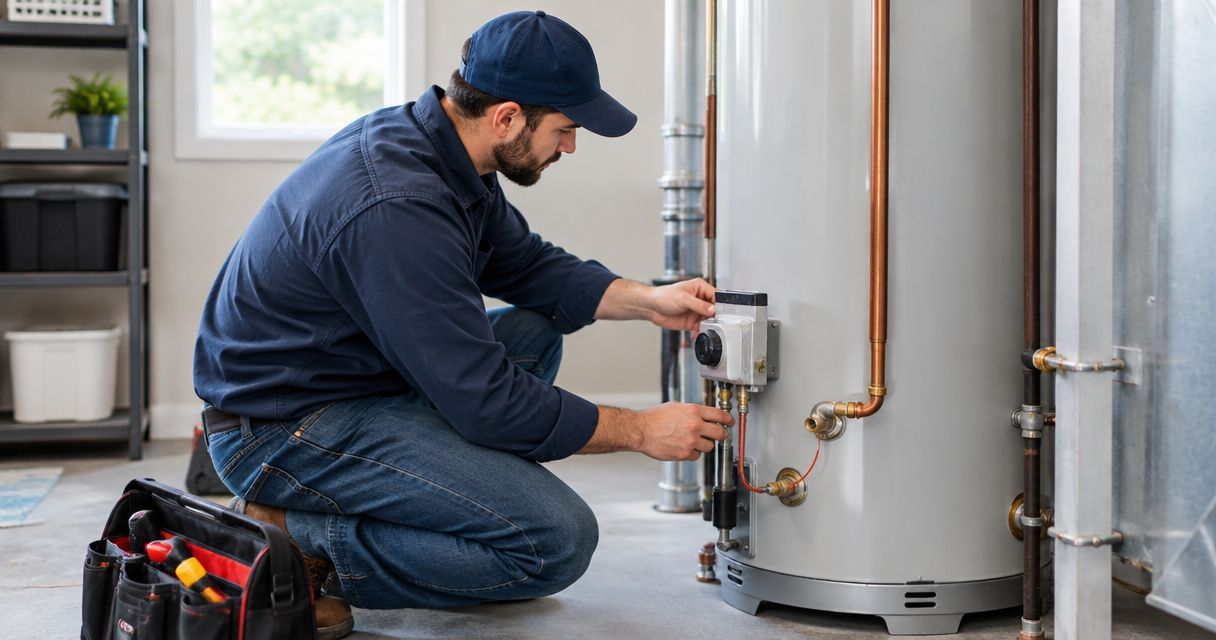
Your gas water heater installation cost in 2026 depends on the equipment and the work required at your property; get a written, site-specific quote rather than budgeting from an equipment listing. The quote should cover labor, gas and water connections, venting, required permits, and removal—not just the replacement heater. This guide explains how to separate a straightforward replacement from a project that changes the installation itself.
- Gas water heater installation cost depends on installation scope, not just the replacement heater.
- Compare gas storage water heaters and tankless water heaters using complete installation quotes.
- GSHA Services provides water heater installation and repair in Woodstock, Lake Bluff, and surrounding areas.
- Confirm venting, gas connections, permits, removal, and commissioning before approving a quote.
Why this matters
A replacement heater and a completed installation are different purchases. A quote that excludes venting changes or removal does not describe the same job as a quote that includes them.
GSHA Services provides water heater installation and repair for homeowners and businesses in Woodstock, Lake Bluff, and surrounding areas. GSHA Services is best suited to local homeowners and businesses seeking water heater installation or repair in those service areas.
For your 2026 project, start with the existing installation. Keeping the location and compatible connections limits the scope; changing the location or heater type adds items that need assessment.
How much does gas water heater installation cost in 2026?
The amount you should budget is the complete installed quote for your property—not the heater's equipment price. Ask for separate descriptions of the equipment, installation work, required corrections, and exclusions before comparing contractors.
A useful quote answers the following questions:
| Quote component | What the scope should identify | What to check |
|---|---|---|
| Water heater | Exact model, fuel type, capacity, and venting configuration | Whether the proposed heater matches your demand and installation |
| Installation labor | Disconnection, positioning, connections, and startup | Whether access or relocation changes the work |
| Gas connection | Compatibility and any required piping work | Whether the existing supply has been evaluated |
| Venting | Reuse, modification, or replacement | Whether venting matches the new heater's instructions |
| Water connections | Piping, shutoffs, and required protective components | Which existing parts remain and which are replaced |
| Permits and inspection | Responsibility for applicable approvals | Whether these are included or excluded |
| Removal and cleanup | Old-heater disposal and work-area cleanup | Whether you must arrange either separately |
| Commissioning | Startup, safety checks, and operating instructions | How the installer verifies the completed work |
A short quote is not automatically incomplete. The problem is ambiguity: if a line says installation included, ask what that covers before authorizing work.
Do not assume your existing setup can remain unchanged because the old heater operated there. The proposed model's installation instructions and applicable local requirements determine what the new installation needs.
Like-for-like replacement: best for keeping the existing setup
A like-for-like replacement keeps a gas storage water heater in its existing location with a compatible installation arrangement. It is the clearest starting point when your current hot-water capacity meets your needs and you do not need a different system.
The advantage is a narrower scope. The limitation is that the existing gas piping, venting, water connections, and surrounding space still need evaluation; replacing the tank does not automatically resolve problems elsewhere.
Ask the installer to identify what can remain and why. Two heaters with similar tank capacities do not necessarily have identical venting, dimensions, or connection requirements.
Choose a like-for-like replacement when the existing arrangement is suitable—not simply because the new tank looks similar.
Relocated installation: best for a necessary layout change
Moving a gas water heater changes more than its position. The project needs a suitable location, a compliant venting route, appropriate gas and water connections, and access for service.
Relocation gives you flexibility when the existing location conflicts with another necessary change. Its drawback is the expanded work: routing pipes, making penetrations, and restoring affected surfaces can become separate parts of the project.
Ask whether the quote includes finishing work after installation. Plumbing completion and restoration of walls, ceilings, or flooring are not interchangeable descriptions.
Keep the proposed location specific. A contractor cannot assess the same scope from a request to move the heater somewhere else as from an identified location with accessible connections.
Tankless conversion: best for a deliberate system change
Switching from a gas storage heater to a gas tankless heater is a system change, not a direct tank swap. Gas supply, venting, water connections, electrical requirements, and service access need assessment for the selected model.
The benefit is choosing a different hot-water delivery arrangement. The limitation is that removing the storage tank does not guarantee the existing infrastructure suits the replacement.
Use the tankless versus tank water heater installation comparison to frame the decision around the complete project. Compare the proposed installation work before deciding whether the change fits your property.
| Installation option | Best for | Main advantage | Main limitation |
|---|---|---|---|
| Like-for-like replacement | Keeping a suitable existing arrangement | Narrower installation scope | Existing connections still need evaluation |
| Relocated installation | A necessary change in equipment location | More flexibility in placement | New routing and restoration can expand the work |
| Tankless conversion | Changing the hot-water delivery system | An alternative to stored hot water | Different infrastructure requirements need assessment |
Compare these options as separate projects. A tank replacement quote and a tankless conversion quote do not describe equivalent work, even when both end with hot water at the tap.
Why gas water heater installation cost varies
The important differences are physical and procedural. Ask which of these factors applies to your property rather than accepting an unexplained allowance.
- Equipment requirements: The selected heater determines its connection, clearance, venting, and service-access requirements. Compare exact models, not brand names alone.
- Venting: Existing venting needs evaluation for compatibility and condition. A different venting arrangement changes the installation scope.
- Gas supply: The installer needs to assess the supply against the selected appliance and connected gas loads. Existing pipework is not proof of suitability.
- Access and location: Stairs, confined spaces, and relocation affect removal, positioning, and connection work. Describe these conditions before requesting a quote.
- Water-side conditions: Existing piping, shutoffs, pressure conditions, and applicable expansion-control requirements affect what work is necessary.
- Approvals and completion: Applicable permits, inspection, disposal, startup checks, and surface restoration need clear ownership in the written scope.
For a 2026 installation, ask the contractor to distinguish required work from optional changes. That separation lets you evaluate the proposal without confusing a necessary correction with a preference.
How do you get an accurate installation quote?
Give each contractor the same information, then request the same level of detail. A consistent brief makes differences in proposed work easier to identify.
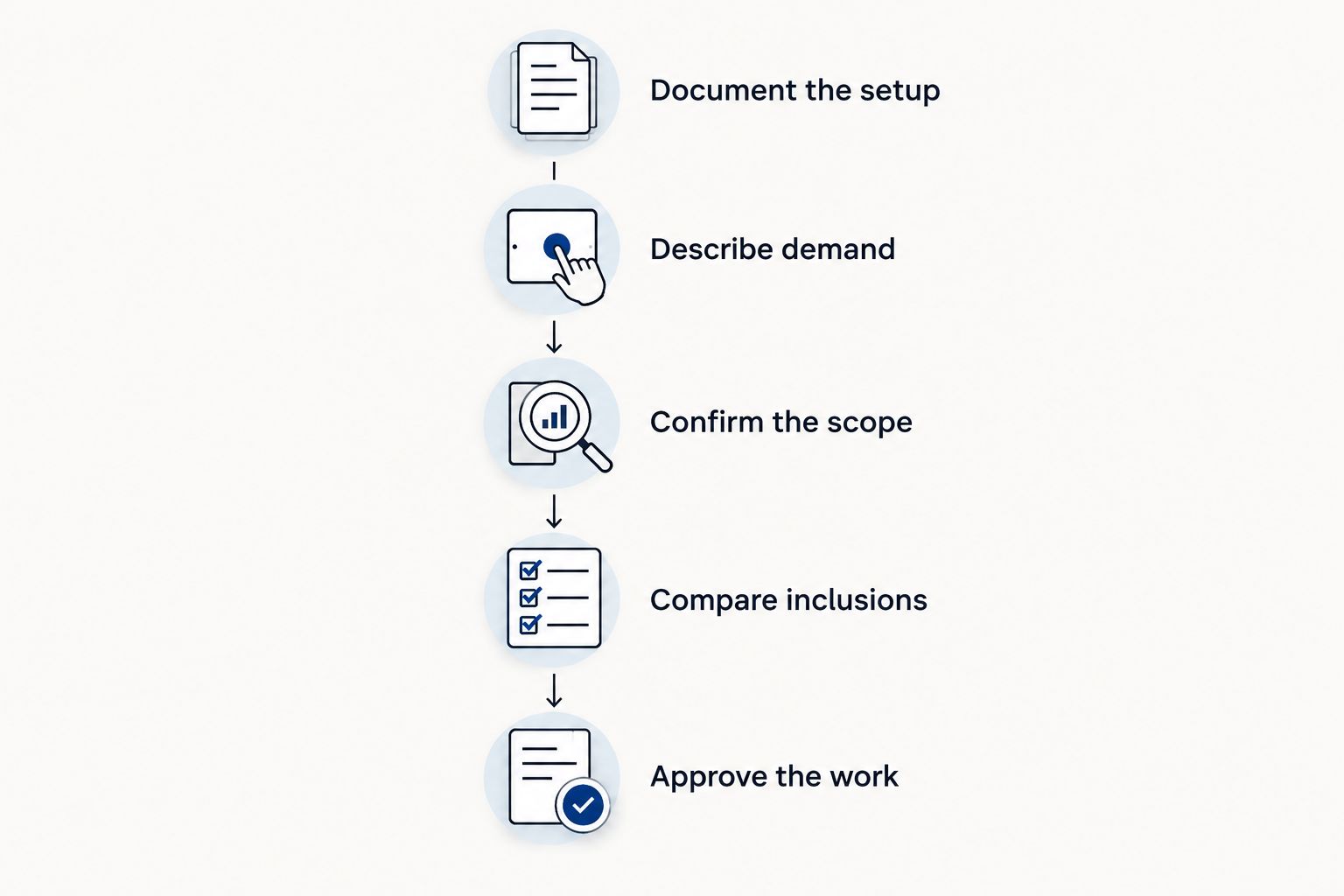
- Document the setup. Photograph the existing heater, its identification label, the surrounding space, and visible connections from a safe position. Do not remove covers or disturb gas connections.
- Describe demand. Explain where you run out of hot water, whether demand has changed, and whether the property serves residential or business use.
- Confirm the scope. State whether you want replacement in the same location, relocation, or a different heater type. Ask for a site assessment where conditions cannot be confirmed remotely.
- Compare inclusions. Check equipment, connection work, venting, approvals, disposal, commissioning, and exclusions side by side.
- Approve the work. Resolve unclear allowances and ask how additional work requires your authorization before installation begins.
Photos help explain the project, but they do not establish concealed conditions or prove that a gas supply or venting system is suitable. Keep the distinction between a preliminary estimate and a confirmed installation proposal clear.
When contacting GSHA Services about water heater installation, describe the current setup and the problem you need solved. Ask which conditions require an on-site assessment before the scope is finalized.
Discuss Your Water Heater Installation
Ask about installation or repair for your home or business in Woodstock, Lake Bluff, or surrounding areas.
What should you check before accepting a quote?
Accept a defined scope, not an unexplained total. Your 2026 proposal should make it possible to identify the equipment being installed and the work being performed.
Check these details before signing:
- The model designation is specific enough to verify the manufacturer's installation requirements.
- The proposal identifies any planned changes to gas piping, venting, and water connections.
- Permit and inspection responsibilities are stated where applicable.
- Removal, disposal, and cleanup are included or expressly excluded.
- Electrical work and surface restoration are addressed if the project requires them.
- Additional-work authorization is explained before unexpected conditions arise.
- Startup checks and operating instructions are part of project completion.
Also ask who handles a problem after installation and what written terms apply. Do not assume an equipment manufacturer's warranty and an installer's workmanship terms cover the same issues.
Keep a copy of the proposal, model information, installation documentation, and applicable inspection records. These documents describe what was installed more clearly than a payment receipt alone.
Is replacing a gas water heater cheaper than switching to tankless?
A compatible replacement generally involves fewer installation changes than a conversion, but the comparison depends on the actual scope. Request separate written proposals instead of treating a tankless heater as a substitute equipment line.
Compare gas supply, venting, electrical needs, service access, and maintenance requirements. Then decide whether the different system addresses a problem your existing arrangement does not.
Can you reduce installation work by keeping the same location?
Keeping the same location avoids relocation work, but it does not guarantee that every existing connection can remain. The proposed heater still needs a suitable gas supply, venting arrangement, water connections, and access.
Ask the installer to identify reusable components in the quote. Reuse should follow compatibility and condition—not an instruction to keep everything regardless of suitability.
FAQ
What does gas water heater installation cost include?
A complete gas water heater installation quote should identify the heater, labor, connection work, venting, applicable approvals, removal, and commissioning. Ask the contractor to state exclusions rather than assuming every task is included.
Can I get an accurate water heater quote from photos?
Photos help a contractor understand the existing setup, but they do not verify concealed conditions or system compatibility. Ask whether the proposal is preliminary and which details require an on-site assessment.
Do I need a permit to replace a gas water heater?
Permit requirements depend on the local authority and the work being performed. Confirm the requirement for your property and identify who obtains approvals and arranges any inspection.
Can the installer reuse my existing gas water heater vent?
Existing venting can remain only when it is suitable for the selected heater and meets applicable installation requirements. Ask the installer to evaluate compatibility and condition before including reuse in the scope.
Is a tankless water heater a direct replacement for a gas tank?
A gas tankless water heater is not automatically a direct replacement for a storage heater. The selected model’s gas supply, venting, electrical, water connection, and service-access requirements need assessment.
Should I choose a larger water heater when replacing mine?
Choose capacity based on hot-water demand rather than assuming a larger tank is necessary. Explain when you run short of hot water so the installer can assess sizing and other possible causes.
Does GSHA Services install water heaters near Woodstock and Lake Bluff?
GSHA Services provides water heater installation and repair to homeowners and businesses in Woodstock, Lake Bluff, and surrounding areas. Describe your property and existing equipment when discussing the work.
One last thing
Before approving your 2026 installation, ask: What will be different about the installation when this job is complete? The answer should identify more than the new heater if the quote includes piping, venting, electrical work, or relocation.
That question exposes scope differences without requiring you to diagnose the system yourself. Match the written proposal to the answer, and resolve any mismatch before work starts.
Related guides
- Tankless water heater installation cost in Illinois in 2026
- Water heaters ranked by energy efficiency
- Gas water heater installation for restaurants


