
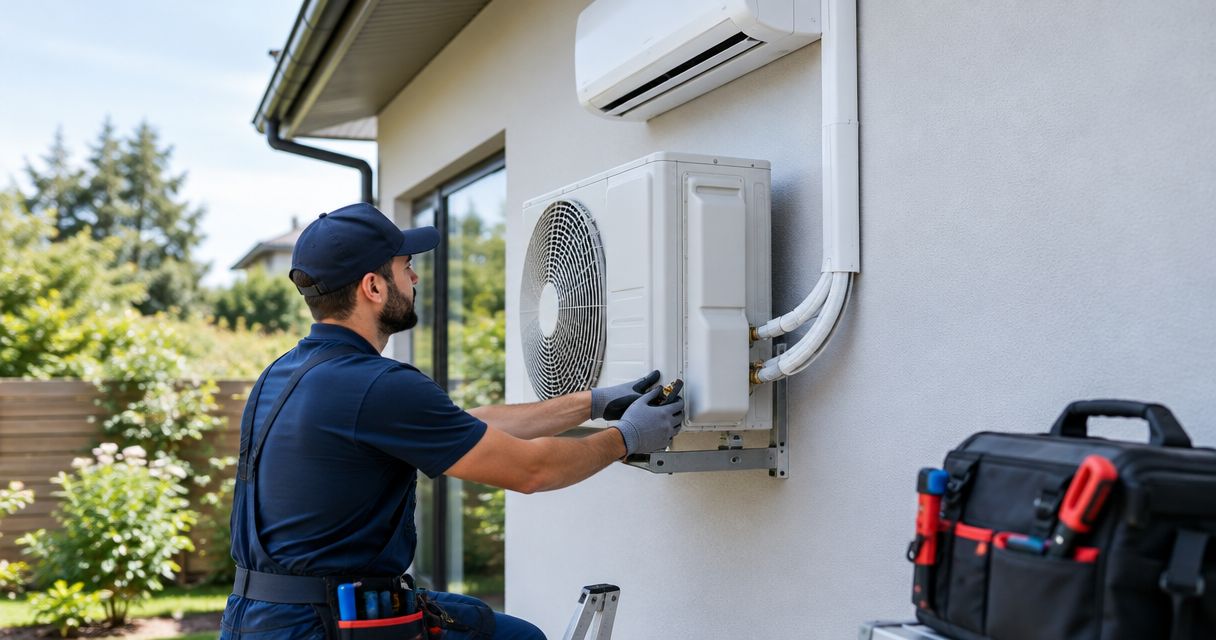
Ductless AC installation takes as long as the approved equipment layout, electrical work, refrigerant piping and startup checks require; a reliable completion estimate comes from a site assessment, not the equipment name alone. For your 2026 project, separate the time technicians spend installing the system from the calendar time needed for scheduling, permits and inspections.
- How long does ductless AC installation take? Zone count, electrical readiness, piping routes and startup requirements determine the schedule.
- A single-zone mini-split has fewer indoor connections than a multi-zone installation, but site conditions still control timing.
- GSHA Services provides HVAC and electrical installation and repair in Woodstock, Lake Bluff and surrounding areas.
- Confirm whether your installation schedule includes electrical work, commissioning, inspections and cleanup before booking.
How long does ductless AC installation take?
The useful estimate is a job-specific schedule that includes installation and commissioning, not just mounting the equipment. Ask your contractor to identify what happens before installation day, what happens on site and what remains afterward.
A ductless installation generally follows this sequence:
- Site assessment: Confirm room requirements, indoor-unit locations, outdoor-unit placement, electrical supply and piping routes.
- Site preparation: Protect work areas, establish access and prepare mounting locations.
- Equipment mounting: Secure the indoor and outdoor equipment using appropriate supports.
- System connections: Install refrigerant piping, condensate drainage, power and control wiring according to the equipment instructions.
- Startup checks: Complete the required leak checks, evacuation, electrical checks and operating tests.
- Owner handoff: Explain operation, filter access, maintenance requirements and any remaining inspection steps.
For local HVAC and electrical installation needs, GSHA Services serves homeowners and businesses in Woodstock, Lake Bluff and surrounding areas.
Why this matters
An installation appointment and a finished project are not always the same milestone. Equipment can be mounted while electrical work, testing or an inspection remains unfinished.
When comparing 2026 proposals, ask each contractor to define completion the same way. Otherwise, a shorter schedule can simply describe a smaller scope rather than a faster installation.
Keep these milestones separate:
- Installation appointment: When technicians arrive and perform the scheduled work.
- Operational handoff: When the connected system has completed the required startup checks and you receive operating instructions.
- Project closeout: When applicable inspection requirements and remaining contract items are complete.
That distinction helps you plan access, work-from-home arrangements and any temporary cooling needs without treating an appointment as a guaranteed finish date.
Single-zone installation: fewer indoor connections
A single-zone ductless AC system connects an indoor unit with an outdoor unit. It suits a project focused on a specific room or area, provided the equipment is selected for that space's cooling requirements.
The scheduling advantage is a narrower installation scope: fewer indoor mounting locations, drain routes and refrigerant connections than a multi-zone project. The limitation is that a single zone does not automatically address cooling needs elsewhere in the building.
A straightforward layout still needs a suitable electrical supply, a workable condensate drain and an approved outdoor location. Do not treat “single-zone” as a promise of a particular installation duration.
If the planned room is far from the outdoor equipment, access is restricted or the electrical supply needs changes, those tasks belong in the estimate before you accept the schedule.
Multi-zone installation: more routes and startup checks
A multi-zone system serves multiple indoor units from compatible outdoor equipment. It suits projects that need cooling in separate rooms or areas, subject to the system design and equipment limitations.
The benefit is room-by-room coverage within the selected system arrangement. The trade-off is additional installation work: each indoor location needs mounting, piping, drainage and the connections specified by the manufacturer.
| Installation scope | Best for | Scheduling advantage | Scheduling limitation |
|---|---|---|---|
| Single-zone | A specific room or defined area | Fewer indoor locations to connect and check | Difficult access or electrical work can still expand the scope |
| Multi-zone | Separate rooms needing individual indoor units | Coordinates multiple rooms within one system design | More routes, connections and indoor units to commission |
For a 2026 multi-zone proposal, request a room-by-room work plan. Confirm whether every room must be accessible throughout the appointment or whether the crew will work through designated areas in sequence.
Do not select the zone count solely to shorten installation. The system still needs to match the spaces you intend to cool.
Why ductless AC installation time varies
These site conditions determine the work involved. Have the contractor address each one in the proposal rather than leaving it for installation day.
- Zone count: Additional indoor units introduce more mounting locations, piping connections, drain arrangements and operating checks.
- Electrical readiness: The equipment requires an electrical supply that meets its specifications and applicable code. Necessary circuit or panel work changes the project scope.
- Piping route: Distance, elevation changes, wall construction and concealed routing affect how technicians install and support the refrigerant lines.
- Condensate drainage: The drain needs a suitable route. Where gravity drainage is not practical, the design needs another appropriate drainage arrangement.
- Site access: Upper-floor locations, restricted outdoor areas and finished interior surfaces affect equipment handling and access to connection points.
- Permits and inspections: Requirements depend on the jurisdiction and work involved. Confirm responsibilities and scheduling before the installation appointment.
These factors interact. A convenient indoor location is not necessarily the simplest location for drainage, wiring or refrigerant piping.
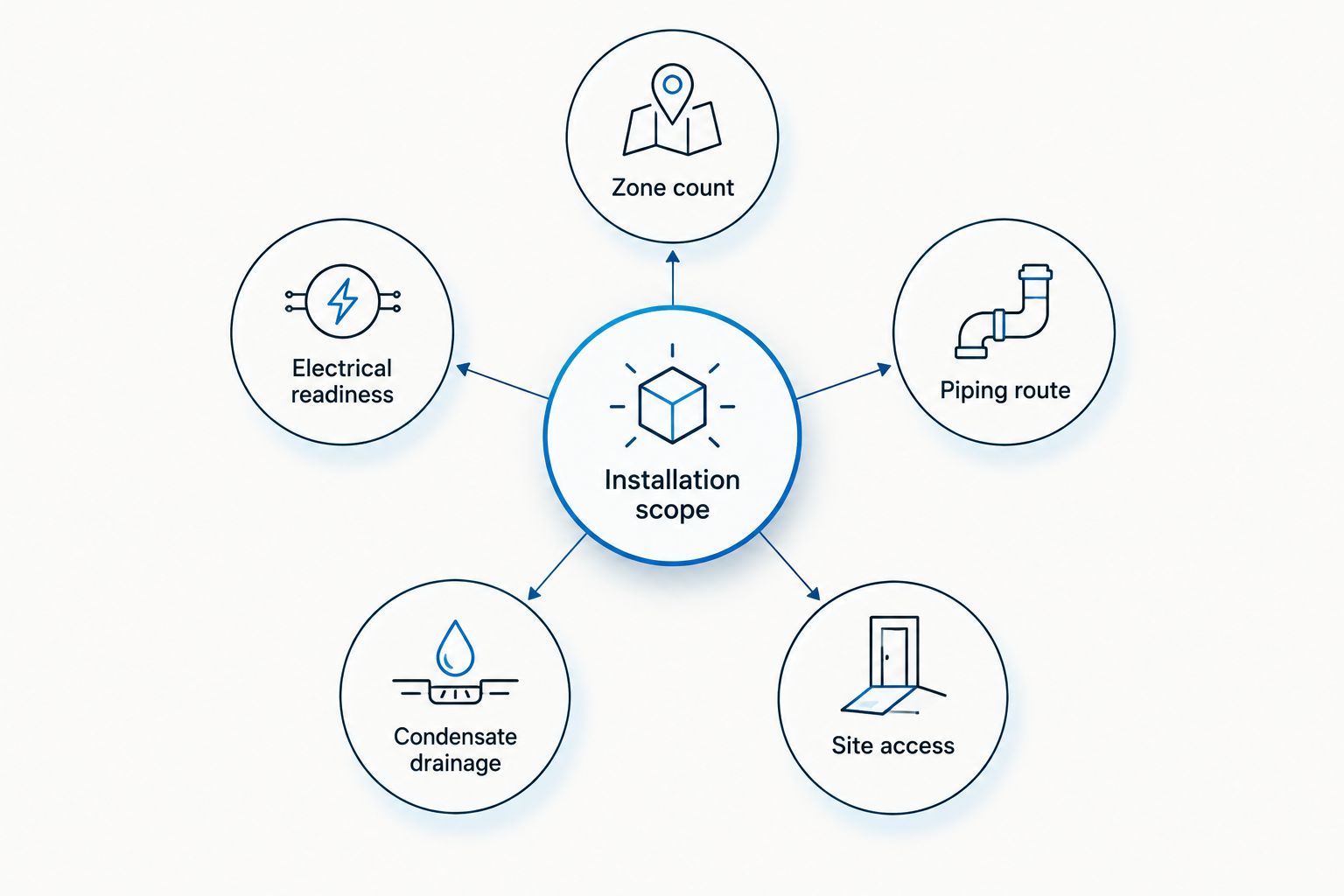
A site assessment should resolve those conflicts before work begins. Choose a workable system layout first; ask for the installation schedule second.
What should the installation schedule include?
Your 2026 installation schedule should identify responsibilities as clearly as dates. Ask who handles the electrical work, permit applications, equipment connections, inspections and any wall repairs included in the contract.
Use this checklist when reviewing the scope:
- Indoor and outdoor equipment locations are agreed upon.
- Refrigerant piping and line-cover routes are identified.
- Condensate discharge locations are established.
- Electrical requirements have been assessed.
- Required access to rooms, utility areas and outdoor workspaces is clear.
- Startup testing and operating instructions are included.
- Cleanup, surface repairs and inspection responsibilities are defined.
A written scope gives you a basis for discussing a schedule change. If a proposed revision introduces a new location, longer route or additional electrical task, ask which completion milestone it affects.
Avoid comparing contractors solely on the promised finish. Compare what each contractor includes in that finish.
Can you stay home during ductless AC installation?
You can plan around occupied spaces, but confirm access and work-area restrictions with the installer. Drilling, equipment handling and electrical work can interrupt normal use of the affected rooms.
Tell the contractor which areas must remain accessible and whether anyone works from home. Keep children and pets away from active work areas, and ask before planning calls or activities beside the installation location.
Clear furniture and stored items from the agreed work route before technicians arrive. Do not remove electrical covers, open equipment or attempt to prepare refrigerant connections yourself.
For rental properties, coordinate entry and tenant communication before booking. A technically workable appointment still needs authorized access to every room and utility area involved.
Will DIY preparation make installation faster?
Limit homeowner preparation to access, information and decisions agreed upon with the contractor. Clearing the work area helps; partially installing equipment without an approved plan can leave the contractor with work to inspect or correct.
The question of DIY ductless mini-split installation involves more than hanging an indoor unit: electrical connections, refrigerant work, drainage and startup procedures all need to match the selected equipment and applicable requirements.
Do not assume every ductless system uses the same connection method. Follow the exact manufacturer's installation instructions, and confirm licensing, permit and refrigerant-handling requirements for the work involved.
Useful preparation includes photographing proposed locations, identifying access restrictions and deciding whether exposed line covers are acceptable. Let the contractor approve any preparatory work that affects mounting, wiring, piping or drainage.
This keeps a scheduling decision from becoming a design change on installation day. It also makes responsibility for the finished installation clearer.
What happens before the installer turns on the AC?
Mounting the equipment is not the final step. The installer needs to complete the connection and startup procedures specified for that system before handing it over.
For conventional field-connected refrigerant systems, the process includes checking for leaks and evacuating the refrigerant circuit as required by the manufacturer. Electrical connections, condensate drainage, controls and system operation also need attention.
Do not ask the crew to skip commissioning to meet a departure time. A system that produces cool air has not, by that fact alone, demonstrated correct drainage or completed every required check.
Before handoff, ask the installer to show you:
- How to select operating modes and adjust the temperature.
- Where the filters are and how to access them safely.
- What maintenance the equipment instructions require.
- What to do if water appears indoors or the controller reports a fault.
- Which inspection or closeout tasks, if any, remain outstanding.
Keep the equipment documentation and installation records together. They are more useful for later service than a remembered description of what happened during the appointment.
When should you request a local site assessment?
Request the assessment before committing to a completion date, particularly when the project involves several rooms, an addition or uncertain electrical capacity. Photos help explain the project, but they do not replace checking the actual routes and connection points.
GSHA Services is best for homeowners and businesses seeking local HVAC and electrical installation and repair services in Woodstock, Lake Bluff and surrounding areas. The relevant advantage is the service scope; it does not establish a standard ductless installation duration or a guaranteed appointment.
For your 2026 ductless AC project, ask GSHA Services to assess the proposed installation and explain the work included. Request a schedule tied to that scope, including any separate electrical or inspection tasks.
Discuss your ductless AC installation
Request a site assessment and clarify the HVAC and electrical work your project requires.
FAQ
Can ductless AC installation be completed in one visit?
One visit is not a reliable promise without a site assessment. Confirm whether the proposed appointment includes electrical work, complete startup testing and any required inspections, or whether those are separate milestones.
Does a multi-zone mini-split take longer to install than a single-zone system?
A multi-zone mini-split adds indoor units, connections and operating checks to the installation scope. Actual completion time still depends on access, piping routes, drainage and electrical readiness.
Do I need an electrical panel upgrade for ductless AC?
A panel upgrade is not automatic for ductless AC. A qualified electrical assessment must determine whether the existing supply, panel capacity and proposed circuit meet the selected equipment’s requirements.
Can I use ductless AC as soon as the indoor unit is mounted?
No, mounting the indoor unit does not make the system ready to use. The installer must finish the required connections and startup procedures before operational handoff.
Do permits affect the ductless AC installation schedule?
Permit and inspection requirements can affect the project calendar. Ask which requirements apply in your jurisdiction, who handles them and whether the quoted completion date includes inspection closeout.
What should I move before ductless AC installation?
Move furniture and stored items out of the agreed work areas and access routes. Confirm the required clearance with the installer, and leave equipment, wiring and refrigerant preparation to the responsible professionals.
What should I ask before booking ductless AC installation?
Ask for a written scope, an installation schedule and a clear definition of completion. Confirm the equipment locations, electrical work, drainage route, commissioning, cleanup and inspection responsibilities.
One last thing
Ask to see the condensate route before approving the indoor-unit location. A location that looks convenient on the wall still needs a practical way to remove the water the system collects during cooling.
That decision belongs before drilling, not after mounting. For a 2026 installation, mark the indoor location, outdoor location and connecting routes together so the schedule reflects a complete plan.
Related guides
- Ductless AC installation for rental units
- Is ductless AC worth it for a single-room home addition?
- How to connect a smart thermostat to a ductless mini-split system


