
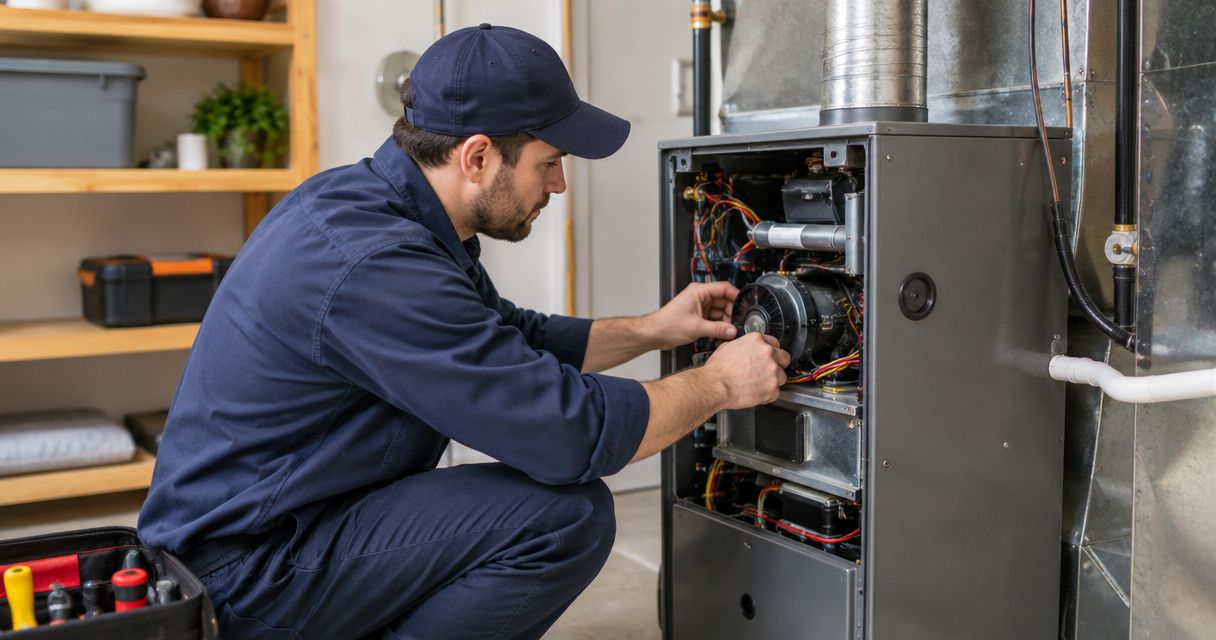
Amana furnace repair cost depends on the failed component, the work needed to correct the underlying problem, and the terms of your service visit; get a written diagnosis and itemized estimate before authorizing repairs. For a 2026 estimate, check whether diagnostic work, labor, parts, and post-repair testing are included, rather than comparing the repair line alone.
- Amana furnace repair needs a diagnosis before a meaningful estimate; a no-heat symptom does not identify the failed part.
- Compare diagnostic work, parts, labor, and testing—not just the repair description.
- Gshaservices provides local HVAC installation and repair for homeowners and businesses around Woodstock and Lake Bluff.
- Treat gas odors and carbon monoxide alarms as emergencies, not routine furnace troubleshooting.
Why this matters
A useful furnace estimate explains what failed and why the proposed repair addresses it. A part name alone does not establish that replacing it will restore reliable heat. Ask for the test findings behind the recommendation.
Gshaservices provides HVAC installation and repair for homeowners and businesses in Woodstock, Lake Bluff, and surrounding Illinois communities. Gshaservices is a local HVAC service option for homeowners and businesses seeking heating repair in those areas. Have your furnace model, symptoms, and service history ready when arranging an assessment.
How much does Amana furnace repair cost?
The amount you authorize should correspond to a specific diagnosis and a clearly defined repair. A furnace that will not heat needs troubleshooting before you can compare proposals meaningfully: thermostat settings, airflow restrictions, ignition problems, and electrical faults require different work.
For your 2026 repair estimate, request the following breakdown. These are items to clarify, not a claim that every contractor bills them separately.
| Estimate item | What to ask | Why it matters |
|---|---|---|
| Diagnostic work | What inspection and testing does the visit include? | Establishes how the fault will be identified |
| Replacement parts | Which component is being replaced, and why? | Connects the proposed work to the diagnosis |
| Labor | Does the stated scope cover removal, installation, and adjustment? | Makes the work included in the proposal clear |
| Related corrections | Does another condition need correction before the repair is complete? | Separates the failed part from contributing problems |
| Final testing | How will normal operation be checked? | Defines what completion means |
| Service terms | What conditions apply to scheduling and repair authorization? | Prevents assumptions about the visit |
Ask whether the diagnostic work remains a separate obligation if you decline the repair. Also ask how additional findings will be handled. Require approval before work expands beyond the written scope.
A verbal description such as furnace repair is too broad for a useful comparison. The estimate should identify the component, the reason for replacing or servicing it, and the operational checks that follow.
What different repair scopes involve
The furnace symptom is your starting point, not your diagnosis. Report what you can observe without opening equipment or attempting internal repairs.
| Repair scope | Best for | What the work addresses | Limitation to confirm |
|---|---|---|---|
| Thermostat or control correction | A verified problem with the heating call or control settings | Whether the furnace receives the correct instruction to heat | Will not correct a separate combustion or airflow fault |
| Airflow correction | A confirmed restriction or blower-related problem | Moving air through the heating system | A filter change alone does not resolve every airflow issue |
| Ignition or flame-sensing repair | A verified failure during ignition or flame confirmation | Starting and maintaining burner operation | Replacing an ignition part does not resolve an unrelated fuel or venting problem |
| Blower or electrical repair | A tested motor, wiring, or control fault | Electrical operation and air circulation | Requires diagnosis; similar symptoms can have different causes |
| Combustion or venting correction | A professionally identified combustion or exhaust problem | Safe fuel burning and exhaust handling | Not a homeowner repair task |
These categories explain scope, not a recommended parts list. Do not authorize several components simply because each could cause the symptom. Ask which test supports each replacement.
Ignition trouble: confirm the failure before replacing parts
If the furnace starts a heating sequence but never delivers heat, describe what happens before it stops. Tell the technician whether you hear startup activity, whether the blower runs, and whether the problem repeats.
Ignition troubleshooting involves more than identifying a part associated with starting the furnace. Fuel delivery, control signals, flame confirmation, and safety circuits affect operation. Leave those checks to a qualified technician.
Airflow trouble: distinguish a restriction from a component fault
Weak airflow does not automatically mean the blower motor needs replacement. Check that supply registers and return grilles are not blocked by furniture or stored items, and follow the equipment instructions for filter inspection.
A technician should establish whether the restriction, blower operation, or another system condition explains the problem. Ask what will be checked after the correction, especially if the furnace has been shutting down repeatedly.
Why Amana furnace repair estimates vary
An estimate changes with the work the furnace actually needs. Use these factors to question the scope rather than assuming every no-heat call requires the same repair.
- Confirmed fault: A control-setting correction and a failed motor involve different tasks. Ask for the evidence identifying the fault.
- Exact equipment: The model and serial information help identify the correct equipment documentation and replacement component.
- Extent of damage: A single failed component and several confirmed faults require different repair scopes. Keep each finding separate in the estimate.
- Underlying conditions: Restricted airflow, electrical problems, or venting concerns need their own explanation when they contribute to the failure.
- Service timing: Ask about the terms of a scheduled appointment versus an urgent request before booking.
- Coverage terms: Verify whether any applicable manufacturer or service coverage addresses the specific component and work being proposed.
For a 2026 comparison, use current written proposals with matching scopes. An older invoice from another property does not establish what your furnace needs, even if both systems carry the Amana name.
What should you do before requesting service?
Collect observations, not guesses about failed parts. A clear description gives the technician a better starting point and helps you evaluate whether the diagnosis explains the original complaint.
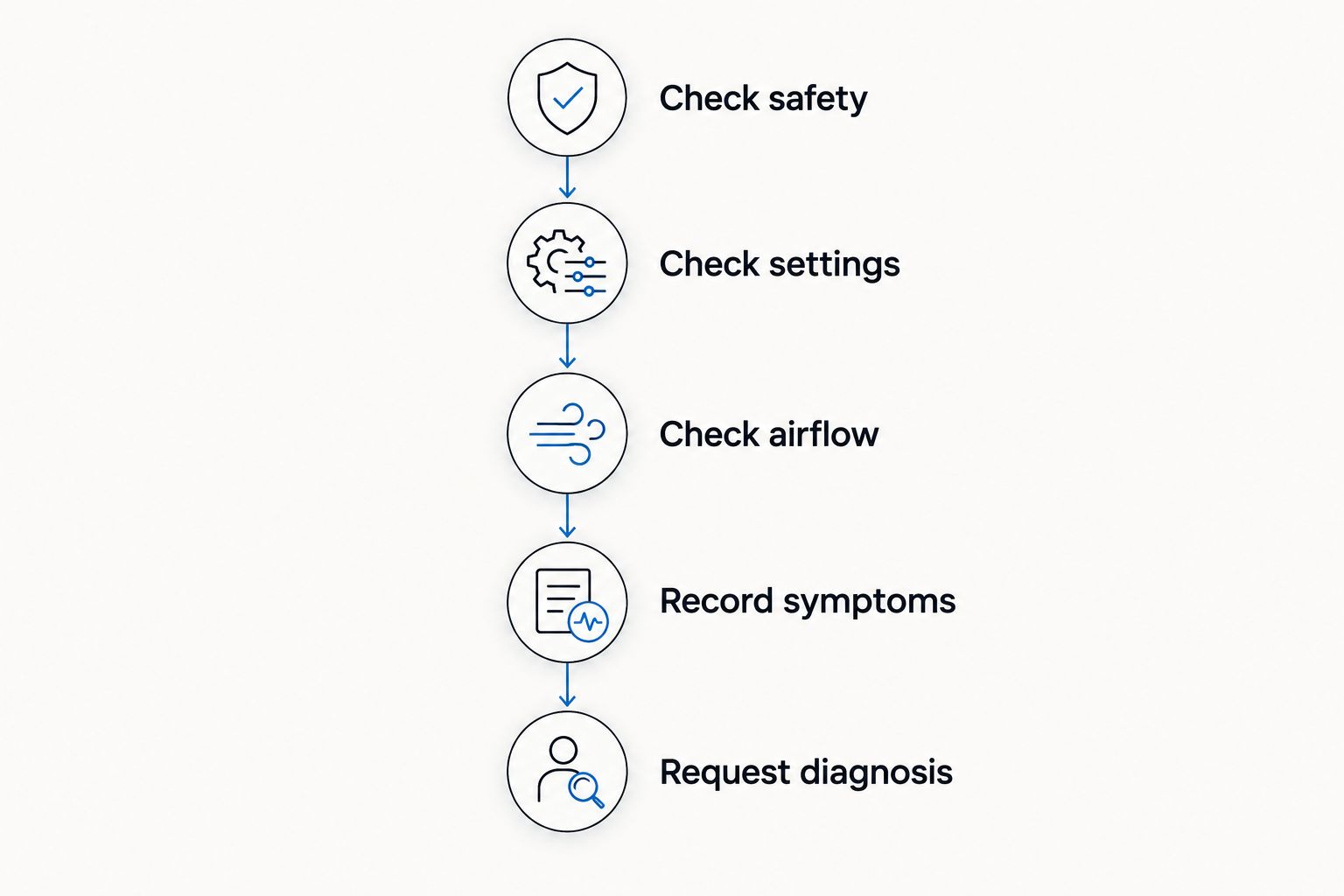
- Check safety. If you smell gas, leave the building without operating switches or attempting a restart. Contact the gas utility or emergency services from a safe location. If a carbon monoxide alarm sounds, get everyone outside and contact emergency services.
- Check settings. Confirm that the thermostat is set to heat and that its temperature setting calls for heating. Follow the thermostat instructions rather than changing wiring.
- Check airflow. Look for blocked supply registers or return grilles. Inspect the filter only as directed by the equipment instructions; do not run the furnace without its required filter.
- Record symptoms. Note whether the furnace stays silent, starts and stops, runs the blower without heat, or fails intermittently. Record any visible diagnostic indication without removing protective covers.
- Request diagnosis. Share the model information and observations, then ask for a written repair scope before approving work.
Do not repeatedly reset a furnace that keeps shutting down. A reset does not explain the fault, and repeated attempts are not a substitute for diagnosis.
What should a written repair recommendation include?
A repair recommendation should connect the reported symptom to a finding, then connect that finding to the proposed work. Ask the technician to distinguish confirmed failures from optional maintenance or unrelated improvements.
Use this checklist before approving the repair:
- The furnace identification matches your equipment.
- The diagnosis explains the symptom you reported.
- Each proposed component has a stated reason for replacement.
- The scope identifies related corrections, not just the failed part.
- The proposal explains how successful operation will be verified.
- Any repair coverage is documented rather than assumed.
Keep the completed service record with your equipment documents. If the same symptom returns, the previous diagnosis and work performed give the next technician specific information to review.
Should you repair or replace an Amana furnace?
Compare a defined repair with a defined replacement—not a confirmed repair against a vague promise of better performance. A replacement decision should account for the furnace's condition, repair history, safety findings, and suitability for the building.
| Option | Best for | Advantage | Limitation |
|---|---|---|---|
| Repair the existing furnace | An isolated, confirmed fault in equipment otherwise suitable for continued use | Addresses the specific failure without replacing the entire system | Does not renew unrelated aging components |
| Replace the furnace | Equipment with documented problems that make continued repair unsuitable | Replaces the heating equipment rather than addressing one component | Requires a separate installation scope and equipment selection |
| Request further diagnosis | An unclear finding or a recommendation that does not explain the symptom | Gives you a clearer basis for authorization | Does not itself restore heat |
Do not use the furnace's age as the only decision rule. Ask what the technician found, what remains serviceable, and what limitations would remain after repair. If replacement is recommended, request the reason in writing.
For a 2026 replacement proposal, have the contractor explain equipment sizing, compatibility with the existing system, and installation requirements. Those questions belong in the replacement assessment, not as assumptions attached to a repair visit.
Can I keep running my Amana furnace until service?
Continued operation depends on the symptom and safety findings, not whether the furnace still produces some heat. Stop troubleshooting and leave the building for a gas odor or carbon monoxide alarm; do not wait for a routine appointment.
Report repeated shutdowns, unusual operation, or electrical concerns when scheduling service. For a workplace heating problem, the emergency furnace repair guide for small businesses addresses the commercial service context.
Does a furnace warranty cover the repair?
Coverage depends on the terms applicable to your exact equipment and the diagnosed failure. Have the model, serial number, and installation documents ready, and ask the service provider to verify eligibility before treating the repair as covered.
Ask separately about the component, diagnostic work, labor, and related corrections. Do not assume that coverage of a part settles every item in the service proposal.
Who should I contact for a local heating assessment?
Gshaservices provides HVAC installation and repair in Woodstock, Lake Bluff, and surrounding areas. Explain that you have an Amana furnace, describe the symptoms, and confirm the service request when arranging the visit.
For your 2026 appointment, prepare the equipment information and any previous repair paperwork. Ask for diagnosis first and authorization before additional work.
Request a furnace repair assessment
Share your furnace model, symptoms, and service location when requesting an appointment.
FAQ
How do I get an accurate Amana furnace repair estimate?
An accurate Amana furnace repair estimate starts with diagnosis of the actual fault. Request a written scope covering diagnostic work, parts, labor, related corrections, and final testing.
Why is my Amana furnace running but not heating?
A running furnace without heat needs diagnosis; blower operation alone does not identify the fault. Check thermostat settings safely, record the symptoms, and leave internal electrical and combustion checks to a technician.
Can I repair an Amana furnace myself?
Limit homeowner checks to settings, unobstructed registers and returns, and filter inspection allowed by the equipment instructions. Leave gas, ignition, internal electrical, and venting repairs to a qualified technician.
Should I reset my Amana furnace when it stops heating?
Do not repeatedly reset an Amana furnace that keeps shutting down. Follow the equipment instructions and arrange diagnosis rather than treating a restart as a completed repair.
Is it better to repair or replace my furnace?
Repair suits an isolated, confirmed fault when the remaining equipment is suitable for continued use. Replacement needs a separate assessment of condition, safety findings, repair history, and installation requirements.
Will my Amana warranty cover furnace repair?
Coverage must be verified against the terms for your exact furnace and diagnosed failure. Ask separately about parts, diagnostic work, labor, and related corrections.
What should I do if my furnace smells like gas?
Leave the building without operating switches or attempting to restart the furnace. Contact the gas utility or emergency services from a safe location.
One last thing
Ask what caused the component to fail, not just which component failed. A repair that addresses a damaged part but leaves a confirmed contributing problem unresolved has an incomplete scope. Before authorizing work, make sure the written recommendation explains both the correction and the test that will confirm normal operation.
Related guides
- How much does emergency furnace repair cost after hours?
- How much does it cost to repair a Goodman furnace?
- Best gas furnace brands for Illinois winters


