
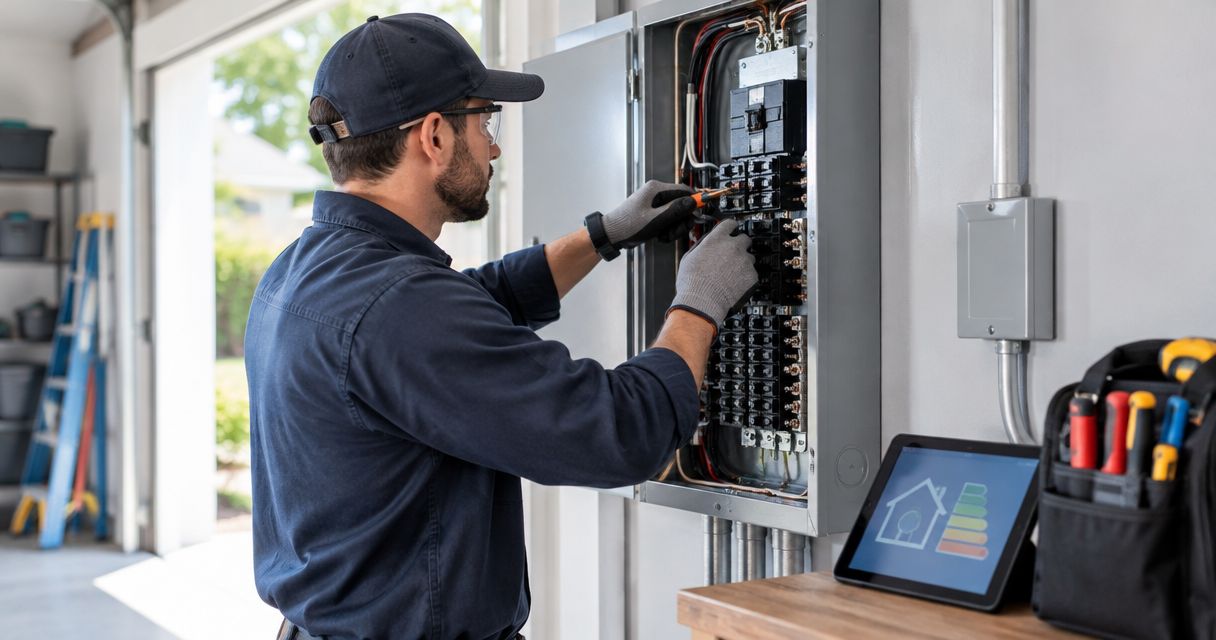
Your electrical panel replacement cost in 2026 depends on whether you need a panel-only replacement or a broader electrical service upgrade; get a written, property-specific quote before setting your budget. Confirm whether that quote includes permits, utility coordination, grounding and bonding work, circuit corrections, and wall repairs—not just the panel itself.
- Electrical panel replacement cost depends on the complete installation scope, not just the replacement equipment.
- A panel replacement does not automatically increase your home’s electrical service capacity.
- Compare permits, wiring corrections, utility work, and restoration before choosing an electrical contractor.
- GSHA Services provides electrical installation and repair services in Woodstock, Lake Bluff, and surrounding Illinois communities.
How much does it cost to replace an electrical panel?
The useful number is the total installed quote for your property, with inclusions and exclusions in writing. A panel-only proposal and a service-upgrade proposal cover different work, even when both are described as a panel replacement.
For a local starting point, contact GSHA Services about electrical installation and repair. Describe the problem, your location, and any equipment you plan to add so the discussion starts with the actual project.
Use this breakdown to check what a 2026 electrical panel replacement estimate covers:
| Quote component | What to confirm | Why it changes the scope |
|---|---|---|
| Panel and breakers | Equipment, circuit spaces, and compatible breakers | The enclosure alone is not the complete installation |
| Installation labor | Removal, reconnection, identification, and testing | Existing wiring conditions affect the work |
| Permits and inspection | Who handles applications and inspection scheduling | Local requirements must be addressed |
| Electrical service | Whether service conductors or meter equipment need changes | A service upgrade extends beyond the panel |
| Grounding and bonding | What existing components require correction | Replacement work can expose deficiencies |
| Property restoration | Wall repair, painting, and other finish work | Electrical work and finish repair are separate scopes |
Do not compare the final line until these rows match. A proposal that excludes required work is not equivalent to one that includes it.
Why this matters
A panel distributes power, but its label does not establish the capacity of the entire electrical service. Service conductors, equipment ratings, and the calculated load all matter.
That distinction matters when you add an EV charger, electric heating, or other substantial loads. More breaker spaces solve a different problem from insufficient service capacity.
For your 2026 project, separate three questions: Is the existing panel defective? Is there room for the required circuits? Can the electrical service support the planned load? Your contractor should answer each before recommending equipment.
Panel replacement, service upgrade, or subpanel: compare the work
These options are not interchangeable. Choose the scope that addresses the electrical problem—not the option with the most impressive equipment label.
| Option | Best for | Main benefit | Main limitation |
|---|---|---|---|
| Panel-only replacement | Replacing unsuitable or damaged panel equipment when the existing service remains adequate | Addresses the panel without automatically expanding the project | Does not increase service capacity by itself |
| Service upgrade | Supporting a higher calculated electrical load | Addresses capacity across the affected service equipment | Requires broader planning and possible utility coordination |
| Subpanel installation | Adding circuit distribution where the existing service can support it | Provides another location for branch circuits | Does not create additional utility service capacity |
A subpanel is not a substitute for correcting a defective main panel. Likewise, replacing a panel does not repair unrelated branch-circuit problems throughout the building.
Ask the electrician to identify the problem each proposed item solves. That keeps optional improvements separate from work necessary for a safe, compliant installation.
Panel-only replacement: best for adequate existing service
A panel-only replacement keeps the existing service capacity when that capacity and the associated equipment remain suitable. The work still requires evaluation of circuit connections, breaker compatibility, grounding, bonding, and applicable local requirements.
The benefit is a focused project. The limitation is equally important: a new enclosure does not make an undersized service larger or eliminate damaged wiring elsewhere.
Service upgrade: best for additional calculated load
A service upgrade addresses the electrical supply needed for the building's calculated load. Depending on the property, the work involves more than replacing the panel and breakers.
Ask which service components need replacement and which remain. Utility responsibilities, contractor responsibilities, and any work at the meter location should be stated separately.
Subpanel installation: best for additional circuit distribution
A subpanel provides another distribution point for circuits, such as those serving an addition or work area. Its feeder and protective equipment must be designed for the installation.
The advantage is circuit organization and distribution. The limitation is capacity: the upstream electrical service still has to support the total calculated load.
Does replacing a 100-amp panel increase capacity?
Replacing a 100-amp panel with another 100-amp panel does not increase the service rating. It replaces equipment within the existing capacity, provided the rest of the installation is appropriate.
A higher-rated enclosure alone does not establish a higher service rating either. The electrician must evaluate the complete service, including conductors and protective equipment.
If your reason for replacement is frequent breaker trips, describe which circuits trip and what is operating at the time. A panel replacement is not automatically the remedy for an overloaded branch circuit or a faulty appliance.
Is a 200-amp service upgrade necessary?
A 200-amp service upgrade is appropriate only when the load calculation and installation requirements support that choice. Floor area, breaker count, and your neighbor's panel rating are not substitutes for that assessment.
A typical residential 120/240-volt service supplies different types of household loads. Adding equipment requires evaluating its electrical demand, not simply checking whether an empty breaker position exists.
List planned equipment before requesting a quote. Include an EV charger, electric water heating, heating-system changes, workshop equipment, and additions where relevant; these plans help establish the scope without assuming every property needs the same upgrade.
Why electrical panel replacement cost varies
The scope of electrical work changes from property to property. These factors explain why two panel replacements are not necessarily comparable:
- Existing equipment condition. Heat damage, corrosion, deteriorated connections, or damaged conductors require evaluation beyond choosing a replacement enclosure.
- Service capacity. Keeping an adequate existing service is a different project from upgrading the service to support additional calculated load.
- Circuit condition and protection. Existing wiring, breaker compatibility, and applicable protection requirements affect reconnection work.
- Panel location and access. Working space, conductor routing, and installation access influence whether the existing location remains suitable.
- Permits and utility coordination. Local requirements and utility involvement determine which approvals and scheduling steps apply.
- Grounding, bonding, and restoration. Electrical corrections and repairs to opened walls need clear responsibility in the proposal.
Ask for a written explanation of any additional work discovered after the project begins. The approval process for changes belongs in the agreement, not in a conversation after the work is complete.
How do you compare electrical panel replacement quotes?
Compare the proposed installation, not just the equipment brand. For a 2026 quote, request enough detail to understand what will be completed and what remains outside the agreement.
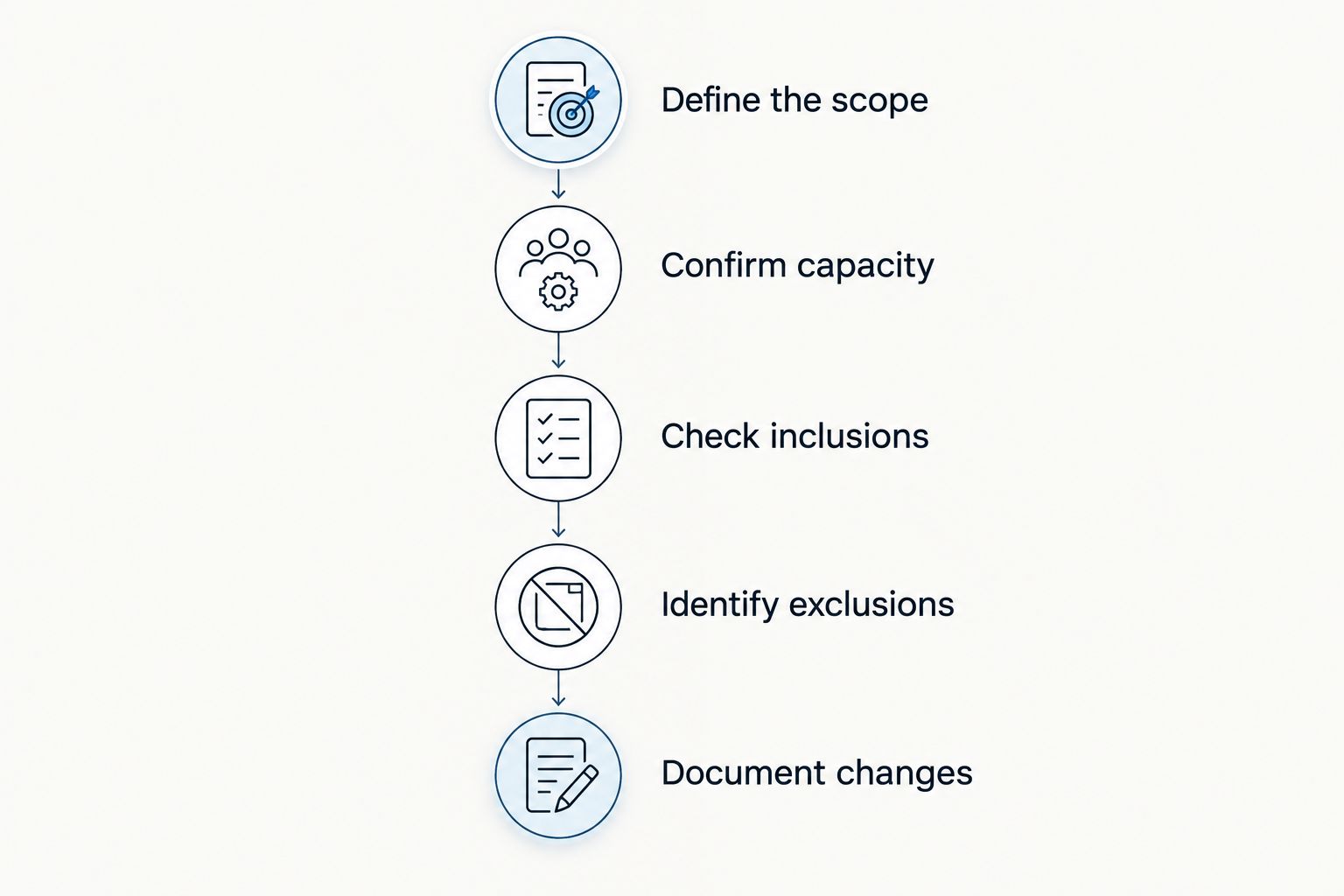
- Define the scope. Have the contractor distinguish panel replacement, service upgrade, and any branch-circuit repairs.
- Confirm capacity. Ask how the existing and planned electrical loads support the recommended service rating.
- Check inclusions. Identify permits, inspection, utility coordination, breakers, grounding, bonding, and labeling.
- Identify exclusions. Clarify wall repairs, painting, unrelated wiring repairs, and any utility-side work.
- Document changes. Require approval before additional work proceeds, and ask what closeout documentation you will receive.
Keep the proposals together and mark differences by scope. When one includes service work and another does not, ask the contractors to explain the discrepancy before choosing.
Photographs help you describe the existing installation, but they do not replace an on-site electrical assessment. Take pictures only from a safe position with covers closed; do not remove the panel cover to obtain a better view.
What should you ask before the work starts?
Ask who arranges the required power interruption and how the contractor coordinates with the utility when necessary. Get the expected sequence rather than assuming the building will remain powered during the work.
If anyone depends on electrically powered medical equipment, arrange an appropriate continuity plan before the scheduled interruption. Tell the contractor about other critical loads, including sump pumps, refrigeration, security equipment, and business systems.
For a home office or business, review electrical upgrades for home-based businesses alongside the panel proposal. The panel project and the circuits serving your work equipment need to fit the same plan.
Before approving the installation, also ask:
- Who schedules the inspection and addresses any required corrections?
- What equipment and circuits will be labeled?
- Which existing components will remain in service?
- Who repairs any surfaces opened during installation?
- How will additional findings be documented and approved?
GSHA Services is best for homeowners and businesses seeking electrical installation and repair in Woodstock, Lake Bluff, and surrounding areas. Its stated service area makes it a relevant local option; your written proposal still needs to establish the exact panel-replacement scope.
Discuss Your Electrical Panel Project
Explain your electrical problem, property location, and planned equipment before requesting a project quote.
When should you stop comparing quotes and address safety?
Active sparking, smoke, or a burning smell around electrical equipment requires a safety response, not continued shopping. Keep away from the equipment; for smoke or fire, leave the area and contact emergency services.
Do not touch a wet panel or remove its cover to investigate damage. Turning off the main breaker does not make every part inside the enclosure safe to touch.
For recurring trips without an immediate emergency, arrange diagnosis rather than repeatedly resetting the breaker. The cause determines the repair: a branch-circuit problem and a failed panel are different findings.
FAQ
What’s included in electrical panel replacement cost?
Electrical panel replacement cost should be tied to a written scope covering equipment, installation labor, and applicable permit and inspection work. Confirm whether grounding, bonding, circuit corrections, utility coordination, and property restoration are included or excluded.
Do I need a 200-amp panel for an EV charger?
A 200-amp panel is not automatically required for an EV charger. An electrician must evaluate the existing service, the charger’s load, other equipment, and applicable installation requirements.
Is replacing a panel the same as upgrading electrical service?
Replacing a panel is not the same as upgrading electrical service. A panel replacement changes equipment; a service upgrade addresses the capacity and associated components needed for a higher calculated load.
Can a subpanel solve a full breaker panel?
A subpanel can provide additional circuit distribution when the existing service and installation support it. It does not increase utility service capacity or correct a defective main panel.
Will a new panel stop my breakers from tripping?
A new panel does not automatically stop breaker trips. Overloaded circuits, appliance faults, wiring problems, and protective-device operation require diagnosis before selecting a repair.
Can I replace an electrical panel myself?
Do not treat panel replacement as a routine DIY project. Service equipment presents shock and arc hazards, and the work requires compliance with applicable permitting, inspection, and utility requirements.
Who can I contact about electrical panel work near Woodstock or Lake Bluff?
GSHA Services provides electrical installation and repair services to homeowners and businesses in Woodstock, Lake Bluff, and surrounding Illinois communities. Describe the existing problem and planned electrical additions when discussing the project.
One last thing
An empty breaker space is not proof of spare electrical capacity. Before approving a 2026 panel project, ask for the explanation connecting your planned loads to the proposed service rating.
That answer helps distinguish necessary capacity work from a panel-only replacement. It also gives you a clearer basis for comparing proposals than enclosure size, breaker count, or brand alone.


