

Best overall for an existing steam system: Weil-McLain. Best for a conventional hot-water radiator replacement: U.S. Boiler Company. Best for a low-temperature efficiency upgrade: Viessmann. This 2026 guide compares gas boiler brands by the heating systems they fit; Gshaservices provides heating installation and repair services for homeowners and businesses in Woodstock, Lake Bluff, and surrounding Illinois communities.
- Best gas boiler brands for older homes 2026: shortlist Weil-McLain for steam and U.S. Boiler Company for conventional hot-water radiators.
- Viessmann fits low-temperature hydronic upgrades; Lochinvar fits projects requiring careful coordination of multiple heating zones.
- Triangle Tube belongs on the shortlist when boiler replacement includes an indirect domestic hot-water tank.
- Gshaservices provides heating installation and repair services; choose boiler type before choosing a brand.
Why this matters
An older home does not automatically need an old-style boiler. It needs equipment that matches its heat loss, radiators, piping, venting, and domestic hot-water arrangement. A steam system and a hot-water system require different equipment, even when their radiators look similar.
The wrong replacement creates problems that a respected brand name cannot fix. Oversizing encourages short cycling, unsuitable venting creates safety risks, and a condensing boiler loses part of its efficiency advantage when return water stays too hot.
For your 2026 replacement, select the system architecture first and the manufacturer second. These recommendations identify useful brand shortlists, not a substitute for a site-specific equipment selection.
What makes the best gas boiler for an older home?
- System compatibility: The selected model must serve steam or hot water as required. Those applications are not interchangeable.
- Correct sizing: Hot-water boilers need a building heat-loss calculation. Steam selection also depends on the connected radiation and the manufacturer's sizing instructions.
- Temperature fit: Condensing equipment belongs in systems that can operate with sufficiently cool return water, not simply houses with newer thermostats.
- Installation fit: Confirm venting, combustion air, gas supply, electrical requirements, condensate disposal, and access before approving equipment.
- Control fit: Match modulation, pumps, thermostats, and zone controls to the actual distribution system.
- Serviceability: Ask who will maintain the selected model and how replacement parts are obtained. Local support belongs in the decision.
Gas boiler brands at a glance
| Brand | Best for | Standout fit | Key limitation |
|---|---|---|---|
| Weil-McLain | Retaining an existing steam system | Gas-fired steam boiler options | Steam piping and radiation sizing remain critical |
| U.S. Boiler Company | Conventional hot-water radiator replacement | Cast-iron gas hot-water boiler options | Conventional equipment does not provide condensing operation |
| Viessmann | Low-temperature hydronic efficiency upgrades | Modulating condensing gas boiler options | High return-water temperatures reduce the condensing benefit |
| Lochinvar | Coordinating multiple hot-water heating zones | Modulating boilers with heating-control capabilities | Small zone loads require careful system design |
| Triangle Tube | Combining space heating with an indirect water heater | Condensing boiler and indirect-tank configurations | Domestic hot-water demand needs separate design attention |
The table compares application fit, not measured reliability or installed cost. Each manufacturer offers different models; confirm the exact model's documentation rather than treating a brand-wide feature as universal.
1. Weil-McLain: best gas boiler brand for existing steam systems
Weil-McLain belongs at the top of the shortlist when your older home already uses steam. The manufacturer offers gas-fired steam boilers, allowing replacement without turning the project into a conversion to hot-water distribution.
Steam requires more than matching the old boiler's nameplate. The installer must assess connected radiation, near-boiler piping, operating pressure, and venting so the replacement works with the existing system.
Weil-McLain pros:
- Gas-fired steam options match a distinct older-home heating application.
- Retaining steam avoids a conversion of the entire distribution system.
- Model-specific installation instructions provide the required piping arrangement.
Weil-McLain cons:
- A boiler replacement does not repair failed radiator vents or incorrect piping automatically.
- Selecting by the old boiler's input rating alone can preserve an oversized installation.
- Conventional steam equipment does not offer the same condensing approach as a hydronic condensing boiler.
Best for: An older home with working steam radiators whose owner wants to retain steam heating.
For a 2026 steam replacement, require the proposal to explain radiation sizing and piping corrections. Buy verdict: choose an appropriate Weil-McLain steam model when the existing steam system is worth retaining.
2. U.S. Boiler Company: best for conventional hot-water radiators
U.S. Boiler Company offers cast-iron gas hot-water boilers suited to a conventional hydronic replacement. This is a practical shortlist when your radiators need relatively high water temperatures during cold weather and the project centers on preserving the existing heating arrangement.
A conventional replacement still needs a heat-loss calculation. The old boiler's capacity is not proof of the capacity your home needs now, particularly after insulation or window improvements.
U.S. Boiler Company pros:
- Cast-iron hot-water options fit conventional radiator applications.
- Suitable configurations can retain existing hydronic distribution.
- A conventional design does not depend on condensing operation to deliver its rated performance.
U.S. Boiler Company cons:
- Noncondensing equipment gives up the efficiency opportunity available from suitable low-temperature operation.
- Existing chimney condition and venting compatibility need assessment.
- Incorrectly cool return water can require protection against condensation in conventional equipment.
Best for: A hot-water radiator home that needs a conventional replacement rather than a redesigned low-temperature system.
Buy verdict: choose a suitable U.S. Boiler Company model when conventional hydronic compatibility is the priority. Do not reject condensing equipment solely because the house is old; first determine the temperatures the radiators actually require.
3. Viessmann: best for low-temperature efficiency upgrades
Viessmann offers modulating condensing gas boilers for hot-water heating. This brand belongs on your shortlist when the replacement includes an assessment of radiator output, water temperatures, and outdoor-reset control.
Large existing radiators can support lower water temperatures when their output exceeds the building's current heat loss. That is an opportunity to evaluate, not a feature guaranteed by the home's age.
Viessmann pros:
- Condensing equipment can recover heat from water vapor in the exhaust.
- Modulation adjusts firing output within the selected model's operating range.
- Outdoor-reset control can match water temperature to changing heating demand.
Viessmann cons:
- High return-water temperatures reduce or prevent condensing operation.
- Condensate drainage and approved venting add installation requirements.
- Equipment benefits depend on proper controls setup and ongoing service.
Best for: A hot-water heating retrofit that can operate at lower temperatures for substantial portions of the heating season.
In 2026, evaluate Viessmann against the proposed operating temperatures, not just the efficiency label. Buy verdict: choose a suitable Viessmann condensing model when the distribution system supports low-temperature operation. Skip a selection based only on advertised efficiency.
4. Lochinvar: best for coordinating multiple heating zones
Lochinvar offers modulating condensing gas boilers with model-dependent heating-control capabilities. Put the brand on your shortlist when an older home has several hydronic zones, additions, or different heat emitters that need coordinated operation.
The central issue is matching boiler output and flow to changing zone demand. A capable controller cannot correct a minimum firing rate that is too high for the smallest active load.
Lochinvar pros:
- Modulating models can adjust output as heating demand changes.
- Model-specific controls support hydronic system coordination.
- Condensing designs suit appropriately designed lower-temperature circuits.
Lochinvar cons:
- Small zones can cause short cycling without appropriate design measures.
- Different emitter temperatures can require mixing and additional controls.
- Pump selection and hydraulic arrangement need explicit design attention.
Best for: A multi-zone hot-water system whose replacement includes controls and piping design, not just a boiler swap.
Ask the installer to explain what happens when only the smallest zone calls for heat. Buy verdict: choose an appropriate Lochinvar model when its output range and controls match the zone design. Hold the purchase if that explanation is missing.
5. Triangle Tube: best for heating with an indirect water heater
Triangle Tube belongs on the shortlist when you want to assess space heating and domestic hot water together. Its condensing boiler and indirect-water-heater options support a configuration in which boiler water transfers heat to a separate domestic-water tank.
This is different from assuming every home should use a combination boiler. An indirect tank gives the designer a separate storage component to size around household hot-water demand.
Triangle Tube pros:
- Boiler-and-tank configurations address heating and domestic hot water together.
- An indirect tank provides stored domestic hot water.
- Condensing boiler operation remains available when heating temperatures permit it.
Triangle Tube cons:
- A separate tank requires installation space.
- Hot-water priority settings affect how heating and tank recovery share boiler output.
- Tank sizing cannot be inferred from bedroom count alone.
Best for: An older home replacing its boiler while also reassessing domestic hot-water storage and delivery.
Buy verdict: choose a suitable Triangle Tube configuration when an indirect tank fits your space and hot-water requirements. Do not assume a larger boiler is automatically the right answer to a hot-water complaint.
What changes the ranking in your home?
Steam or hot water
Identify the system before requesting equipment. Water boils at 212°F at standard atmospheric pressure, but steam heating operates under its own pressure and control conditions; that reference temperature is not a boiler setting instruction. Never select a hot-water boiler as a direct replacement for a steam boiler.
Required water temperature
Conventional hydronic radiator designs often use 180°F supply water as a design reference. Your home might need less after envelope improvements or with generously sized radiators. Calculate emitter output at the proposed temperature instead of assuming the old operating temperature remains necessary.
For natural-gas condensing boilers, return water below approximately 130°F generally supports condensation, with the precise threshold affected by combustion conditions. The relevant question is how often your system can operate in that range, not whether it reaches it once during mild weather.
Removal and installation access
A replacement also needs a physical route out of the building. The constraints involved in removing bulky old appliances—door openings, stair turns, and handling space—also belong in boiler-replacement planning. Ask whether the existing boiler will leave intact or require professional disassembly.
Keep demolition and disposal separate from equipment selection. A new boiler that fits the mechanical room still needs a safe delivery route, service clearances, and room for its connected components.
What your 2026 boiler proposal should include
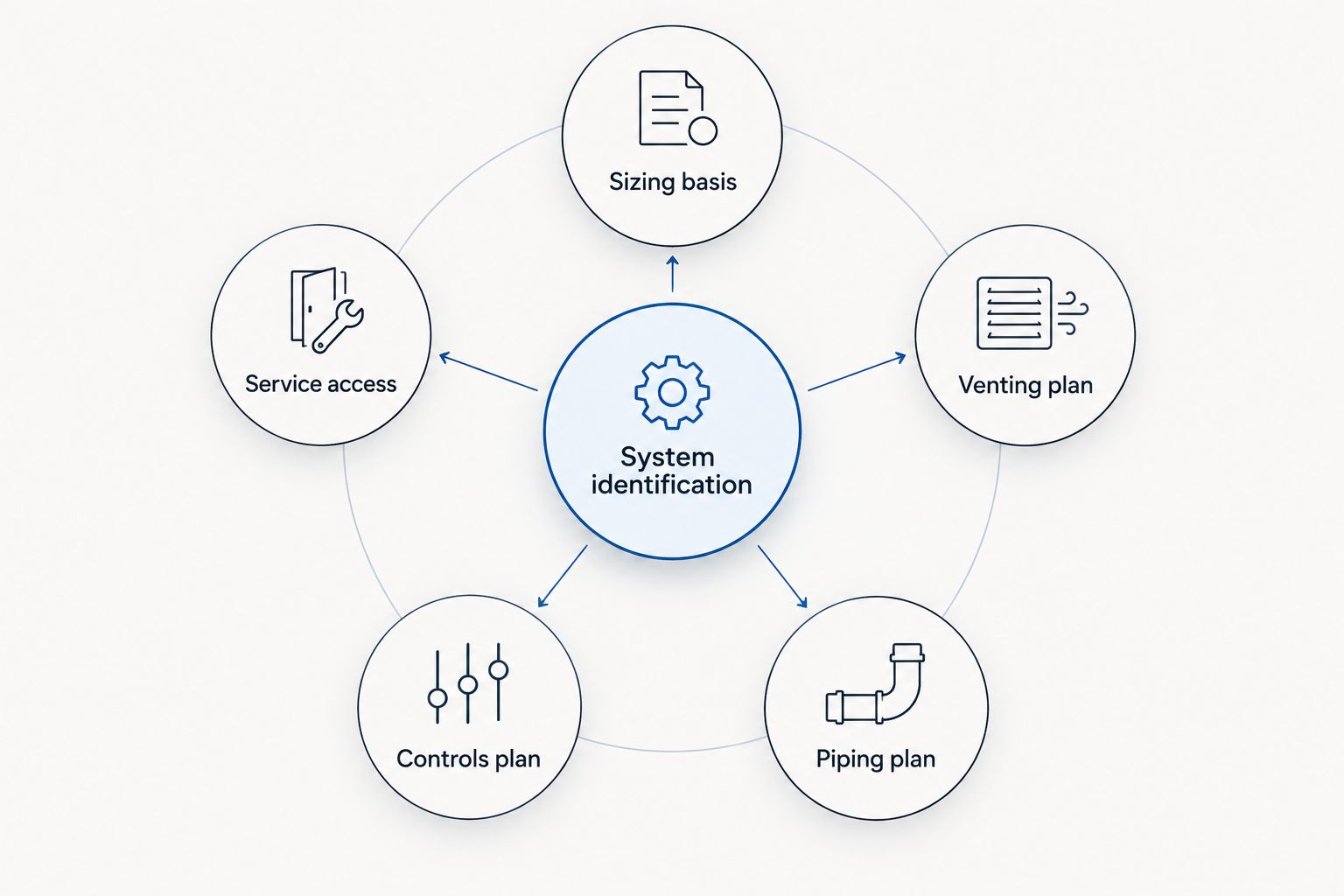
Compare written scopes before comparing manufacturer names. Two proposals for the same brand can describe substantially different installations.
- System identification: State steam or hot water, existing emitters, and retained components.
- Sizing basis: Include building heat loss for hydronic selection and the relevant radiation calculation for steam selection.
- Venting plan: Identify the approved exhaust arrangement and combustion-air provisions.
- Piping plan: Explain pumps, separation, mixing, or near-boiler piping as applicable.
- Controls plan: Identify zoning, outdoor reset, and domestic hot-water priority where used.
- Service access: Show how technicians will reach components after installation.
Gshaservices provides heating installation and repair services in the Woodstock and Lake Bluff area. Discuss the existing distribution system and replacement scope before settling on equipment; this guide does not establish that any particular brand is offered by the company.
Discuss Your Heating Replacement
Review your heating installation or repair needs in Woodstock, Lake Bluff, and surrounding areas.
How the brands are ranked
This 2026 ranking assigns each manufacturer a distinct application based on established equipment categories: steam, conventional hot-water replacement, low-temperature operation, multi-zone coordination, and indirect domestic hot water. It is not a reliability survey, field-test report, or ranking of local dealer support.
The winning model is the one that fits your system and has a clear installation and service plan. Brand reputation does not replace either requirement.
Which gas boiler brand should you choose?
For an undecided owner, start with the existing distribution. Shortlist Weil-McLain for retained steam and U.S. Boiler Company for conventional hot-water replacement. Evaluate Viessmann when lower-temperature operation is feasible, Lochinvar when zone coordination drives the design, and Triangle Tube when an indirect water heater is part of the project.
Gshaservices is a local heating-service option for homeowners comparing gas boiler replacement needs. Confirm the proposed model, installation scope, and service arrangements directly before committing.
FAQ
What’s the best gas boiler brand for an older home in 2026?
The best brand depends on the existing heating system: shortlist Weil-McLain for steam and U.S. Boiler Company for conventional hot-water radiators. Viessmann, Lochinvar, and Triangle Tube fit different condensing-boiler project requirements.
Can an older home use a condensing gas boiler?
An older hot-water-heated home can use a condensing gas boiler when its distribution, venting, drainage, and controls support the installation. Lower return-water temperatures increase the opportunity for condensing operation.
Is Weil-McLain better than Viessmann for steam radiators?
Weil-McLain’s gas-fired steam options are the relevant shortlist for retained steam radiators; Viessmann’s condensing hot-water options address a different application. Compare equipment for the same system type rather than comparing brand names alone.
Should a replacement boiler match the old boiler’s size?
A replacement boiler should follow the appropriate sizing calculation, not automatically match the old nameplate. Hot-water selection uses building heat loss, while steam selection also depends on connected radiation and manufacturer requirements.
Do old radiators need replacing with the boiler?
Old radiators do not automatically need replacement when the boiler is replaced. Assess condition, leakage, heat output, valves, and compatibility with the proposed system.
Will a new gas boiler work during a power outage?
A gas boiler generally needs electricity for controls and, in hot-water systems, circulation equipment. Backup-power planning must account for the complete heating installation rather than the gas burner alone.
Is an indirect water heater the same as a combination boiler?
An indirect water heater uses a separate tank heated through the boiler system, while a combination boiler integrates space heating and domestic-water heating functions. Choose between them using hot-water demand, storage space, and the specific equipment design.
One last thing
Do not let the existing boiler's size become the replacement specification. An older home with upgraded insulation can retain its radiators while needing less heat than before. For your 2026 project, ask for the calculation and the distribution-system assessment before approving the model.
Related guides
- Best gas furnace brands for Illinois winters
- Best tankless water heaters for large families
- Best whole-house generator brands
- Best ductless mini-split brands for home additions


