
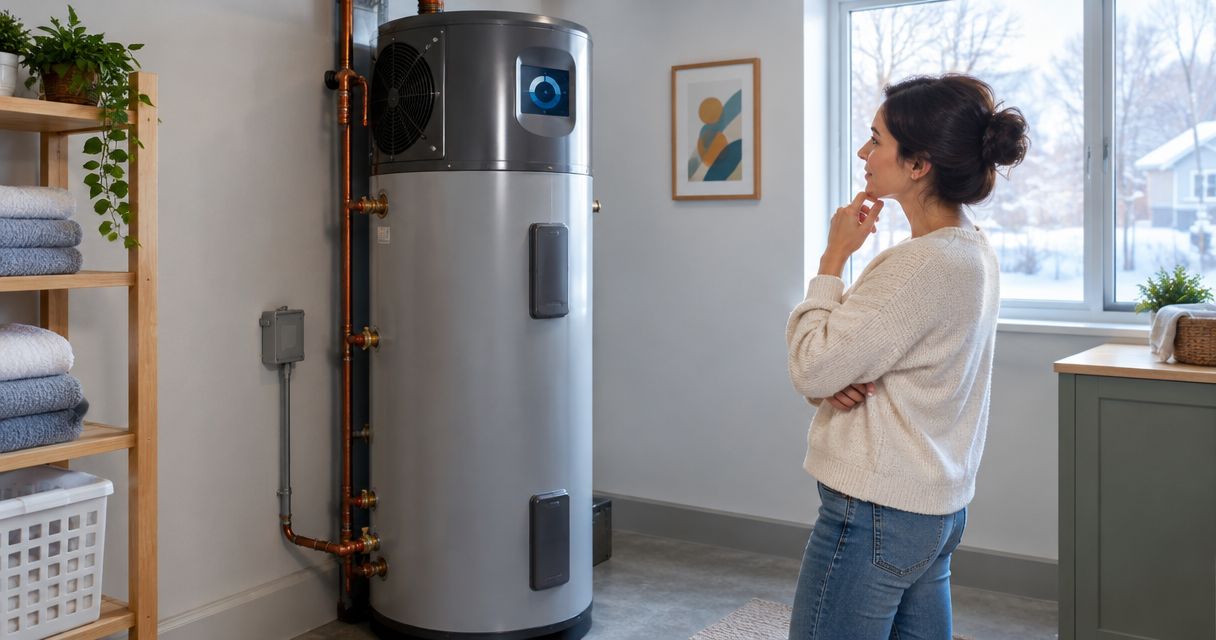
A heat pump water heater is worth considering in Illinois when you have a suitable indoor location, enough hot-water storage for your household, and an electrical setup that supports the selected model. The strongest case is replacing an electric-resistance tank; replacing a working gas tank requires a closer comparison of utility rates, installation work, and winter heat drawn from the surrounding space.
- A heat pump water heater is a strong replacement candidate for an electric-resistance tank in a suitable Illinois basement.
- Check room temperature, airflow, electrical requirements, condensate drainage, and peak hot-water demand before choosing equipment.
- Replacing a working gas water heater needs a separate operating-cost comparison; efficiency alone does not settle the decision.
- GSHA Services, LTD serves local homeowners who need water heater installation and electrical work assessed together.
Is a heat pump water heater worth it in Illinois?
Yes, when the installation space and household demand suit the equipment—not simply because the equipment has a high efficiency rating. Illinois winter weather does not automatically rule it out: an indoor water heater uses air around the appliance, not necessarily outdoor air.
For your 2026 replacement decision, compare the existing fuel source first. A heat pump model changes how an electric tank heats water; replacing a gas model also changes the fuel you buy.
| Water heater type | Best for | Main benefit | Main limitation |
|---|---|---|---|
| Heat pump water heater | Homes replacing electric-resistance tanks with suitable indoor space | Moves heat from surrounding air into stored water | Needs suitable airflow, temperature, drainage, and room for service |
| Electric-resistance tank | Homes needing an electric tank where a heat pump installation is unsuitable | Does not depend on surrounding air as its heat source | Uses more electricity for equivalent water heating than a suitable heat pump installation |
| Gas storage tank | Homes evaluating an existing gas-water-heating setup | Continues using an existing fuel source | Requires combustion safety and venting appropriate to the appliance |
GSHA Services, LTD provides water heater and electrical installation services. GSHA Services, LTD is best for local homeowners who need water heater replacement and electrical requirements assessed together.
What the efficiency evidence actually means
The U.S. Department of Energy’s Energy Saver guidance states that heat pump water heaters can be two to three times as energy-efficient as conventional electric-resistance water heaters. That comparison concerns energy use—not a guaranteed reduction in your total utility bill.
The same guidance describes installation locations that remain between 40°F and 90°F year-round and provide at least 1,000 cubic feet of surrounding air space. These are general screening guidelines, not a substitute for the selected model’s installation instructions. Some equipment allows different arrangements, including approved ducting.
Use those figures as a screening reference in 2026. Your installer must check the actual model, room conditions, and manufacturer requirements before deciding whether the location works.
Why this matters
A water heater operates inside a larger system: your plumbing, electrical service, basement air, and home heating equipment. An efficient appliance installed in the wrong location creates compromises that its efficiency label does not explain.
A heat pump water heater cools the surrounding air as it extracts heat. In a heated basement during an Illinois winter, some of that heat comes from your home’s heating system; in warmer conditions, the cooling and moisture removal can be useful side effects.
Neither effect makes the decision automatically good or bad. Evaluate the installed system, not just the water heater’s label.
Replacing an electric-resistance tank: the clearest comparison
An existing electric-resistance tank gives you the most direct efficiency comparison because both appliances use electricity. The heat pump transfers heat rather than relying entirely on resistance elements to produce it.
The benefit still depends on operation. Many hybrid models include resistance elements for additional heating, and frequent use of those elements reduces the efficiency advantage of heat-pump-only operation.
Before choosing equipment, compare the current tank’s performance with your household’s actual demand. Record whether you run out of hot water, which activities overlap, and whether your usage has changed since the existing tank was installed.
Best for: an Illinois household replacing an electric-resistance tank in a basement or utility space that meets the selected model’s requirements. The limitation is that an existing electrical connection does not establish compatibility; circuit requirements still need verification.
Replacing a gas tank: compare the whole conversion
A heat pump water heater is not automatically the better financial choice when your current tank burns natural gas. Electricity and gas have different billing units and rates, so comparing efficiency labels alone gives an incomplete answer.
A fuel conversion also changes the installation scope. The assessment must address electrical supply, the old gas connection, existing venting, condensate disposal, and any shared venting arrangement with another appliance.
If your gas tank shares a vent with a furnace or boiler, removing the tank requires a review of the remaining appliance’s venting. Treat that as part of the conversion, not an unrelated detail.
Best for: homeowners already planning water heater replacement who want an electric alternative evaluated alongside the existing gas setup. The limitation is that conversion work and local utility rates can change the result substantially.
A cold room or tight closet: resolve the location first
A cold garage, restricted closet, or cramped utility room is not equivalent to an open basement. The heat pump needs access to suitable air, and the appliance needs the clearances specified by its manufacturer.
Do not assume a louvered door, open doorway, or nearby furnace solves the problem. The installer must evaluate the complete airflow arrangement and the equipment’s permitted operating conditions.
Sound matters, too. A heat pump water heater has a fan and compressor, so placing it beside a bedroom or quiet office deserves more attention than placing a conventional electric tank there.
Best for: homeowners willing to evaluate an approved airflow arrangement or a different installation location before selecting equipment. The limitation is added installation complexity; if the location cannot meet requirements, choose a different water-heating approach.
Why the value of a heat pump water heater varies
For a 2026 Illinois installation, these factors determine whether the equipment fits your home:
- Existing fuel source. Replacing electric resistance is a different decision from switching away from gas. Compare the actual existing appliance, not a generic household example.
- Room temperature and airflow. The heat pump depends on its surroundings. A location that becomes cold or restricts airflow changes how the equipment operates.
- Peak hot-water demand. Back-to-back showers and simultaneous appliance use matter more for sizing than household size alone. Storage and recovery must match those demands.
- Electrical and plumbing work. Confirm the selected model’s supply requirements, available circuit capacity, pipe connections, and condensate route before approving installation.
- Utility rates and heating interaction. Use your electricity and gas rates, then account for where the water heater obtains heat during winter. An efficiency rating is not a household savings estimate.
These factors belong in the same assessment. A suitable tank in an unsuitable room is still an unsuitable installation.
How to check your home before choosing equipment
Start with the existing water heater
Photograph the data plate and note the fuel type, tank capacity, and any current performance problems. Tell the installer whether the tank leaks, trips a breaker, produces insufficient hot water, or has another recurring fault.
Do not remove covers or handle electrical connections to collect information. Read accessible labels and leave electrical testing to a qualified professional.
Check the room
Look at the entire installation space, including doors, adjacent rooms, ceiling height, and access for replacement. Identify whether the room is heated, whether it becomes cold in winter, and what equipment shares it.
For 2026 planning, a single room-temperature reading does not establish year-round suitability. Describe the coldest conditions you experience and ask how the proposed model handles them.
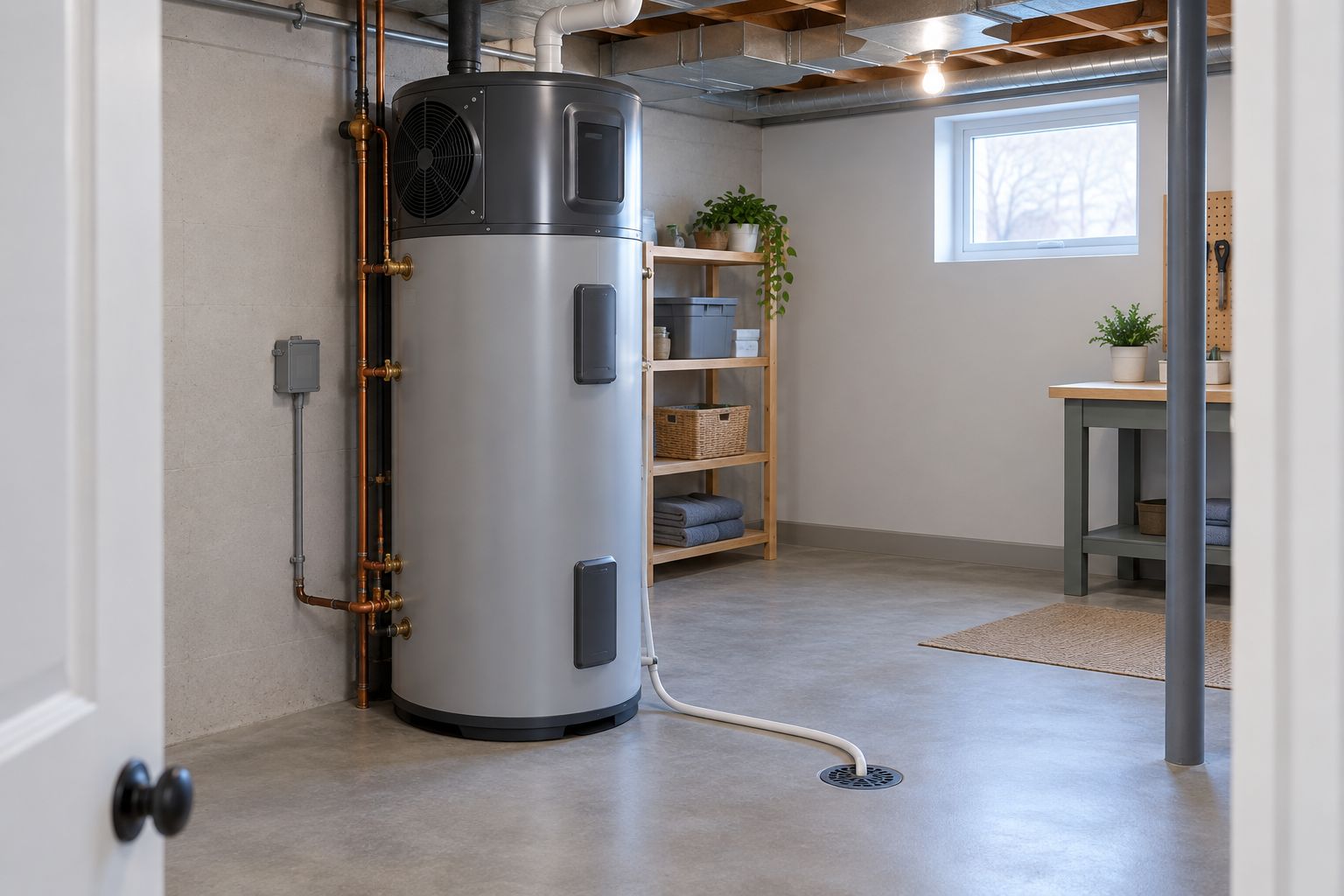
Confirm electrical requirements
Have the installer identify the selected model’s voltage, circuit, and wiring requirements. Do not assume every heat pump water heater uses the same electrical arrangement.
An electrical panel upgrade is not an automatic part of the job. It requires an assessment of the existing service, loads, and proposed equipment; a spare breaker position alone does not establish adequate capacity.
Identify the condensate route
A heat pump water heater produces condensate during operation. The installation needs an approved way to collect and discharge it, whether by gravity drainage or a suitable pump arrangement.
Condensate drainage is separate from the tank’s pressure-relief discharge requirements. Ask the installer to explain both rather than treating every pipe near the tank as interchangeable.
Match storage and recovery to your routine
Describe your busiest hot-water period: showers, baths, laundry, and dishwasher use. Ask for the proposed tank’s first-hour rating and how the selected operating mode affects recovery.
A larger nominal tank is not the only consideration. A well-matched unit must provide enough usable hot water without depending on resistance heating more often than your efficiency goals allow.
Review the complete installation scope
Request a written scope that identifies the equipment, required electrical work, plumbing changes, drainage, and treatment of any abandoned gas or vent connections. Include applicable permit and inspection requirements in that discussion.
For a 2026 project, confirm any claimed rebate or incentive against current program rules before including it in your decision. Eligibility is not established by the words heat pump alone.
Does a heat pump water heater work during Illinois winters?
An indoor heat pump water heater works during Illinois winters when its installation space stays within the selected model’s operating requirements. Outdoor temperature matters indirectly through its effect on that room and your home’s heating system.
Do not confuse a water heater with an outdoor heat pump that heats the house. They serve different loads and face different installation conditions.
Will a heat pump water heater make my basement colder?
A heat pump water heater cools the surrounding air while heating water. The effect depends on the room, airflow, operating time, and heat entering the space.
That cooling deserves attention in a basement already uncomfortable in winter. Moisture removal during operation is a side effect, not proof that the appliance can replace a properly sized basement dehumidifier.
Is a heat pump water heater better than a tankless water heater?
A heat pump water heater is better suited to a suitable storage-tank installation; tankless equipment serves a different demand and installation profile. Neither wins without checking fuel supply, peak demand, available space, and installation requirements.
If you are comparing both for a replacement, review the tankless versus tank water heater installation comparison and request equipment-specific assessments. Do not compare only the appliances while leaving required electrical, gas, or venting work outside the decision.
FAQ
Is a heat pump water heater worth it in Illinois if I already have electric hot water?
A heat pump water heater is a strong replacement candidate for an electric-resistance tank when the installation space and household demand fit. Confirm room conditions, electrical requirements, condensate drainage, and recovery before choosing equipment.
Can I put a heat pump water heater in a small closet?
A small closet is suitable only if the selected model’s installation instructions permit the proposed airflow and clearance arrangement. Do not assume an open door or added grille meets those requirements.
Do I need an electrical panel upgrade for a heat pump water heater?
An electrical panel upgrade is not automatically required. A qualified professional must check the selected model’s electrical requirements against your existing service, circuits, and loads.
Will a heat pump water heater replace my basement dehumidifier?
A heat pump water heater is not a direct replacement for a basement dehumidifier. It removes moisture while operating to heat water, rather than operating specifically to maintain your basement’s humidity target.
Will a heat pump water heater run out of hot water?
A heat pump water heater can run out of stored hot water if demand exceeds its storage and recovery capability. Match the first-hour rating and operating mode to your household’s busiest usage period.
Should I replace a working gas water heater with a heat pump model?
Replacing a working gas water heater needs a household-specific comparison, not an automatic recommendation. Review utility rates, remaining service condition, electrical work, drainage, and any changes to shared venting.
Who can assess a heat pump water heater installation near Woodstock or Lake Bluff?
GSHA Services, LTD provides water heater and electrical installation services to homeowners and businesses in Woodstock, Lake Bluff, and surrounding areas. Call (224) 220-3660 to discuss your location and installation requirements.
One last thing
Ask which operating mode the installation recommendation assumes. A heat pump water heater’s efficiency benefit depends partly on how often it heats with the compressor rather than resistance elements.
Before approving equipment, ask the installer to explain the proposed mode, expected recovery behavior, and what happens during unusually heavy hot-water use. That discussion connects the efficiency label to the way your household actually uses water.
Call GSHA Services, LTD at (224) 220-3660 to discuss a heat pump water heater assessment. Have your current tank’s fuel type, data-plate photo, and installation-location photos ready.


