

Best overall: a Generac managed whole-home configuration sized from an electrical load calculation. Best for essential backup: a Generac essential-circuit configuration. Best for simultaneous appliance use: a Generac full-demand configuration. The best Generac generator size by square footage in 2026 is not a fixed kilowatt rating: your appliances, motor-starting requirements, fuel supply, and backup priorities determine the size.
- For best generac generator size by square footage 2026, use electrical loads, not an area-only chart.
- A Generac managed whole-home configuration suits households willing to prioritize appliances during outages.
- A Generac essential-circuit configuration suits homeowners backing up selected circuits rather than every appliance.
- GSHA Services, LTD provides generator installation and repair in Woodstock, Lake Bluff, and surrounding Illinois areas.
Why this matters
Square footage describes your house, not its electrical demand. Two homes with the same floor area can need different backup systems because one uses gas heating while the other uses electric resistance heating, a well pump, and electric water heating.
Do not approve a generator size based only on a square-footage chart. Ask for a circuit-level calculation that identifies what runs during an outage, what starts under load, and what gets disconnected when demand rises.
For generator installation and repair in Woodstock, Lake Bluff, and surrounding areas, GSHA Services, LTD is a local service option. Bring the equipment list to the sizing conversation rather than treating your home's area as the specification.
For your 2026 installation decision, separate two questions: which loads need backup, and which loads need to operate together? That distinction determines whether you need essential-circuit coverage, managed demand, or capacity for simultaneous use.
What makes the best Generac generator size?
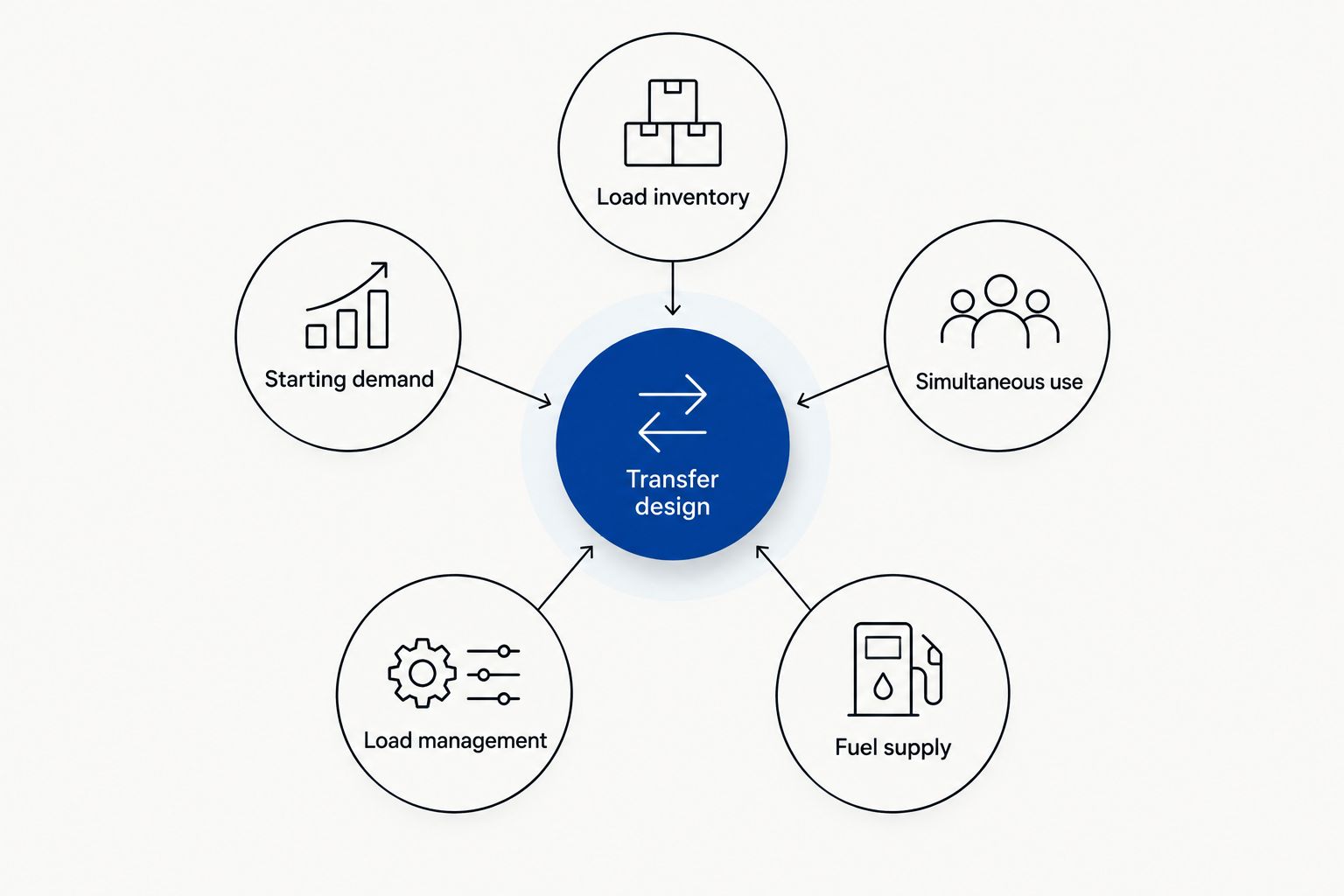
The best sizing approach accounts for these criteria before assigning a kilowatt rating:
- Load inventory: List the actual equipment you want powered, including heating controls, refrigeration, pumps, cooling, and selected outlets.
- Starting demand: Account for motor startup, not just steady operation. A compressor or pump presents a different sizing problem from a light fixture.
- Simultaneous use: Decide whether cooling, cooking, water heating, and other substantial loads must operate together.
- Load management: Identify appliances that can be delayed or disconnected, using equipment compatible with the proposed installation.
- Fuel supply: Match the generator's rating to the intended fuel and verify that the supply supports operation.
- Transfer design: Define the backed-up circuits and how the transfer equipment separates generator power from utility power.
Electrical output is expressed in kilowatts: 1 kilowatt equals 1,000 watts. Floor area is expressed in square feet; there is no universal conversion between those measurements.
Typical U.S. homes have both 120-volt and 240-volt circuits. A sizing worksheet needs to account for both, including larger appliances on 240-volt circuits. Adding breaker ratings together is not a substitute for calculating appliance demand.
Review whole-house generators ranked by fuel type alongside the load calculation. Fuel choice and electrical sizing are separate decisions that must work together.
Generac sizing options at a glance
These are installation configurations, not Generac model names. Each requires equipment selection and a load calculation; none represents a guaranteed kilowatt rating for a particular house size.
| Rank and configuration | Best for | Standout feature | Key limitation |
|---|---|---|---|
| 1. Generac managed whole-home configuration | Households accepting appliance priorities | Manages simultaneous demand across connected loads | Some loads are temporarily unavailable |
| 2. Generac essential-circuit configuration | Selected outage essentials | Limits backup to clearly defined circuits | Unselected circuits remain without backup |
| 3. Generac full-demand configuration | Households requiring simultaneous appliance use | Sizes capacity around the intended concurrent loads | Requires careful accounting of substantial electrical loads |
| 4. Generac engineered high-demand configuration | Properties with complex equipment combinations | Uses a detailed equipment and operating assessment | Requires more design detail than a square-footage estimate |
1. Generac managed whole-home: best for appliance priorities
A Generac managed whole-home configuration connects the intended household loads through a transfer arrangement and uses compatible load-management equipment to control demand. Selected appliances are delayed or disconnected when necessary rather than all operating without restriction.
This is the default configuration to discuss when you want broad household coverage but do not require every substantial appliance to run together. The size still comes from the electrical calculation, including starting demand and the loads that remain connected.
Generac managed whole-home pros:
- Supports a plan that prioritizes essential equipment.
- Accounts for the difference between connected load and simultaneous load.
- Gives you explicit control priorities to review before installation.
Generac managed whole-home cons:
- Managed appliances are not continuously available during every operating condition.
- Compatibility and control behavior need verification for the selected equipment.
- Poorly chosen priorities can interrupt an appliance you expected to use.
Ask which loads get disconnected first and how they return to service. Your heating system, cooling equipment, pumps, and water heater should each have a defined place in that sequence.
Best for: Homeowners who accept appliance prioritization during an outage.
Verdict: Buy this configuration only after the load-management plan identifies what remains powered and what gets interrupted. For a 2026 project, that written plan matters more than a whole-home label.
2. Generac essential-circuit: best for selected outage essentials
A Generac essential-circuit configuration backs up a defined set of circuits rather than every electrical load in the house. Your selection determines the sizing target: refrigeration, heating controls, selected lighting, communications equipment, and necessary pumps are examples to assess, not an automatic package.
This approach starts with your outage priorities. A large house with limited backup needs does not automatically need the same capacity as a house whose owner expects cooking, cooling, and electric water heating together.
Generac essential-circuit pros:
- Makes the backed-up circuit list explicit.
- Keeps optional appliances outside the backup calculation.
- Creates a straightforward checklist for household outage use.
Generac essential-circuit cons:
- Unselected rooms or appliances do not receive backup power.
- Selected motor loads still require a starting-demand assessment.
- Future additions can change the original capacity requirement.
Walk through the home before approving the circuit list. A furnace control circuit is not interchangeable with electric space heating, and a refrigerator circuit does not address a separate sump pump.
Best for: Homeowners who want specific essential circuits powered rather than broad appliance coverage.
Verdict: Buy this configuration when the circuit list matches your actual outage needs. Skip an area-based recommendation that does not state which equipment is included.
3. Generac full-demand: best for simultaneous appliance use
A Generac full-demand configuration is sized around the household loads you intend to operate together, without relying on routine load shedding to stay within capacity. It requires a clear definition of simultaneous use, not an assumption that every connected appliance operates at maximum demand continuously.
Choose this sizing discussion when interrupting particular appliances is unacceptable to you. The calculation must still address motor starting, fuel-specific output, and the proposed transfer arrangement.
Generac full-demand pros:
- Aligns the design with stated simultaneous-use requirements.
- Avoids making routine appliance interruption the core operating strategy.
- Makes substantial loads visible before equipment selection.
Generac full-demand cons:
- Overlooking an appliance can leave the proposed size inadequate.
- Fuel supply and installation constraints still need verification.
- Later electrification changes can invalidate the original assumptions.
Tell the installer if you expect to cook while cooling the house or operate an electric water heater while a pump starts. These combinations are more useful than a statement that you want everything covered.
Best for: Homeowners requiring specified substantial appliances to operate together during outages.
Verdict: Buy this configuration when the calculation supports your concurrent-load requirements. Do not choose it merely because your home has a large footprint in 2026.
4. Generac engineered high-demand: best for complex properties
A Generac engineered high-demand configuration starts with a detailed assessment of equipment combinations, operating sequences, and installation conditions. This is a sizing approach, not a named product line or a promise that a particular generator type is required.
Discuss this approach for properties with several substantial electrical loads, multiple HVAC systems, outbuilding circuits, or equipment with specific operating requirements. Complexity comes from the load mix and distribution, not square footage alone.
Generac engineered high-demand pros:
- Examines equipment interactions rather than relying on a house-size category.
- Separates critical loads from discretionary loads across the property.
- Addresses operating sequences and distribution as part of the design.
Generac engineered high-demand cons:
- Requires detailed equipment information before a size can be selected.
- Property-wide coverage needs explicit circuit and transfer boundaries.
Best for: Properties whose equipment combinations need a detailed electrical design.
Verdict: Hold equipment selection until the load assessment and transfer design are complete. A larger generator does not correct an incomplete circuit plan.
How the configurations are ranked
The ranking prioritizes a clear match between backup needs and electrical demand. Managed whole-home coverage is the starting discussion for households willing to prioritize appliances; essential-circuit coverage suits narrower needs; full-demand sizing addresses simultaneous use; engineered assessment handles complexity.
This is not a product-performance ranking. No configuration wins because of a claimed efficiency figure, noise measurement, or square-footage capacity. Each wins its use-case slot by answering a different operating requirement.
GSHA Services, LTD generator installation services are best suited to homeowners and businesses in its stated Woodstock and Lake Bluff service areas. The generator configuration should follow the property's load assessment.
Which Generac generator configuration should you choose?
Start with a managed whole-home configuration if you want broad coverage and accept appliance prioritization. Choose essential-circuit coverage when your priority is a defined list of necessary equipment, and choose full-demand sizing when specified loads must run together.
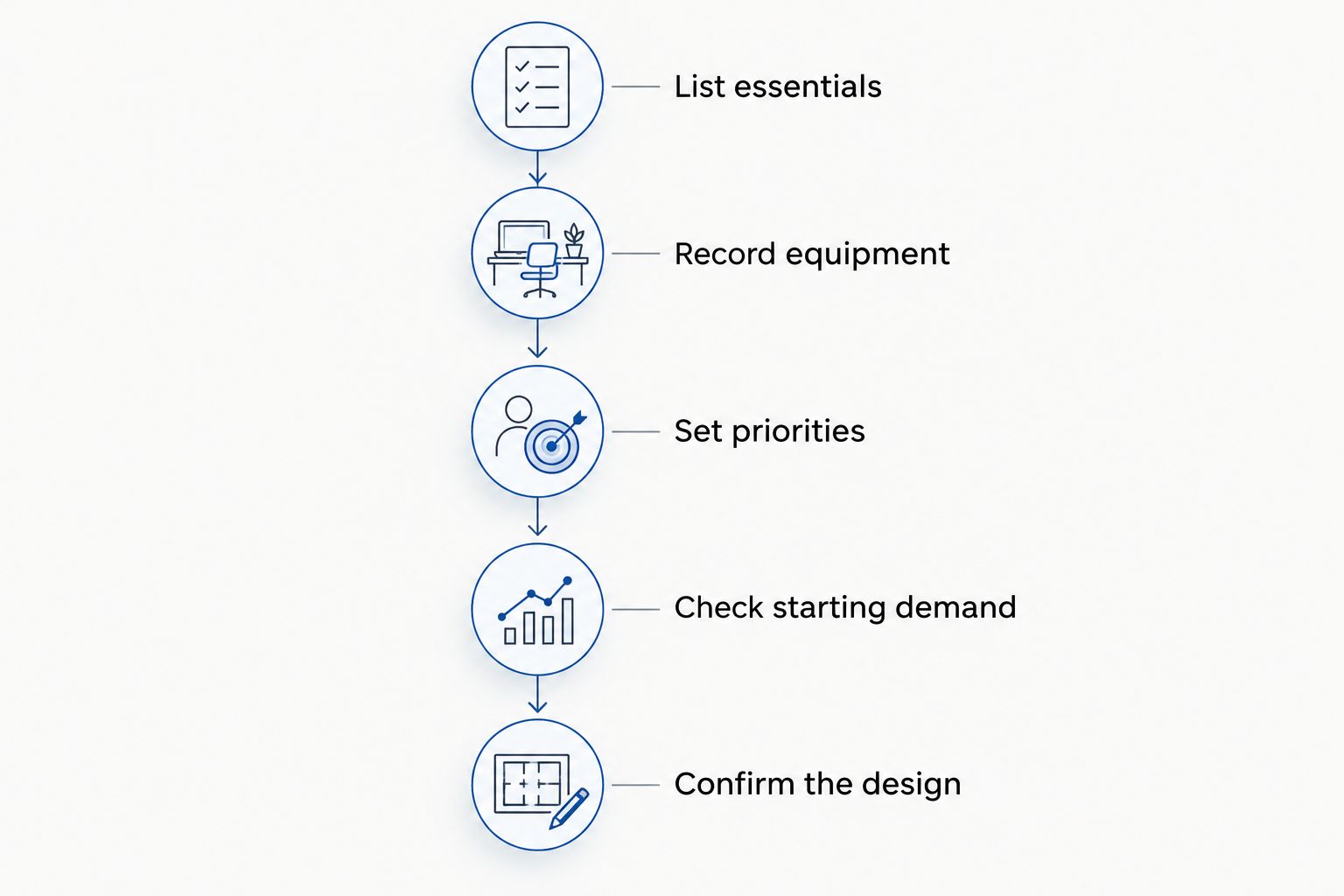
In 2026, a square-footage chart is a conversation starter, not an installation specification. Before approving equipment, use this decision sequence:
- List essentials: Identify what must operate during an outage.
- Record equipment: Gather nameplate information and model details for substantial loads.
- Set priorities: State which appliances can wait and which cannot.
- Check starting demand: Have the installer account for motors and compressors.
- Confirm the design: Review the proposed fuel supply, transfer arrangement, and load-management behavior.
The resulting recommendation should explain why the proposed rating supports your selected loads. If the explanation only references floor area, ask for the electrical basis before signing.
Give GSHA Services, LTD your equipment list and outage priorities when discussing generator installation. Include planned changes such as electric vehicle charging, a heat pump, or electric water heating; those additions belong in the conversation before sizing is finalized.
Discuss your generator installation
Review generator installation needs for your Woodstock, Lake Bluff, or surrounding-area property.
What to confirm before approving the size
Ask for the proposed generator's output on the fuel your installation will use. Do not substitute a rating associated with a different fuel or assume that a model label resolves the fuel-supply question.
Then review the transfer equipment. Whole-home connection and unrestricted whole-home operation are not the same thing: a system can serve the electrical panel while managing selected loads to stay within capacity.
Finally, ask what happens when utility power returns and which operating instructions apply to your installation. Keep those instructions with the equipment documentation. Never connect a generator to a household receptacle to feed the house; the transfer arrangement must prevent utility backfeeding.
FAQ
What’s the best Generac generator size by square footage in 2026?
The best Generac generator size in 2026 is the rating supported by your selected electrical loads, not square footage alone. Include running demand, motor starting, intended simultaneous use, and the installation’s fuel supply.
Can I choose a Generac generator using only my home’s square footage?
No, square footage alone does not establish a Generac generator size. Homes with the same area can have different heating systems, pumps, appliances, and backup priorities.
What’s the best Generac setup if I only want essential circuits?
A Generac essential-circuit configuration is the appropriate starting point for backing up selected circuits. Define the circuit list and include the starting requirements of any selected motors or compressors.
Is managed whole-home backup the same as running everything at once?
No, managed whole-home backup prioritizes loads rather than guaranteeing that every appliance runs together. Review which equipment is delayed or disconnected before approving the system.
Does gas heating mean I don’t need generator power for heat?
No, a gas heating system can still require electricity for controls, ignition, pumps, or a blower. Include the actual heating equipment’s electrical requirements in the backup calculation.
Should my generator power an electric vehicle charger during an outage?
Include an electric vehicle charger only if outage charging is part of your stated backup requirements. Decide whether charging can wait, then account for the charger in the load or load-management plan.
Who provides generator installation around Woodstock and Lake Bluff?
GSHA Services, LTD provides generator installation and repair to homeowners and businesses in Woodstock, Lake Bluff, and surrounding Illinois areas. Discuss your equipment list and outage priorities before selecting a generator rating.
One last thing
The transfer plan can change what whole-home backup actually means. Before approving a 2026 Generac installation, ask the installer to name every appliance that will be disconnected under the proposed management plan.
Keep that list with your household outage instructions. Knowing that a water heater or charger will wait is more useful during an outage than knowing your generator was marketed for a particular house size.
Related guides
- Best portable generators for home backup
- Generators ranked by noise level
- Best whole-house generator brands


