
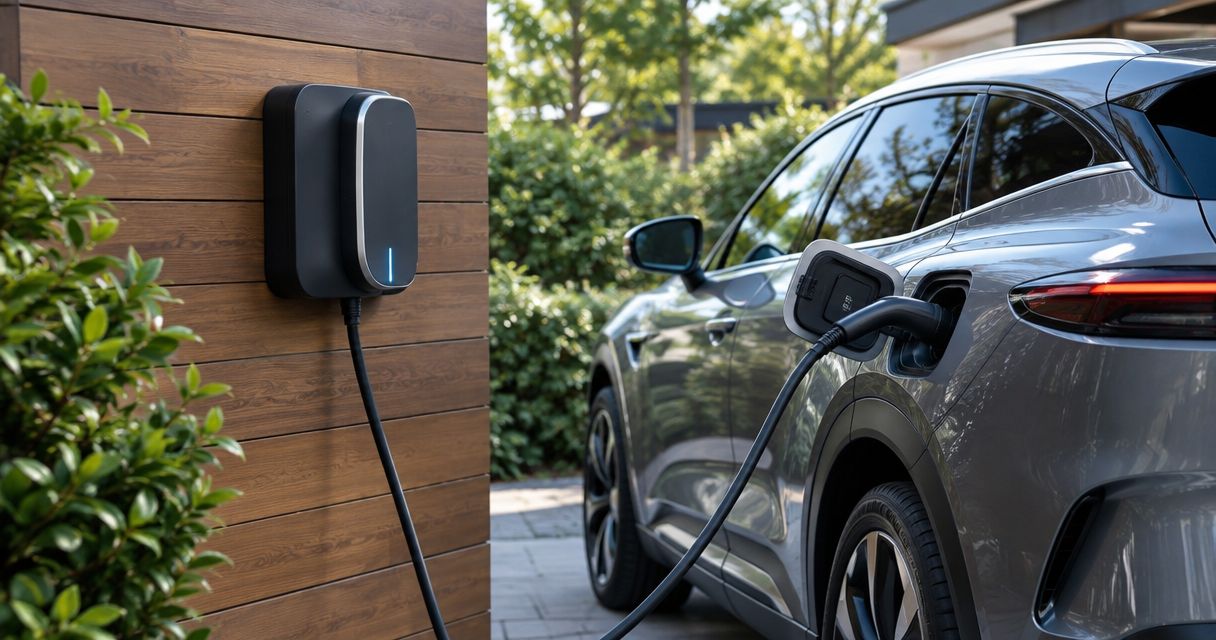
Best for maximum output: a 50-amp hardwired Level 2 charger. Best default for a compatible home and vehicle: a 48-amp hardwired charger. Best lower-output option: a 32-amp charger. This 2026 guide ranks charging configurations by electrical output and explains what GSHA Services, LTD customers should confirm before choosing equipment.
- For best level 2 ev chargers ranked by charging speed, compare usable output—not just the advertised maximum.
- At 240 volts, 50-amp charging supplies 12 kilowatts before charging losses.
- A 48-amp charger supplies 11.52 kilowatts; your vehicle must support that AC input to benefit.
- GSHA Services, LTD installs EV chargers and provides electrical services in Woodstock, Lake Bluff, and surrounding areas.
Why this matters
The fastest charger on the wall does not always charge your car faster. Your vehicle’s onboard AC charger, the charging equipment’s setting, and the home’s electrical capacity all limit delivered power.
Buy the fastest charging configuration your vehicle can use and your electrical system can support—not the largest number on the box. This ranking compares output classes rather than claiming that one manufacturer charges faster than another at the same usable power.
What makes the best Level 2 EV charger?
Use these criteria before comparing equipment for a 2026 installation:
- Usable output: Match the charger’s amperage to the vehicle’s maximum AC charging input.
- Electrical fit: Confirm service capacity, calculated load, circuit requirements, and manufacturer instructions.
- Connection method: Distinguish a hardwired installation from a receptacle-connected installation.
- Vehicle connection: Confirm the connector or approved adapter matches your vehicle.
- Daily recovery: Size charging around the energy you need between parking and departure.
- Installation location: Check cable reach, mounting requirements, and suitability for the intended environment.
App features do not increase a vehicle’s onboard charging limit. Scheduling and load-management features serve different purposes from maximum charging speed.
Charging speed at a glance
The following ranking uses a nominal 240-volt supply. Values describe electrical input before charging losses, not guaranteed power entering the battery; actual supply voltage and vehicle behavior affect results.
| Rank and configuration | Best for | Standout feature | Key limitation |
|---|---|---|---|
| 1. 50-amp hardwired charger | Maximum output among these configurations | 12 kW nominal input | Requires a vehicle that accepts the output and an appropriate installation |
| 2. 48-amp hardwired charger | High-output home charging | 11.52 kW nominal input | Requires a suitable circuit and sufficient electrical capacity |
| 3. 40-amp charger | Moderate-output charging | 9.6 kW nominal input | Slower than higher-output configurations when the vehicle accepts more |
| 4. 32-amp charger | Lower daily energy recovery needs | 7.68 kW nominal input | Takes longer to deliver the same energy |
The order is strictly by nominal power. The best installation for your property does not automatically occupy the first row.
1. 50-amp hardwired: best for maximum charging output
A charger delivering 50 amps at 240 volts supplies 12 kW before losses. It ranks first here because it has the highest electrical output of the configurations compared.
That advantage only matters when the vehicle accepts more than the lower-ranked configurations deliver. A vehicle with a lower AC input limit cannot use the full output simply because the charging station supports it.
50-amp hardwired pros:
- Highest nominal output in this comparison.
- Suits vehicles with sufficient onboard AC charging capacity.
- Supports shorter charging sessions when charging power is the limiting factor.
50-amp hardwired cons:
- Requires electrical capacity appropriate to the installation.
- Offers no speed benefit above the vehicle’s AC charging limit.
- The circuit must follow the equipment’s instructions and applicable electrical requirements.
Best for: Drivers whose vehicles accept the output and whose charging window makes the additional power useful.
Do not select the breaker or conductors from the charger’s advertised amperage alone. EV charging is a continuous load, and equipment instructions govern the permitted installation.
Verdict: Buy only after confirming vehicle acceptance and electrical capacity.
2. 48-amp hardwired: best for high-output home charging
A 48-amp charger supplies 11.52 kW at 240 volts. Under standard continuous-load sizing, that charging current corresponds to a 60-amp branch circuit, subject to the equipment instructions and applicable code.
The difference from 50-amp charging is just 0.48 kW at the same voltage. That makes vehicle compatibility and installation requirements more useful decision factors than the small difference between these output ratings.
48-amp hardwired pros:
- Delivers high nominal power for home AC charging.
- Avoids a plug-and-receptacle connection at the charging station.
- Provides an output target to compare against your vehicle’s AC specification.
48-amp hardwired cons:
- Does not improve speed when the vehicle accepts less power.
- Requires a suitable dedicated circuit and electrical capacity.
- A fixed installation is less convenient to relocate than compatible portable equipment.
Best for: Homeowners seeking high-output charging when both the vehicle and the electrical design support it.
For a 2026 equipment decision, start with the vehicle’s documented AC input specification. Battery size alone does not establish how much AC power the vehicle accepts.
Verdict: Buy as the default high-output configuration when the electrical assessment supports it.
3. 40-amp charging: best for moderate-output charging
A charger set to 40 amps supplies 9.6 kW at 240 volts. Standard continuous-load sizing associates that charging current with a 50-amp circuit, subject to the equipment and installation requirements.
Some equipment permits receptacle-connected installation at this output; other installations use a hardwired connection. Follow the specific product instructions rather than treating every charger or receptacle as interchangeable.
40-amp charging pros:
- Requires less charging current than the higher-ranked configurations.
- Supports equipment choices with different connection methods.
- Avoids specifying output that a lower-input vehicle cannot use.
40-amp charging cons:
- Delivers less power than 48-amp or 50-amp charging.
- A receptacle installation introduces another electrical connection requiring correct selection and installation.
- Still requires a load assessment; a lower rating does not establish spare capacity.
Best for: Drivers whose charging window and vehicle input do not justify a higher-output configuration.
An existing receptacle is not proof that the circuit is suitable for EV charging. Its condition, circuit design, protection, and compatibility with the selected equipment need assessment.
Verdict: Buy when 9.6 kW fits your charging requirement and the installation is suitable.
4. 32-amp charging: best for lower daily energy recovery
A 32-amp charger supplies 7.68 kW at 240 volts. Standard continuous-load sizing associates that output with a 40-amp circuit, subject to manufacturer instructions and applicable requirements.
This configuration ranks last for speed, not usefulness. A driver with a long parking window and modest energy use has a different charging requirement from someone who arrives nearly depleted and leaves again shortly afterward.
32-amp charging pros:
- Draws less current than the other configurations in this comparison.
- Fits charging plans that prioritize overnight recovery rather than maximum output.
- Avoids selecting a higher setting solely for its headline rating.
32-amp charging cons:
- Takes longer to deliver the same energy than higher-output options.
- Provides less recovery during a short charging window.
- Does not remove the need for a suitable circuit and load calculation.
Best for: Drivers whose daily energy requirement fits the available parking window at this output.
Do not assume that a software setting alone makes an installation compliant. Current limits must be configured using the methods permitted by the equipment instructions and electrical requirements.
Verdict: Buy for a verified lower-output requirement; skip when your charging window requires more power.
How this speed ranking works
The ranking compares nominal electrical power using volts multiplied by amps. At the same voltage, higher permitted charging current means higher available input power.
It is not a hands-on product test or a ranking of reliability, apps, warranties, or customer support. Equal-output chargers cannot overcome the same vehicle’s onboard AC charging limit.
For your 2026 shortlist, separate three questions: how much power the equipment supports, how much the installation permits, and how much the vehicle accepts. The lowest applicable limit controls charging power.
Match the installation to the property
Choosing equipment comes after establishing the electrical conditions. The best home EV charger brands for a Sunshine Coast installation do not establish the right installation for northern Illinois; electrical supply, local requirements, and vehicle compatibility still control the selection.
Before requesting an installation estimate, collect the following:
- Vehicle details: Make, model, model year, connector, and documented AC charging limit.
- Parking location: Where the vehicle sits and where its charging port is located.
- Electrical details: Panel information and the location of other major electrical loads.
- Charging window: When you park and when you next need the vehicle.
- Future needs: Any planned additional vehicle or major electrical equipment.
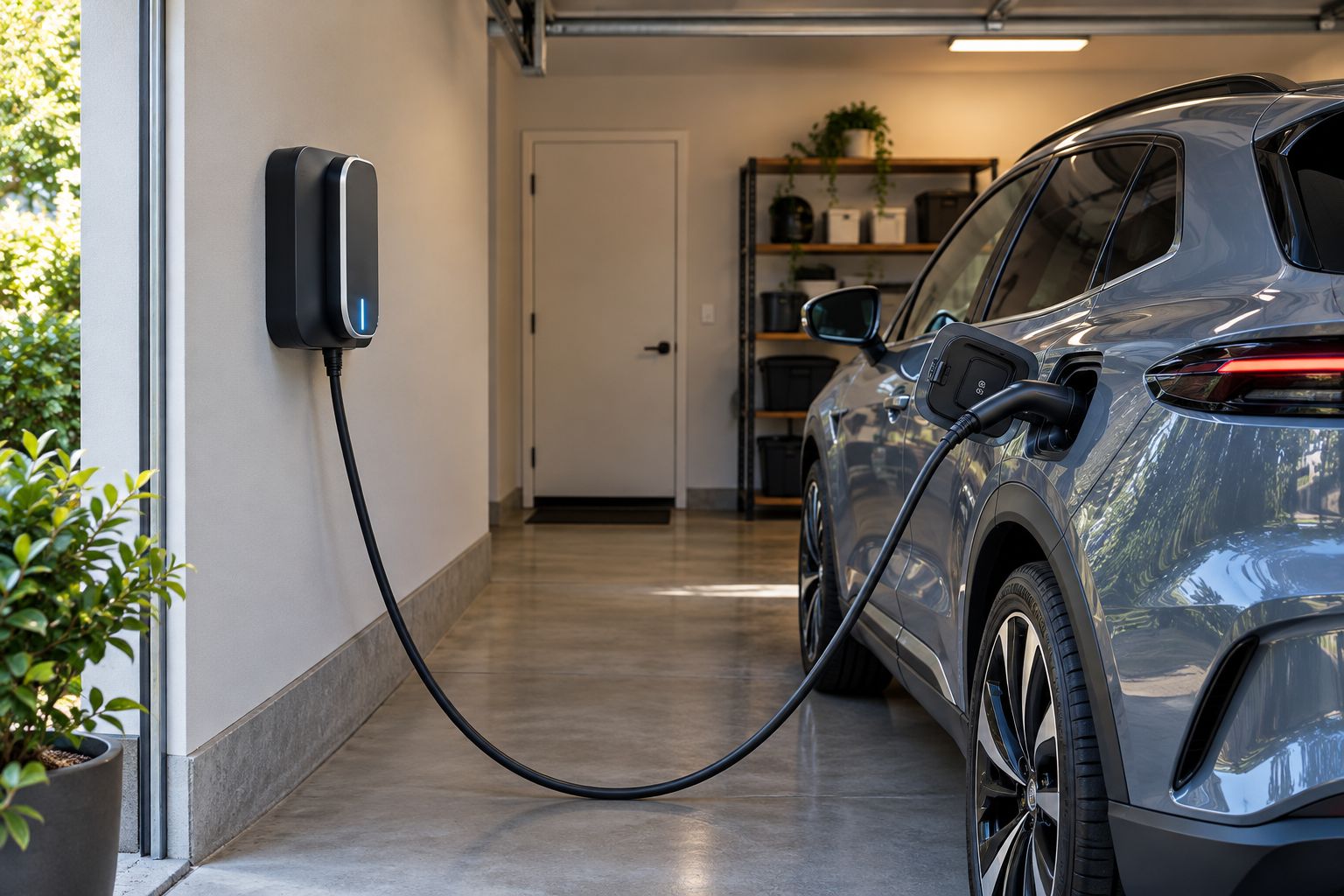
A clear parking plan also prevents a poor cable layout. Position the equipment so the cable reaches the charging port without depending on an extension cord or crossing a routine walking path.
Electrical capacity comes before maximum amperage
An empty breaker space does not establish available electrical capacity. An electrician needs to assess the service, panel, existing loads, proposed charging load, and permitted installation methods.
A panel replacement is not an automatic requirement for every EV charger. Depending on the property and equipment, the design question includes charging current, load management, circuit routing, and whether existing equipment is suitable.
GSHA Services, LTD provides Level 2 EV charger installation and electrical services for homeowners in Woodstock and Lake Bluff. Ask for an assessment that identifies the proposed charging setting, connection method, and electrical work rather than requesting the highest amperage without a site review.
Request an EV charger assessment
Discuss your vehicle, parking location, and electrical installation with GSHA Services, LTD.
Which Level 2 charger should you choose?
Choose a 48-amp hardwired configuration as the starting point for a high-output installation, then adjust the specification to your vehicle and property. Choose 50 amps only when the additional output serves a documented need and the equipment and electrical design support it.
Choose 40 amps or 32 amps when that output satisfies your charging window. A lower-output installation that restores the energy you need is a better fit than unused charging capacity.
For a 2026 purchase, compare complete configurations—not just equipment names. Record the intended output, connector, connection method, circuit design, and any load-management requirements before approving installation.
FAQ
What is the fastest Level 2 charging option in this ranking?
A 50-amp charger on a nominal 240-volt supply is the fastest configuration in this ranking, supplying 12 kW before losses. Your vehicle must accept that AC input to use the full output.
Is a 50-amp charger much faster than a 48-amp charger?
At 240 volts, 50-amp charging supplies 0.48 kW more than 48-amp charging. The difference provides no benefit when the vehicle’s AC input limit is below both configurations.
Does a 48-amp EV charger need a 60-amp circuit?
Under standard continuous-load sizing, 48-amp charging corresponds to a 60-amp circuit. The installation must also satisfy manufacturer instructions and applicable electrical requirements.
Will a faster home charger work with every electric vehicle?
A higher-output charger does not make every vehicle charge faster. Connector compatibility and the vehicle’s onboard AC charging limit determine whether the equipment connects and how much power the vehicle accepts.
Can I use an existing garage outlet for Level 2 charging?
An existing outlet needs an electrical assessment before you use it for Level 2 charging. The receptacle, circuit, protection, and selected charging equipment must be suitable for the application.
Do I need a new electrical panel for an EV charger?
A new panel is not an automatic requirement for EV charging. A load assessment and equipment review establish whether the proposed installation needs electrical changes.
Should I choose a charger by miles of range added per hour?
Compare electrical power first because miles added per hour depend on the vehicle’s energy use. Battery conditions, charging losses, and vehicle limits also affect the result.
One last thing
A charger marked for high output can run at a lower commissioned setting. Before comparing the app’s charging rate with the equipment label, check the installed current limit and the vehicle’s AC specification—neither the label nor battery size tells the whole story.
For installation questions, call (224) 220-3660. Have your vehicle details and parking location ready.


