
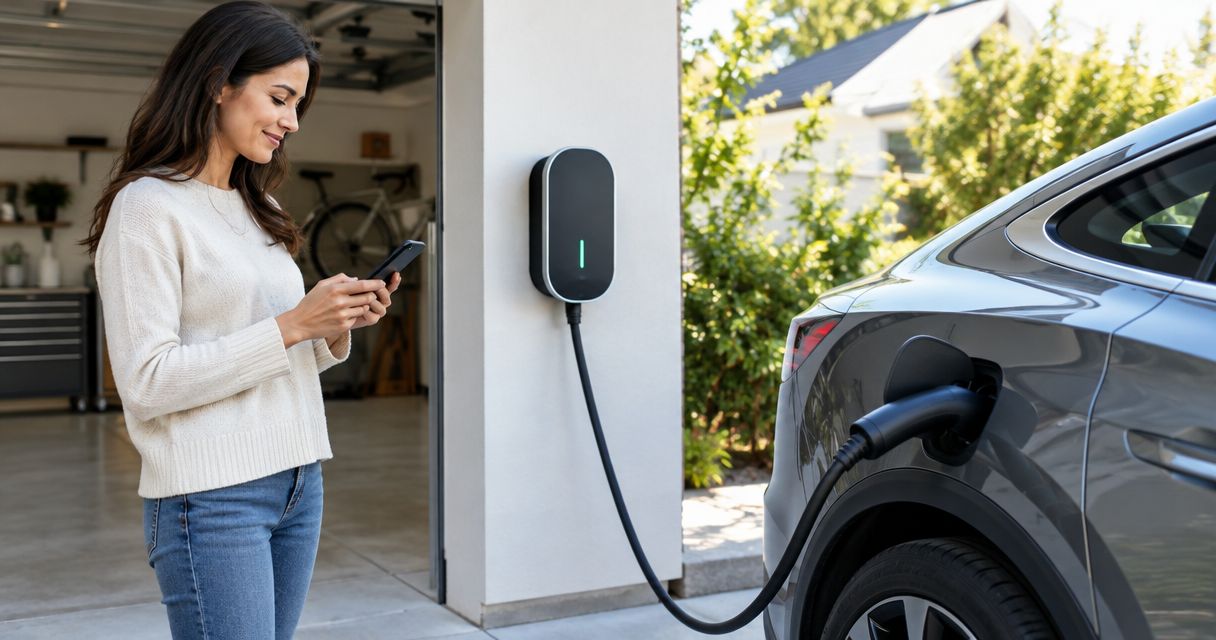
Installing a ChargePoint electric vehicle charger at home requires a property-specific quote: the total depends on your electrical capacity, wiring route, connection method, and local permit requirements. Separate the charger purchase from the electrical installation, and confirm whether the quote includes panel work, inspection, trenching, and wall repairs before you approve it.
- A ChargePoint electric vehicle charger needs a site-specific installation quote, not a hardware-only budget.
- Compare electrical capacity, circuit routing, permits, and restoration before choosing an installation proposal.
- Hardwired and plug-in installations have different connection requirements; neither eliminates the electrical assessment.
- GSHA Services provides electrical installation and repair for homeowners in Woodstock, Lake Bluff, and surrounding areas.
Why this matters
A charger listing and an installation proposal describe different purchases. The listing covers equipment; the proposal must explain how that equipment will connect safely to your home's electrical system.
For a 2026 project, compare the finished installation rather than the electrician's labor line alone. The EV charger installation cost by brand guide addresses the broader budgeting question; this page focuses on the property conditions and quote details you need to resolve before approving work.
The right comparison is the same completed scope, not the smallest headline total. A proposal that excludes a required circuit or permit is not equivalent to one that includes it.
How much does it cost to install a ChargePoint EV charger at home?
Your installation quote must account for the circuit, cable route, connection, mounting, and any work needed to support the additional electrical load. There is no single installation scope that fits every home, even when the charger model stays the same.
Ask the installer to separate these items in writing. That makes exclusions visible and lets you compare proposals without guessing what each contractor included.
| Quote component | What it should describe | What to verify |
|---|---|---|
| Charger equipment | Exact model and who supplies it | Whether equipment is included or homeowner-supplied |
| Electrical assessment | Existing service, panel, and calculated load | Whether the proposed circuit fits the electrical system |
| Branch circuit | Breaker, conductors, and wiring method | Circuit rating and compatibility with the equipment |
| Installation route | Path from panel to parking location | Exposed routing, concealed work, or trenching |
| Charger connection | Hardwired connection or compatible receptacle | Compliance with the exact model's instructions |
| Permits and inspection | Required local approvals | Who applies, schedules, and closes out the permit |
| Restoration | Repairs after electrical work | Whether drywall, paint, paving, or landscaping is excluded |
For your 2026 quote, distinguish required work from optional improvements. A panel replacement should have a documented electrical reason, not appear as an unexplained addition.
What belongs outside the installation total?
Keep ongoing charging electricity separate from installation. Your utility rate, vehicle use, and charging schedule affect operating expense; they do not describe the work required to install the circuit.
Also separate unrelated electrical improvements. If you want garage lighting or additional outlets installed during the same visit, request distinct line items so the charger project remains easy to compare.
Hardwired or plug-in: which installation fits your home?
Choose the connection method after confirming the exact equipment instructions and electrical requirements. A plug-in configuration requires a suitable receptacle and circuit; a hardwired configuration connects directly through the approved wiring arrangement.
Neither approach makes an unsuitable circuit acceptable. An existing garage receptacle is not proof that the circuit supports the intended charger.
| Connection option | Best for | Practical advantage | Limitation |
|---|---|---|---|
| Hardwired | Homeowners planning a fixed charging location | Does not require a plug-and-receptacle connection | Removal or relocation involves electrical disconnection |
| Plug-in | Homeowners whose selected equipment permits a receptacle connection | Equipment can be unplugged without disconnecting fixed wiring | Requires a suitable receptacle, circuit, and installation arrangement |
The connector that attaches to your vehicle is a separate compatibility question. Confirm vehicle compatibility before purchasing equipment, then confirm the electrical connection with the installer.
Avoid choosing a configuration based only on the word portable. Moving the charging unit does not move the electrical capacity or approved connection point with it.
Why ChargePoint installation scope varies
The main differences between installation proposals come from the building and the proposed circuit. Ask each contractor to address these factors explicitly:
- Electrical capacity: The calculated load determines whether the existing system can support the proposed charging arrangement.
- Panel condition and compatibility: Breaker compatibility, equipment condition, and usable panel space affect the work required.
- Wiring route: A direct, accessible route differs from concealed wiring through finished rooms or a route to a detached garage.
- Connection method: A receptacle installation and a hardwired connection require different connection components.
- Site work: Trenching, wall penetrations, and surface restoration create scope beyond mounting the charger.
- Local requirements: Permits, inspections, and applicable electrical rules must match the property jurisdiction.
For a 2026 installation in Woodstock, Lake Bluff, or surrounding communities, identify the authority responsible for the property's electrical permit. Do not assume that a nearby property's requirements apply to yours.
A photograph helps establish the discussion, but it does not replace measurements or an electrical assessment. Concealed conditions and actual circuit routing still need confirmation.
Does your electrical panel need an upgrade?
An EV charger does not automatically require a panel replacement. The decision depends on the electrical load calculation, existing equipment, and proposed charging current—not simply whether an unused breaker position exists.
Home Level 2 charging typically uses 240 volts. That voltage identifies the supply arrangement; it does not establish how much additional current your home can support.
Ask for the proposed charging current and the branch-circuit rating separately. EV charging is treated as a continuous load under electrical code, so the permitted charging current and circuit rating are not interchangeable.
For example, a 40-amp continuous charging load generally requires a circuit rated for at least 50 amps under the standard 125 percent sizing rule. This is a circuit-sizing example, not a specification for every charger or permission to change a charger setting yourself.
Ask what makes the upgrade necessary
If a contractor proposes replacing the panel, ask whether the reason is calculated capacity, equipment condition, breaker compatibility, or another documented issue. Different problems require different solutions.
Where permitted and compatible, a lower charging setting or an approved load-management arrangement can change the design. Have the electrician evaluate those choices rather than assuming the highest available charging setting is required.
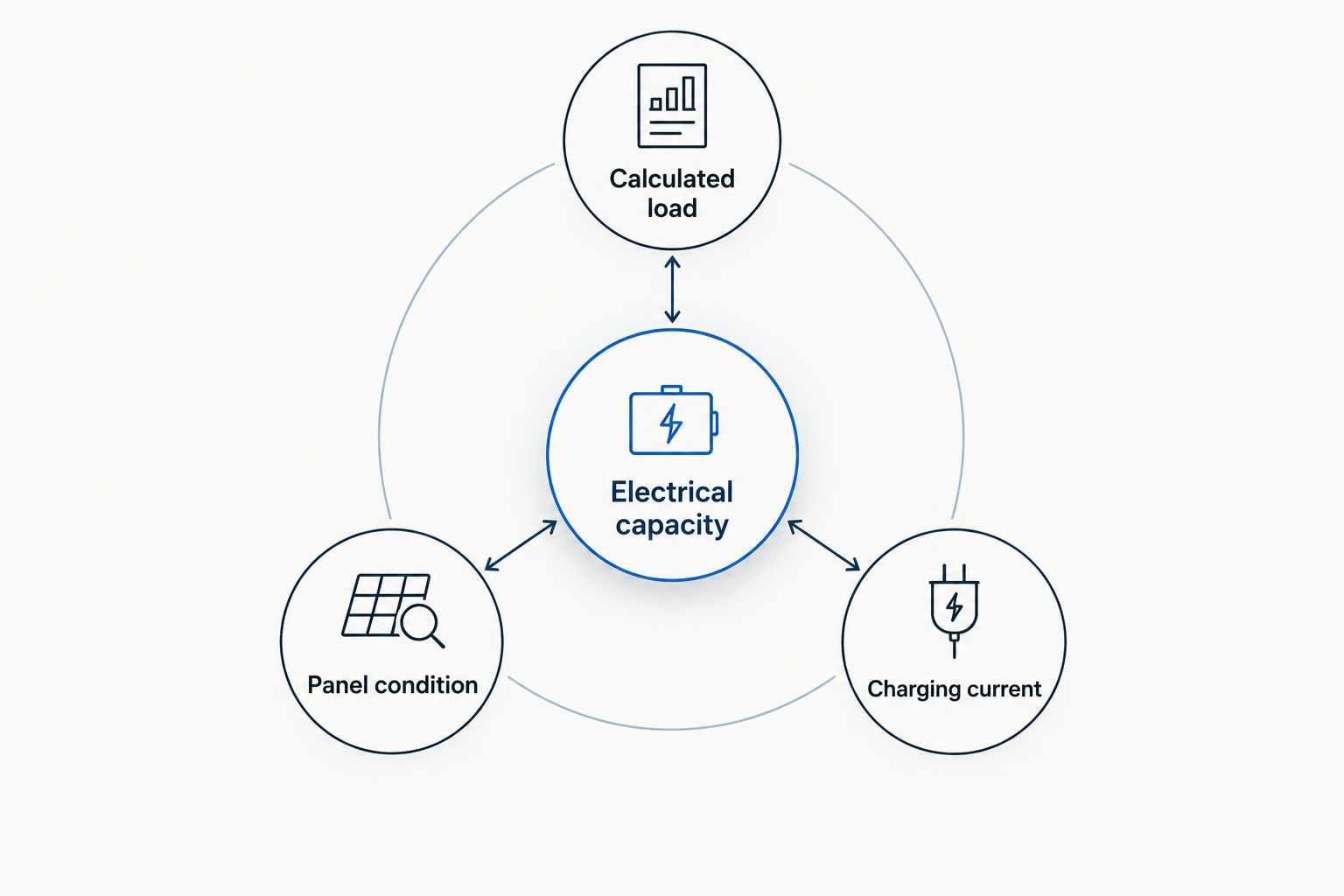
The practical goal is a compliant installation that meets your charging needs. A larger setting has no value if the electrical system or vehicle cannot use it as intended.
What should you prepare before requesting a quote?
Give every contractor the same project information. Consistent inputs make differences between proposals easier to explain and reduce assumptions about the installation location.
- Identify the equipment. Provide the exact charger model, installation instructions, and whether you already own it.
- Show the electrical equipment. Share clear photographs of accessible panel labels and the surrounding area without removing covers.
- Mark the parking location. Explain where the vehicle parks and where its charging port sits when parked normally.
- Describe the route. Note finished walls, detached buildings, outdoor sections, and surfaces between the panel and charger.
- State your charging needs. Discuss daily driving and overnight parking time instead of requesting maximum output by default.
- List planned electrical changes. Mention other proposed electrical additions so the assessment considers the intended project.
Do not remove an electrical panel cover to obtain photographs. Leave internal inspection, testing, circuit installation, and configuration to qualified electrical personnel.
GSHA Services is a local electrical-service option for homeowners in Woodstock, Lake Bluff, and surrounding areas. Its stated services include electrical installation and repair; confirm the charger-specific project scope when requesting service.
How should you compare hardwired and plug-in proposals?
Compare connection methods only after holding the rest of the design constant. The same charger location, intended charging current, cable route, and permit scope should appear in both proposals.
Differences in hardwired versus plug-in installation costs must be evaluated alongside the required connection hardware and circuit protection. A proposal that reuses an existing receptacle is not equivalent to one that installs a new branch circuit unless the existing circuit has been assessed and accepted for the intended use.
For your 2026 comparison, ask each installer to identify the following:
- The exact equipment configuration covered by the proposal.
- The intended charging setting and corresponding circuit requirements.
- Whether existing wiring or a receptacle will be reused.
- Which protective devices the installation requires.
- Which inspection and commissioning tasks are included.
Keep the answer in writing. A verbal statement that everything is included does not resolve an exclusion elsewhere in the proposal.
Check what happens if conditions change
Ask how the contractor handles concealed damage, an unsuitable existing circuit, or an unexpected obstruction. The proposal should explain how additional work is authorized before it starts.
This does not require predicting every hidden condition. It requires a clear approval process so you retain control over changes to the agreed scope.
What should happen before the installation is finished?
Completion means more than seeing the charger power on. The installer should verify the electrical installation, apply the appropriate equipment settings, and complete any required inspection process.
Ask for a handoff that identifies the charger circuit, explains the configured charging limit, and covers the manufacturer's normal operating instructions. If an inspection remains outstanding, clarify what must happen before the project is considered complete.
Your 2026 project records should include the proposal, approved changes, permit documentation where applicable, and equipment information. Keep these together so future electrical work starts with an accurate description of the installed system.
GSHA Services provides electrical installation and repair in its stated Illinois service area. When contacting Gshaservices, describe the charger model, parking location, and electrical work you need rather than requesting an undefined installation total.
FAQ
How much does it cost to install a ChargePoint electric vehicle charger at home?
A ChargePoint electric vehicle charger installation requires a property-specific quote covering the circuit, wiring route, connection, and required approvals. Confirm whether equipment, panel work, trenching, and restoration are included before comparing totals.
Does a ChargePoint home charger require 240 volts?
Home Level 2 charging typically uses 240 volts, but the exact equipment instructions determine the permitted installation. Have the electrician verify the selected model, supply requirements, and circuit design.
Do I need a new electrical panel for an EV charger?
An EV charger does not automatically require a new electrical panel. The electrical load calculation, panel condition, and proposed charging current determine the work required.
Is a hardwired charger better than a plug-in charger?
A hardwired charger suits a fixed installation, while a plug-in arrangement suits compatible equipment installed on an appropriate receptacle circuit. Neither option removes the need to assess electrical capacity and follow installation instructions.
Can I use an existing garage outlet for my charger?
Use an existing garage outlet only after a qualified electrician confirms that the receptacle, wiring, protection, and circuit are suitable for the selected charger. An outlet’s appearance does not establish its suitability for continuous EV charging.
Does a 40-amp charging load need a 50-amp circuit?
A 40-amp continuous charging load generally requires at least a 50-amp circuit under the standard 125 percent sizing rule. The electrician must also follow the equipment instructions and applicable local requirements.
What should I ask an electrician before approving an EV charger quote?
Ask for the exact equipment configuration, charging setting, circuit scope, permit responsibilities, and exclusions. Confirm how additional work is approved if the installer finds unsuitable existing wiring or concealed conditions.
One last thing
Choose the mounting location around the parked vehicle before approving the wiring route. A convenient wall is not necessarily a convenient charging position if the cable crosses a walkway or cannot reach the vehicle's charging port comfortably.
Show the installer how you normally park. Resolving placement before work starts keeps the electrical design tied to the way you will actually use the charger.
Related guides
- How to connect a ChargePoint Home Flex charger to your electrical panel
- Best home EV charger brands
- Best electrical panel upgrade brands


