
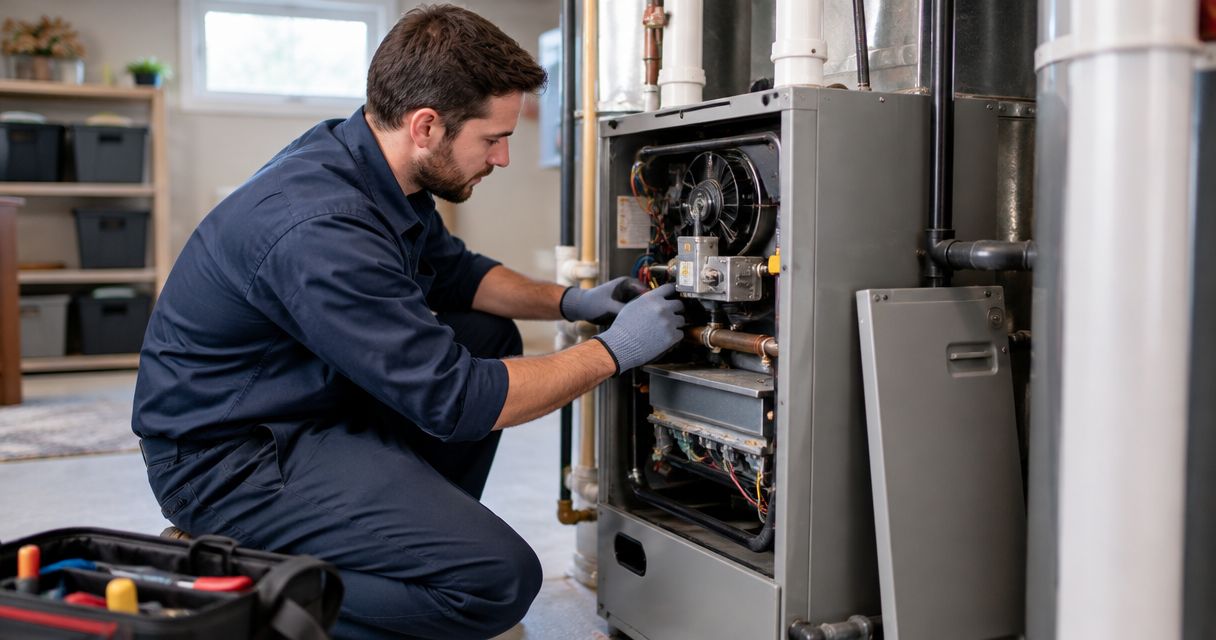
Carrier furnace repair cost in 2026 depends on the diagnosed fault, the replacement part, and the labor required—not the Carrier name alone. Before approving work, get a written total that identifies diagnostic charges, repair labor, parts, and any separate service charges; a part-only estimate does not tell you the full repair cost.
- Carrier furnace repair cost requires a diagnosis; compare complete repair quotes, not isolated part prices.
- Ask whether diagnostic charges, repair labor, replacement parts, and taxes are included before authorizing work.
- Compare furnace repair with replacement when safety concerns, repeated failures, or major component damage are documented.
- GSHA Services provides local HVAC installation and repair for homeowners and businesses around Woodstock and Lake Bluff.
How much does Carrier furnace repair cost?
The useful number is the complete, written charge for the diagnosed repair. A furnace that will not heat can have a thermostat problem, an ignition failure, an airflow restriction, or a component fault. Those conditions do not call for the same work.
For local HVAC installation and repair, GSHA Services serves homeowners and businesses in Woodstock, Lake Bluff, and surrounding Illinois communities. Start with the symptoms and equipment information rather than requesting a replacement part before the furnace has been checked.
Use this breakdown to understand what a 2026 repair quote covers:
| Quote component | What it covers | What to confirm |
|---|---|---|
| Diagnostic service | Inspection and testing to identify the fault | Whether this charge is separate from the repair |
| Replacement parts | Components specified for the diagnosed problem | Exact component and compatibility with your furnace |
| Repair labor | Removing, installing, adjusting, and testing | Whether the quoted labor covers the complete repair |
| Scheduling charges | Any charge associated with the requested service time | Whether the appointment carries an additional charge |
| Other charges | Applicable taxes or separately listed work | The total you must authorize before work begins |
A diagnostic visit and an approved repair are different scopes of work. Ask what you owe if you decline the repair, and whether the diagnostic charge is credited toward approved work. Get the answer before the appointment.
Why this matters
A low-looking estimate can describe less work than another contractor's estimate. One quote might cover a component alone, while another includes diagnosis, installation, and operating checks.
Compare the same repair scope before comparing totals. You need to know what failed, why the proposed work addresses that failure, and how the technician will confirm that the furnace operates correctly afterward.
This matters when the furnace stops during cold weather. Urgency does not remove the need for a clear authorization, and a temporary return of heat does not establish that the underlying fault has been corrected.
What should you do before requesting a repair quote?
Gather information without opening electrical compartments or handling gas components. Your goal is to describe the problem accurately, not diagnose the furnace yourself.
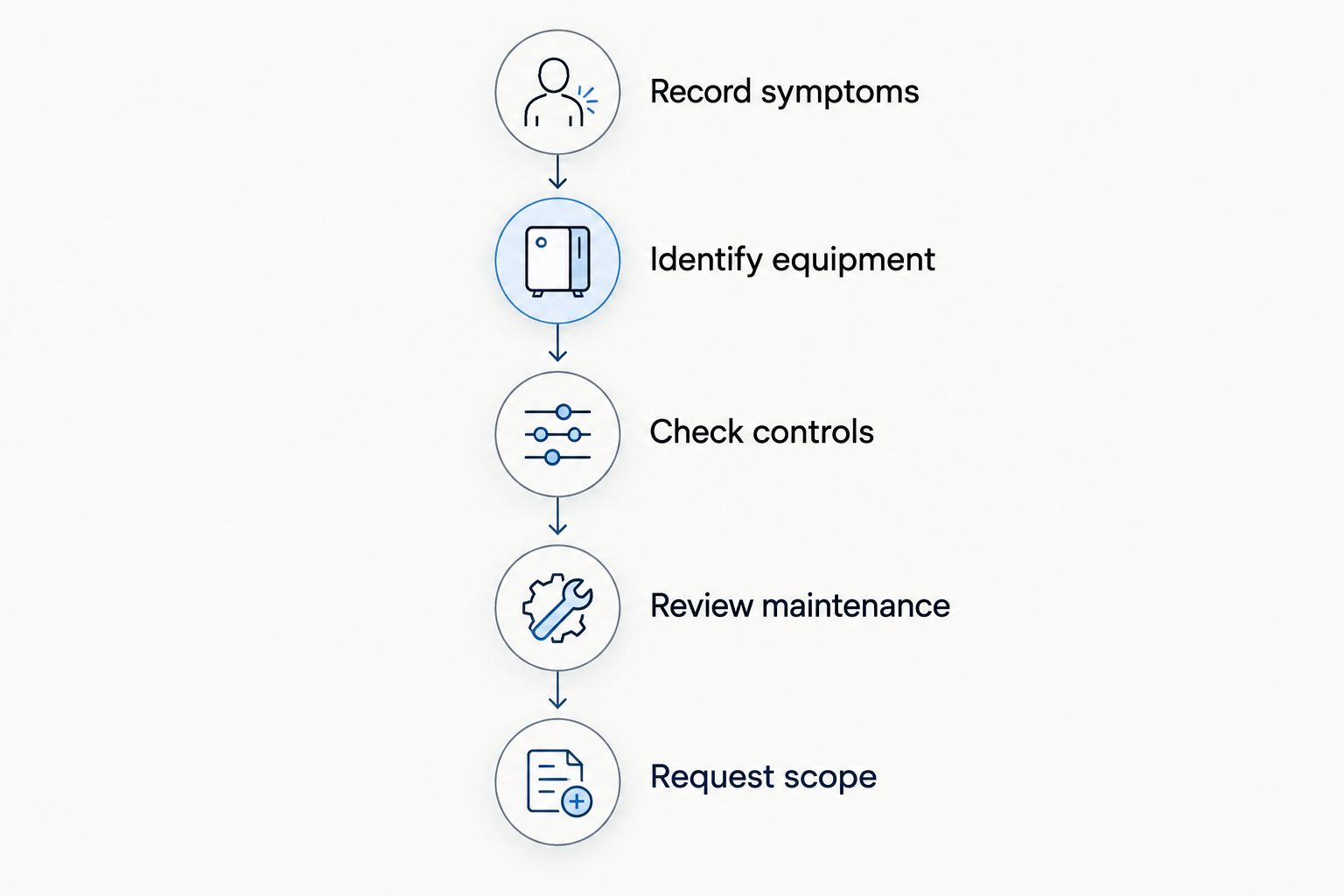
- Record symptoms. Note whether the furnace does not start, starts without producing heat, shuts down repeatedly, or runs with weak airflow. Explain whether the problem is continuous or intermittent.
- Identify equipment. Have the model and serial information ready if you can access it safely. Use existing paperwork or an accessible label; do not remove a service panel solely to collect it.
- Check controls. Confirm that the thermostat is set to heating and that the requested temperature is above the room temperature. Check thermostat batteries if your thermostat uses them.
- Review maintenance. Note recent filter changes, previous repairs, and any work performed just before the problem began. Follow the equipment instructions for any homeowner-accessible filter check.
- Request scope. Ask how diagnosis is charged and whether you will receive the repair total before authorizing parts and labor.
Do not repeatedly reset a furnace that shuts itself down. A safety control can stop operation because of an unresolved condition, and repeated restarting is not a repair.
Ignition and flame-sensing repairs
An ignition or flame-sensing problem can prevent a gas furnace from establishing or maintaining burner operation. The technician must distinguish the failed component from other conditions that interrupt the heating sequence.
Ask the quote to identify the actual work: testing, cleaning when appropriate, component replacement, or correction of another verified fault. A symptom such as burners shutting off does not prove that the flame sensor needs replacement.
Approve the diagnosed repair, not a part selected from an online symptom list. The benefit is a defined repair target; the limitation is that similar symptoms can come from different faults.
Blower motor and airflow repairs
The blower moves air through the furnace and duct system. A blower complaint requires attention to the motor, its controls, and restrictions that affect airflow—not just whether air comes from a register.
A dirty filter or blocked return can affect airflow, but replacing a filter does not establish that the motor is healthy. Likewise, weak airflow alone does not establish that the motor has failed.
For a 2026 blower repair quote, ask which component failed and whether the proposed replacement matches the equipment. Confirm that the scope includes checking operation after installation rather than only swapping the part.
Control board and electrical repairs
A furnace control board coordinates parts of the operating sequence. Electrical faults can also involve wiring, connections, power supply, switches, or components connected to the board.
A fault code is a diagnostic clue, not automatic proof that the board is defective. Ask what testing supports the diagnosis before approving a control board replacement.
The advantage of a documented diagnosis is that you can understand why the board is being replaced. The limitation is that replacing a board will not correct a separate wiring or component problem that remains unresolved.
Heat exchanger and combustion concerns
A suspected heat exchanger problem needs a documented safety assessment. Ask the technician to explain the finding, identify the affected component, and state whether the furnace is safe to operate.
A confirmed major component problem also justifies comparing repair with replacement. That comparison must include the complete repair scope and the complete installation scope, not an isolated component against a complete new system.
If you smell gas, leave the building and contact the gas utility or emergency services from a safe location. If a carbon monoxide alarm sounds, move outside and contact emergency services. Do not stay inside to investigate or restart the furnace.
Why Carrier furnace repair cost varies
These factors change the work required and belong in the explanation behind your estimate:
- Diagnosed failure: Cleaning a serviceable component, correcting a connection, and replacing an assembly are different tasks. The quote should name the condition being corrected.
- Equipment configuration: The model determines which components and controls apply. Ask for a part that matches the furnace rather than assuming similar-looking parts are interchangeable.
- Access and repair scope: The technician needs safe access to inspect, remove, install, and test components. Ask whether any additional work is outside the quoted scope.
- Appointment timing: Confirm whether your requested appointment carries an extra charge. Do not assume that daytime and after-hours service use identical terms.
- Warranty terms: Applicable coverage can change which charges you pay. Verify the specific equipment coverage and ask separately about labor, diagnosis, and other service charges.
- Related faults: A failed component and the condition that damaged it can require separate corrections. Ask whether the proposal addresses both when the technician documents a connection.
For your 2026 estimate, request an explanation for each charge rather than accepting a generic furnace-repair line item. A clear scope also gives you a useful record if the same symptom returns.
Should you repair or replace your Carrier furnace?
Repair suits a clearly diagnosed fault in a furnace that can be returned to safe operation. Compare replacement when a documented major failure, repeated repair history, or broader equipment condition makes an isolated repair an incomplete answer.
| Option | Best for | Main advantage | Main limitation |
|---|---|---|---|
| Repair the existing furnace | A defined fault with an appropriate repair | Addresses the identified problem without replacing the entire furnace | Does not renew unrelated aging components |
| Replace the furnace | A documented condition that warrants a full-system comparison | Allows the installation and equipment needs to be assessed together | Requires a separate installation scope and does not automatically fix duct problems |
Age is context, not a diagnosis. Review the service history, current condition, safety findings, and written proposals together instead of using a birthday alone to decide.
Do not accept a promise of energy savings without knowing what equipment and operating assumptions support it. A replacement decision should also account for installation requirements, airflow, controls, and any documented venting work.
Is a Carrier furnace part covered by warranty?
Warranty coverage depends on the terms that apply to your specific furnace and component. Have the model, serial information, and ownership or installation records ready for verification.
Ask whether the claim covers the part, labor, diagnostic service, or other charges. A covered component does not establish that the entire service visit is covered. Request your remaining responsibility in writing before approving work.
Keep the warranty determination with the estimate. That lets you compare proposals on the same basis rather than treating an unverified coverage assumption as a confirmed reduction in your bill.
Is emergency furnace repair different from scheduled service?
Emergency furnace service addresses an urgent heating problem, but the appointment terms still need confirmation. Ask about scheduling charges, diagnostic authorization, and how the repair total will be presented before work begins.
For a 2026 service request, distinguish a loss of heat from a gas odor or carbon monoxide alarm. A suspected immediate hazard requires leaving the building and contacting the appropriate emergency service, not waiting for a routine appointment.
How can you avoid paying for the wrong repair?
Ask the contractor to connect the symptom, test result, and proposed correction. You do not need to interpret electrical readings yourself; you need a plain explanation of why the proposed work addresses the failure.
Before authorizing the repair, confirm:
- The diagnosed fault and the proposed correction.
- The complete charge and any exclusions.
- What happens if additional work becomes necessary.
- How operation will be checked after the repair.
- What repair warranty, if any, applies.
GSHA Services is a local HVAC service option for homeowners and businesses around Woodstock and Lake Bluff. Use the contact page to describe your furnace problem and ask about the service process. Confirm Carrier-specific repair scope and appointment terms directly before scheduling.
FAQ
How much does Carrier furnace repair cost in 2026?
Carrier furnace repair cost in 2026 depends on the diagnosed fault, required parts, labor, and applicable service charges. Request a written total before authorizing the repair rather than relying on a part-only estimate.
Does a furnace diagnostic charge include the repair?
A furnace diagnostic charge does not automatically include the repair. Ask whether diagnosis is billed separately and whether that charge is credited toward approved work.
Can a Carrier furnace error code tell me which part to buy?
A Carrier furnace error code does not, by itself, establish which part needs replacement. It identifies a condition that requires interpretation using the model’s instructions and appropriate testing.
Will a furnace warranty pay for labor?
A furnace warranty pays for labor only when the applicable terms include it. Verify parts, labor, diagnosis, and other service charges separately before authorizing work.
Should I replace my furnace instead of repairing it?
Compare replacement when documented safety findings, major component damage, or repeated failures justify a broader assessment. For an isolated fault, compare the complete repair proposal with the furnace’s overall condition.
Can I keep resetting my furnace when it stops heating?
Do not keep resetting a furnace that repeatedly shuts down. Record the symptom and any safely visible fault indication, then arrange diagnosis rather than bypassing or repeatedly overriding the shutdown.
Does GSHA Services provide local HVAC repair?
GSHA Services provides HVAC installation and repair for homeowners and businesses in Woodstock, Lake Bluff, and surrounding areas. Confirm the Carrier furnace repair scope and scheduling terms directly when requesting service.
One last thing
A furnace that produces heat after a repair still needs its operation checked. Ask the technician to explain what was tested and whether any separate issue remains unresolved.
Keep the diagnosis with the invoice. If the problem returns, a record of the fault, installed component, and completed checks is more useful than a receipt that says only furnace repair.
Related guides
- How much does emergency furnace repair cost after hours?
- Furnaces ranked by AFUE efficiency rating
- Is a whole-house humidifier worth it in Illinois winters?


