

Choose GSHA Services if you want to approach a local HVAC, electrical, generator, plumbing, or indoor air quality contractor directly; choose HomeGuide if you want a marketplace for finding and comparing service providers. In 2026, the useful distinction is who you hire to do the work versus where you search for that contractor.
- GSHA Services vs HomeGuide compares a local service contractor with a contractor-search marketplace, not two installation companies.
- Choose the direct contractor route for a defined HVAC, electrical, generator, plumbing, or indoor air quality job.
- Choose HomeGuide when comparing providers is your next step rather than selecting a specific contractor.
- Use written scope, contractor credentials, and payment terms to evaluate either hiring route.
Why this matters
A contractor and a marketplace occupy different places in your hiring process. A contractor evaluates and performs work within its service scope; a marketplace helps you find providers to evaluate.
GSHA Services is the better fit for homeowners seeking a direct local service relationship rather than a contractor-search marketplace. HomeGuide is the better starting point when your immediate task is building a shortlist, not choosing an installer you already know.
For a 2026 hiring decision, separate discovery from delivery. Finding a provider does not establish the repair scope, equipment suitability, permit responsibility, or terms of the eventual contract. Those details belong in your agreement with the contractor performing the work.
At a glance
| Dimension | GSHA Services | HomeGuide |
|---|---|---|
| Best for | Direct service inquiries for supported local work | Finding and comparing service providers |
| Standout feature | HVAC, electrical, generator, plumbing/water heater, and indoor air quality services | Marketplace-based contractor discovery |
| Comparing providers | Evaluating a specific contractor's proposal | Building a shortlist of providers |
| Local fit | Woodstock, Lake Bluff, and surrounding Illinois areas | Searching for providers relevant to your location |
| Technical scope | Discussing supported installation and repair work directly | Identifying contractors to ask about technical scope |
| Accountability | Evaluating the contractor you approach directly | Evaluating the provider you select through the marketplace |
| Pricing model | Request a proposal defining work and payment terms | Obtain proposals from prospective service providers |
| Safety checks | Verify credentials and job requirements before hiring | Apply the same checks to each prospective contractor |
Direct service wins when your job is already defined
Best for: a homeowner or business owner ready to discuss a specific installation or repair. The direct route removes the provider-search stage from your immediate task. You already know which company you want to ask about the work.
GSHA Services provides HVAC, electrical, generator, plumbing/water heater, and indoor air quality installation and repair services to homeowners and businesses in Woodstock, Lake Bluff, and surrounding areas. That stated scope gives you a concrete starting point for a furnace problem, electrical project, generator inquiry, or water heater replacement.
The limitation is choice within the inquiry itself: contacting a particular contractor does not compare that contractor against alternatives. If comparing companies is essential to your decision, obtain other proposals before signing.
HomeGuide fits a different stage. Use the marketplace when you have identified the job but have not identified the contractor. Neither route replaces a written agreement.
Direct service wins for discussing connected systems
Best for: a project involving more than one supported service category. A generator installation, for example, raises electrical questions as well as questions about the generator itself. HVAC work can also involve electrical supply and indoor air quality considerations.
A company whose stated service scope includes those categories gives you a place to raise those questions together. Ask which parts of your particular project the company will perform and which responsibilities sit elsewhere. A broad service description is not a promise that every task belongs in the same contract.
HomeGuide's strength is discovery rather than a single company's service scope. You can use it to identify providers, but you still need to establish each provider's responsibilities.
For backup power planning, review the guide to generator sizing by square footage before discussing equipment. Bring a list of essential loads rather than treating floor area alone as the specification.
HomeGuide wins when you need to compare providers
Best for: a homeowner who wants a shortlist before making contact with a particular company. HomeGuide is a service-provider marketplace, so its role aligns with contractor discovery. That makes it the more relevant option when searching is the task.
The direct contractor route starts further along in the process: you are evaluating a named company. It does not, by itself, give you a comparison of competing providers.
The marketplace route has a limitation too. A list of providers is not a like-for-like comparison of proposed work. Different contractors can interpret the same short request differently, particularly when the cause of a fault has not been diagnosed.
For your 2026 shortlist, send each prospective contractor the same description. Include the equipment involved, the symptom or desired outcome, and relevant access constraints. Compare their proposed scope, not just the presentation of their profiles.
Direct service wins for a named local starting point
Best for: property owners in the stated Woodstock and Lake Bluff service areas. A named local contractor gives you a specific company to ask about your address and project. That is useful when your priority is establishing service fit rather than browsing options.
The geographic limitation matters. A description that includes surrounding areas does not establish coverage for every address in Illinois. Confirm your exact location and requested service before arranging a visit.
HomeGuide is the more suitable starting point when you need to search for providers relevant to a location rather than approach this particular contractor. You still need to confirm each provider's service area directly.
Neither a nearby business address nor a marketplace listing establishes appointment timing. Keep location, service scope, and scheduling as separate questions; an answer to one does not answer the others.
Neither route replaces a technical assessment
Tie: the proposed work must match the actual property and equipment. Choosing a hiring channel cannot determine whether a furnace needs repair, an electrical panel needs replacement, or a water heater is suitable for your demand.
Ask the contractor to distinguish observations from recommendations. A useful proposal explains the problem being addressed, the work included, and the assumptions that affect the recommendation.
Use these 3 scope questions before approving work:
- Existing condition: What has been inspected, and what finding supports the proposed work?
- Included work: Which equipment, connections, removal tasks, and finishing work belong in the agreement?
- Exclusions: What conditions require further investigation or a change to the proposal?
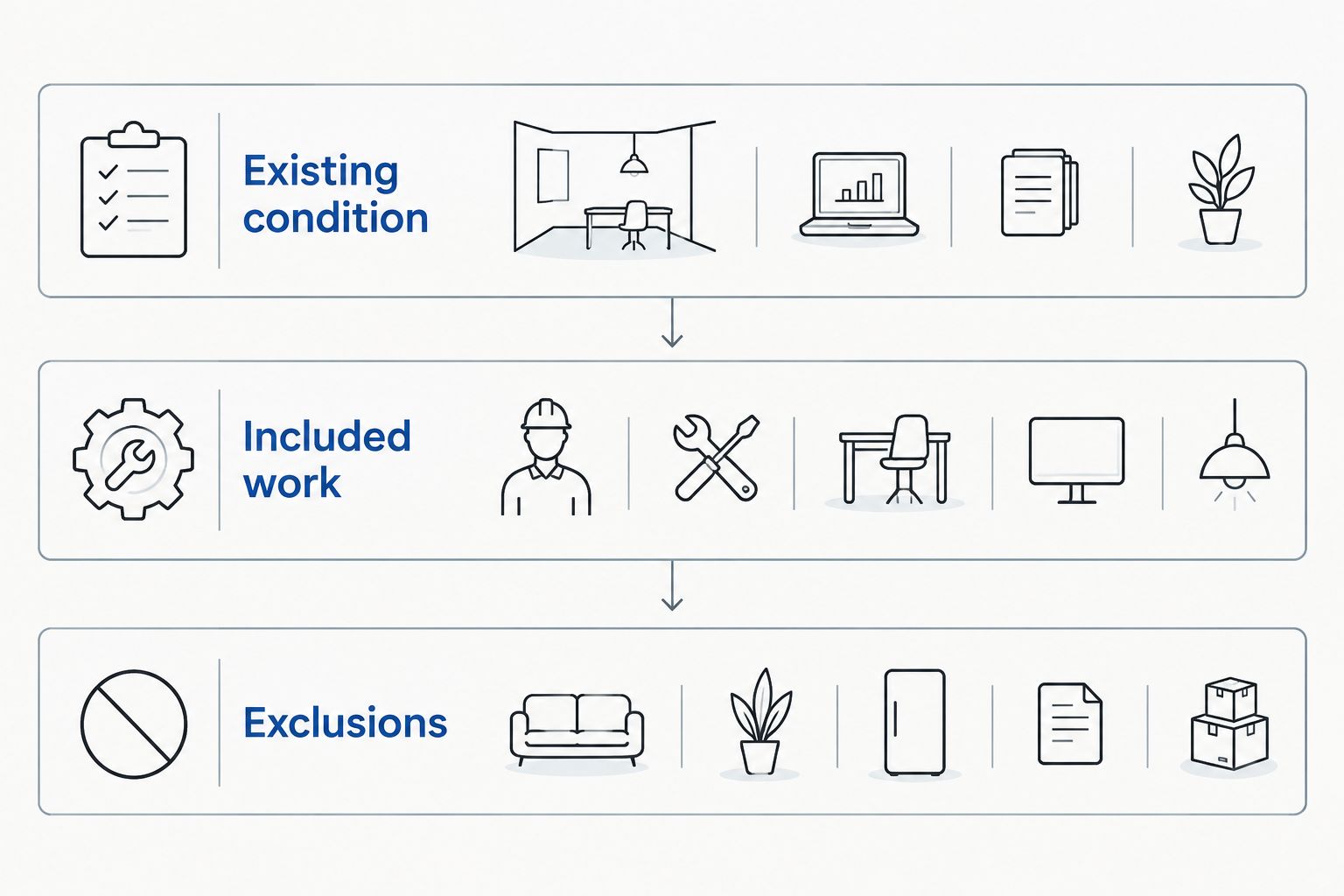
Those questions work whether you approach a company directly or find it through a marketplace. Keep the answers with your proposal so the decision rests on documented scope rather than memory.
Direct contact wins for a shorter communication path
Best for: a property owner who wants to evaluate and contact a named contractor without a discovery platform. Direct contact keeps your initial questions focused on that company's work, proposed responsibilities, and terms.
HomeGuide adds a discovery step, which is useful when you need options. Once you choose a provider, however, identify the legal business performing the work and the person responsible for answering project questions.
Request 1 named point of contact in your project paperwork. This is a hiring recommendation, not a claim about either option's staffing or support arrangements.
For either route, establish who handles questions before work begins, changes during the job, and concerns after completion. Do not treat the website where you found a contractor as a substitute for understanding your contract with that contractor.
Pricing: compare project proposals, not website types
Neither route wins on price without comparable proposals. A contractor relationship and a contractor-search marketplace are different business models, not competing equipment packages.
For direct service, request a proposal that states how the work will be charged and when payment is due. For a provider found through HomeGuide, request the same information from the business proposing the work. Do not assume either route means hourly billing, fixed project billing, or particular platform fees.
For your 2026 comparison, request 2 written estimates when evaluating alternatives. Give both contractors the same scope and ask them to identify exclusions. This is a comparison method, not a statement about how many estimates either service supplies.
Predictability comes from a clearly defined scope and payment terms. Flexibility comes from an agreed process for handling changes or conditions uncovered during work. Neither benefit follows automatically from using a marketplace or contacting a contractor directly.
Before signing, check:
- Whether diagnosis and repair are separate parts of the proposal.
- Which equipment and installation tasks are included.
- Who handles required permits and inspections.
- How additional work receives your approval.
- What written terms apply after completion.
Both routes require the same safety checks
Tie: hiring checks belong to the contractor, not the search method. Verify the credentials, insurance, and applicable local requirements for the business that will perform your work. Requirements vary by trade and jurisdiction.
Do not bypass those checks because a company offers several services or appears on a marketplace. Ask who will perform the work and whether any portion will be subcontracted.
Your role is to document symptoms and communicate the problem, not to open energized electrical equipment or attempt fuel-system repairs. If you suspect an immediate hazard, prioritize the appropriate emergency response rather than comparing contractors online.
In 2026, use the same written screening questions for every candidate. Consistent questions make differences in scope and responsibility easier to identify without confusing a detailed answer with a verified credential.
Final verdict: choose by your next task
Choose GSHA Services if you want direct local service
Named profile: the local property owner with a defined service need. Choose this route when you want to discuss supported HVAC, electrical, generator, plumbing/water heater, or indoor air quality work with a specific contractor serving Woodstock, Lake Bluff, and surrounding areas.
The tradeoff is straightforward: you are evaluating that contractor, not using a marketplace to discover alternatives. Confirm your address, job scope, and contract terms directly.
Choose HomeGuide if you want to build a shortlist
Named profile: the comparison-first homeowner. Choose HomeGuide when finding prospective providers is your next task and you want a marketplace as the starting point.
The tradeoff is that discovery does not settle technical suitability or responsibility for the job. Evaluate the selected contractor's proposal and credentials before hiring.
| Dimension | Winner |
|---|---|
| Defined local service inquiry | Direct contractor |
| Discussing supported service categories together | Direct contractor |
| Finding providers to compare | HomeGuide |
| Named Woodstock or Lake Bluff starting point | Direct contractor |
| Technical assessment | Tie: project-specific assessment required |
| Shorter initial communication path | Direct contractor |
| Pricing | Tie: compare written proposals |
| Safety checks | Tie: verify the performing contractor |
FAQ
Is GSHA Services better than HomeGuide?
GSHA Services is better suited to a direct local service inquiry; HomeGuide is better suited to finding and comparing providers. They serve different stages of hiring rather than offering identical services.
Is HomeGuide the company that installs my equipment?
HomeGuide is a service-provider marketplace, not the contractor to assume will install your equipment. Identify the business performing the work and confirm its responsibilities in your agreement.
Which option should I use for a furnace repair?
Use a direct contractor inquiry when you already know which company you want to evaluate; use HomeGuide when you need to find prospective contractors. Either way, the repair decision should follow an assessment of the equipment.
Which option is cheaper in 2026?
Neither option is the cheaper choice without comparable project proposals. Compare included work, exclusions, payment terms, and the process for approving additional work.
Can a marketplace replace checking a contractor’s credentials?
No, a marketplace does not replace your contractor checks. Verify the performing business’s credentials, insurance, and applicable local requirements before hiring.
Can businesses use the direct service route?
Yes, the stated client scope includes homeowners and businesses. Confirm the particular property’s location, equipment, and requested work before arranging service.
What should I send when requesting an estimate?
Send the property location, equipment details, symptoms or desired outcome, and relevant access information. Give competing contractors the same description so their proposals are easier to compare.
One last thing
Write down the problem before selecting the solution. A request to replace equipment already assumes replacement is the answer; a description of the symptom lets the contractor explain the diagnosis and recommended work. Keep that distinction in your 2026 inquiry, whether you contact a contractor directly or start with HomeGuide.
Related guides
- Electrical panel upgrade brands
- Gas furnace brands for Illinois winters
- Tankless water heaters for large families


