
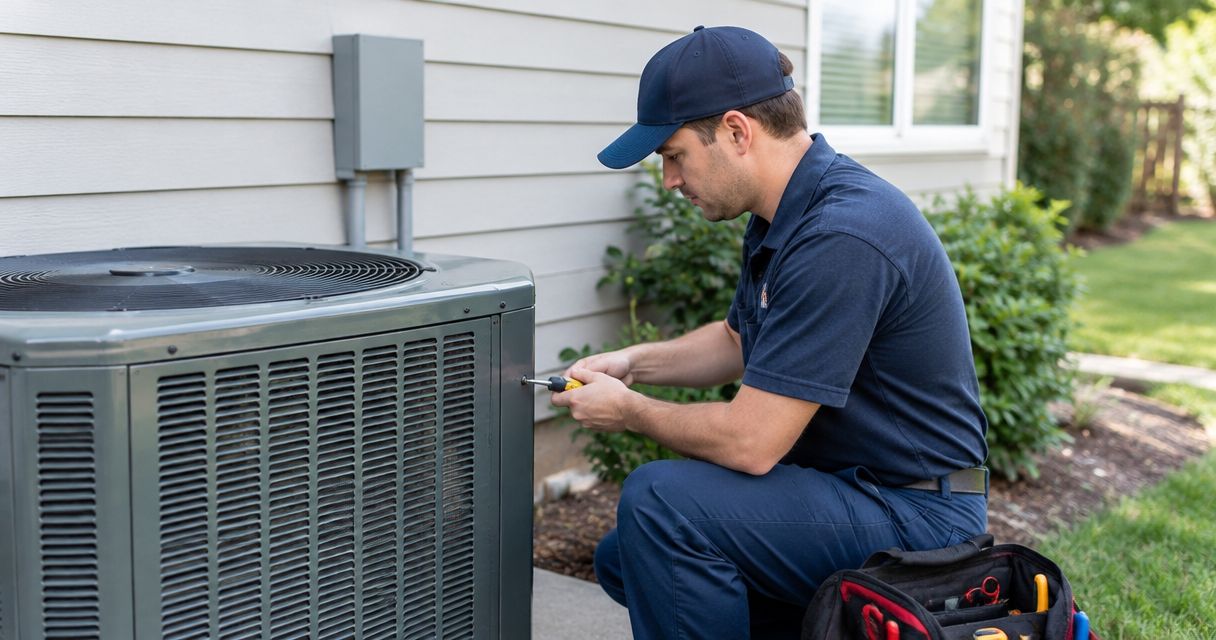
Trane air conditioner repair requires a system-specific quote in 2026; the brand name alone does not establish the repair total. Ask for a written estimate that separates diagnosis, parts, labor, and any refrigerant work. Warranty coverage also needs checking because a covered component does not automatically mean every service charge is covered.
- Trane air conditioner repair needs a diagnosis before you can compare repair estimates meaningfully.
- Ask for separate descriptions of diagnostic work, replacement parts, labor, and refrigerant service.
- Gshaservices provides local HVAC installation and repair for homeowners and businesses around Woodstock and Lake Bluff.
- Compare repair with replacement when the proposed work leaves other documented problems unresolved.
Why this matters
An air conditioner that stops cooling does not identify its own failed component. A thermostat problem, restricted airflow, electrical fault, and refrigerant problem require different tests and different work. Approving a replacement part before the cause is established risks paying for work that does not solve the complaint.
Gshaservices is best for homeowners and businesses seeking local HVAC installation and repair around Woodstock and Lake Bluff. To discuss a cooling problem, contact Gshaservices with the equipment model, symptoms, and any previous repair records. Confirm service scope for your specific Trane equipment when scheduling.
How much does Trane air conditioner repair cost?
Your Trane air conditioner repair estimate in 2026 should describe the diagnosed fault and the work required to correct it. Compare the scope before comparing the total. Two estimates are not equivalent if one includes testing and follow-up checks while another lists only a replacement component.
Use this breakdown to review a written proposal:
| Estimate item | What it should explain | What to confirm |
|---|---|---|
| Diagnosis | Tests used to identify the fault | Whether diagnostic charges are separate from repair work |
| Replacement parts | The component being replaced | Exact compatibility with your equipment |
| Labor | Removal, installation, and related work | What the quoted labor includes |
| Refrigerant work | Leak investigation, repair, recovery, or charging as applicable | Whether the source of refrigerant loss is addressed |
| Completion testing | Checks after the repair | How operation will be verified |
| Warranty treatment | Applicable coverage and exclusions | Which charges remain your responsibility |
Approve a defined repair, not an unexplained total. A useful proposal connects the symptom you reported to a verified fault, then explains how the proposed work addresses that fault.
Keep the diagnostic findings with your equipment records. If the same symptom returns, those records help the next technician distinguish a recurring problem from a separate failure.
Electrical and control repairs: check the failed component
Electrical and control work includes faults involving items such as a capacitor, contactor, thermostat circuit, or control board. These components have different jobs. A system that will not start needs testing rather than a parts replacement based only on the symptom.
The benefit of a targeted component repair is that it addresses an identified fault without replacing the entire cooling system. The limitation is equally important: replacing an electrical component does not correct an unrelated airflow or refrigerant problem.
Ask the technician to explain:
- Which component failed and what test supports that diagnosis.
- Whether damaged wiring or another condition contributed to the failure.
- Whether the proposed part matches the equipment requirements.
- How the system will be checked after installation.
Do not open electrical compartments or test capacitors yourself. Electrical components can present a shock hazard even after equipment has been switched off. Leave internal testing and repairs to a qualified technician.
Refrigerant and coil repairs: identify the leak first
Refrigerant work needs a clear scope. Adding refrigerant and repairing a leak are not the same service, and a proposal should make that distinction explicit.
A functioning sealed refrigerant circuit does not consume refrigerant as fuel. If the charge is low, ask what caused the loss and how that conclusion was reached. A recharge without an explanation leaves the underlying problem unresolved.
Leak repair can preserve an otherwise serviceable system. Its limitation is that access, component condition, and the location of the leak determine what work is practical. A leaking connection and a leaking coil are different repair proposals.
For a 2026 estimate, request the refrigerant designation from the equipment label rather than assuming it from the Trane name. Ask whether the proposal includes leak testing, the identified repair, and the procedures needed to return the system to service.
Compressor repairs: compare the complete scope
A compressor diagnosis deserves a clear explanation because the compressor is part of the refrigerant circuit and depends on proper electrical supply and operating conditions. A unit that does not start is not, by itself, proof that the compressor has failed.
Ask whether electrical starting components, controls, and relevant operating conditions were checked before compressor replacement was recommended. The written diagnosis should distinguish a failed compressor from a problem preventing a working compressor from operating.
Replacing a confirmed failed compressor can retain the existing system. The drawback is that it does not renew the remaining equipment. Existing coil, blower, control, or duct problems still need separate consideration.
Request a replacement alternative when a major repair leaves other documented defects unresolved. Use the AC installation cost guide to prepare questions about the installation scope, not as a substitute for a property-specific proposal.
Why Trane air conditioner repair estimates vary
A useful 2026 comparison accounts for the equipment and the work, not just the logo on the outdoor cabinet. These factors change the repair scope:
- Diagnosed fault. A control problem, refrigerant leak, and compressor failure require different procedures and components.
- Equipment configuration. The model and installed controls determine which parts and diagnostic procedures apply.
- Refrigerant requirements. The equipment's specified refrigerant and the work required on the circuit affect the proposal.
- Access and condition. Restricted access, damaged connections, and deteriorated surrounding components change the work required.
- Warranty terms. Coverage depends on the applicable warranty, equipment records, and exclusions—not a general assumption about the brand.
- Unresolved related problems. Restricted airflow or another verified defect needs attention if it contributed to the failure.
Ask each contractor to identify which factors apply to your system. A longer proposal is not automatically better; a clear proposal is one that explains the required work without mixing confirmed findings with optional recommendations.
What should you check before scheduling service?
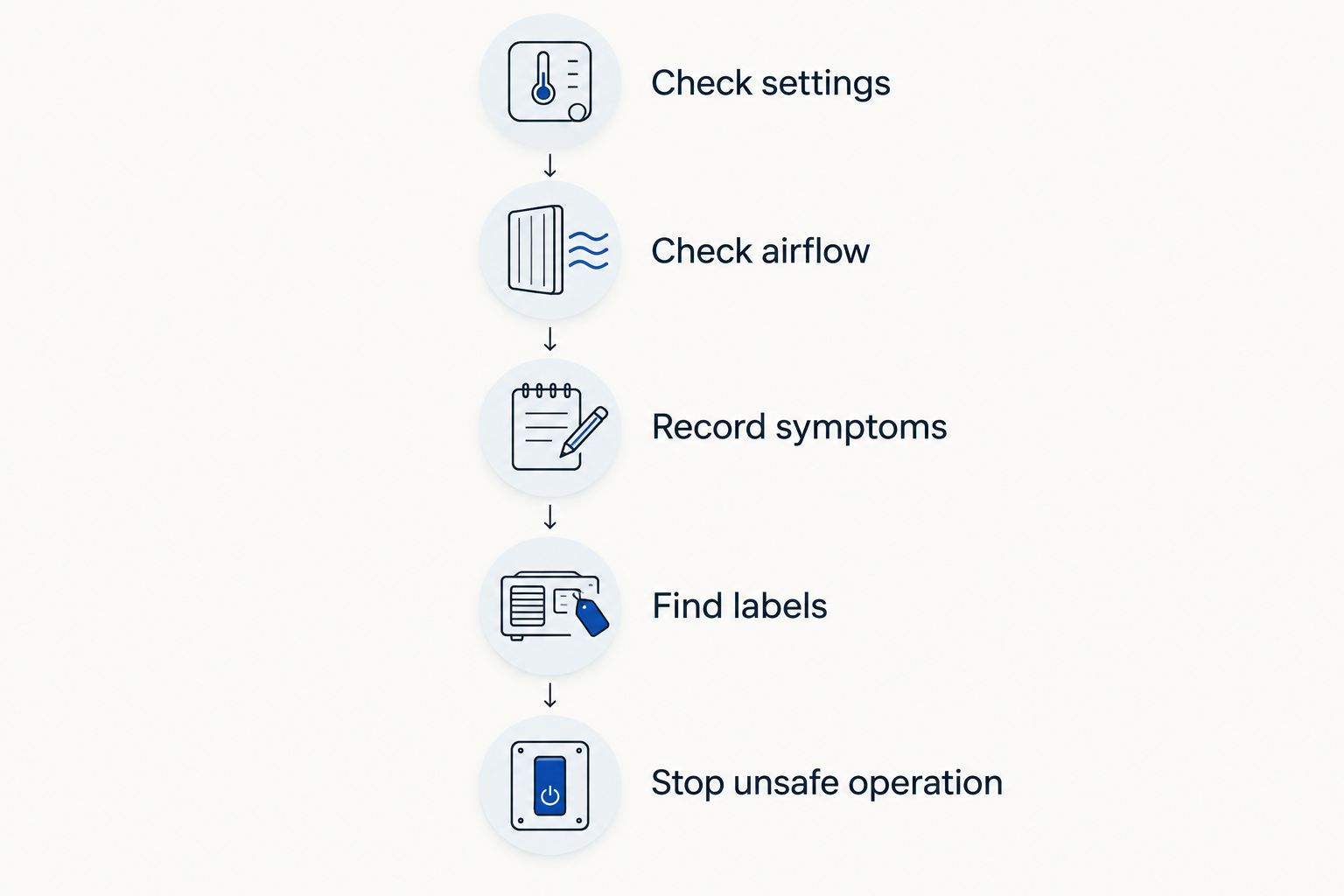
You can collect useful information without opening the equipment. Keep these checks observational and follow the owner's manual for your particular system.
- Check settings. Confirm that the thermostat is set to cooling and that the requested temperature is below the room temperature.
- Check airflow. Inspect an accessible filter according to the owner's manual and note whether supply registers are blocked.
- Record symptoms. Note whether the indoor blower runs, the outdoor unit operates, or cooling stops after startup.
- Find labels. Photograph accessible model and serial labels without removing electrical covers.
- Stop unsafe operation. Turn cooling off if you see ice, smell burning, or notice repeated breaker trips, then request service.
These observations help describe the problem. They do not establish which component needs replacement. Do not repeatedly reset a breaker, bypass a safety control, or chip ice from a coil.
Should you repair or replace a Trane air conditioner?
Repair and replacement solve different problems. Repair addresses a defined fault in the existing system; replacement changes the equipment and requires its own installation assessment. Neither choice is justified by a brand name or an unexplained age cutoff alone.
| Option | Best for | Main benefit | Main limitation |
|---|---|---|---|
| Targeted repair | An isolated, confirmed fault with no other documented major defects | Retains the existing system | Other existing components remain in service |
| Further diagnosis | An uncertain cause or conflicting recommendations | Reduces guesswork before approving work | Does not itself restore cooling |
| System replacement | Comparing alternatives to major work or multiple documented defects | Addresses equipment replacement as a complete project | Requires a separate installation scope and assessment |
For a fair decision, ask for the findings supporting each recommendation. Maintenance history, previous failures, equipment condition, and remaining warranty coverage belong in that discussion.
Do not accept an efficiency claim as proof that your current system needs replacement. Ask what is wrong with the installed equipment and what the proposed replacement changes. The recommendation should address your actual cooling problem.
Request HVAC service
Discuss your cooling symptoms and confirm service scope for your equipment.
Does a Trane warranty cover air conditioner repair?
A Trane warranty covers only the items and conditions stated in the applicable warranty documents. Confirm coverage using your equipment records rather than assuming that a covered part includes diagnosis, labor, refrigerant, or every associated service.
Ask the service provider to distinguish warranty-covered work from customer-paid work before authorization. Keep the written explanation with the estimate so the final invoice can be checked against the agreed scope.
Is adding refrigerant enough to fix an AC that is not cooling?
Adding refrigerant is not a complete repair when an unresolved leak caused the refrigerant loss. Poor cooling also has causes unrelated to refrigerant charge, so diagnosis comes first.
Ask what measurements support the recommendation and whether a leak was identified. Do not approve a recharge solely because the air from the registers feels warmer than expected.
Can you get a useful repair estimate over the phone?
A phone conversation can establish the service process and the information needed for a visit, but it cannot verify an internal component failure. Describe the symptoms without presenting an assumed diagnosis as fact.
For example, report that the outdoor unit hums but does not start rather than declaring that it needs a compressor. That distinction keeps the discussion focused on testing instead of a preselected replacement part.
FAQ
How do I get an accurate Trane air conditioner repair estimate?
Get a diagnosis followed by a written repair scope. Ask the provider to separate diagnostic work, parts, labor, refrigerant service, and applicable warranty treatment.
Does a Trane air conditioner need a Trane-branded replacement part?
Replacement parts must meet the equipment’s applicable requirements. Ask the technician to identify the proposed part and explain its compatibility rather than choosing by appearance alone.
Should I turn off my Trane AC if it freezes?
Turn cooling off if you see ice and arrange an inspection. Do not chip away the ice; the cause needs checking before normal cooling resumes.
Is a humming outdoor unit proof that the compressor is bad?
A humming outdoor unit is not proof of compressor failure. Electrical starting components, controls, and other operating conditions need testing before a compressor replacement is approved.
Will a new thermostat fix an air conditioner that is not cooling?
A new thermostat fixes the problem only when the thermostat or its control function is the diagnosed cause. It does not repair a refrigerant leak, failed motor, or restricted airflow.
What should I ask before approving AC repair in 2026?
Ask for the diagnosed fault, supporting test results, proposed work, and completion checks. Confirm which charges and procedures are included before authorizing the repair.
Can Gshaservices help with a local cooling problem?
Gshaservices provides HVAC installation and repair for homeowners and businesses around Woodstock and Lake Bluff, Illinois. Confirm the service scope for your specific Trane model when you contact the team.
One last thing
Ask what the technician will verify before calling the repair complete. A replaced part is not the same as a demonstrated return to proper operation. The completion check should relate directly to your original complaint, whether that was failed startup, weak airflow, or cooling that stopped during operation.
Related guides
- Best smart thermostats for forced-air HVAC systems
- Can dirty air ducts cause poor indoor air quality?
- Best central air conditioners for small homes


