
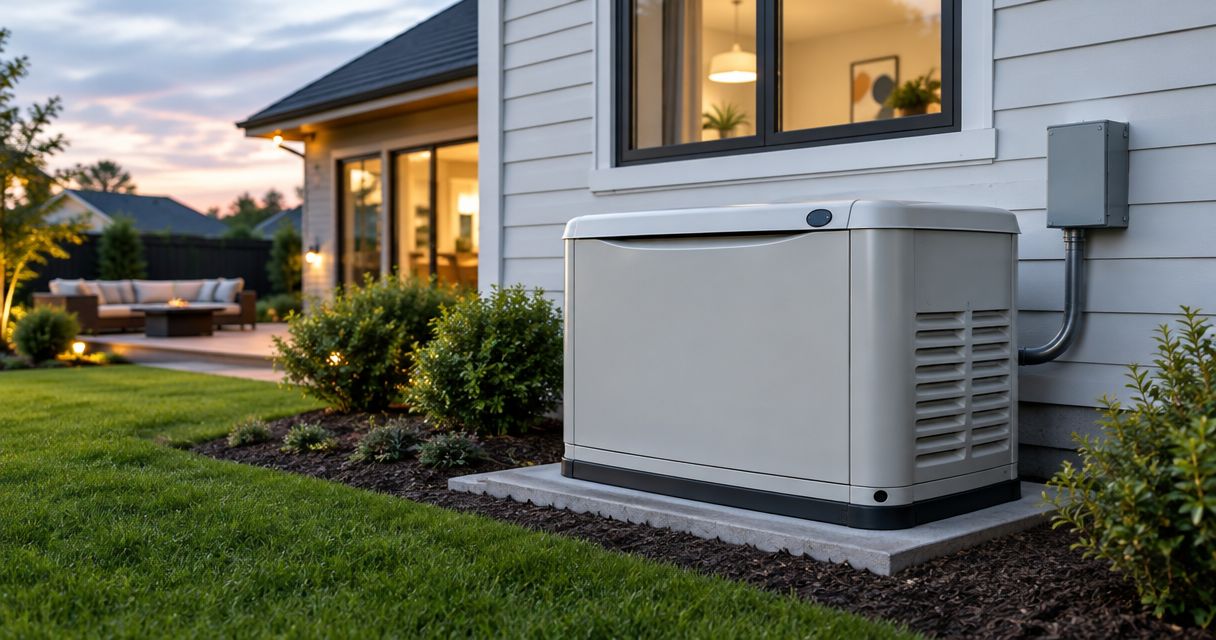
Whole house generator cost by size follows one rule in 2026: every step up in kW raises the unit price, the gas supply requirement and the install labor, and the install side moves as much as the generator itself. This page ranks the common size tiers by what they run and what drives their cost, so you can pick a tier before you ask for a quote.
- Whole house generator cost by size rises with every kW tier, and install scope often swings the total more than the unit.
- Pick the smallest tier that runs your largest load, usually central air, a well pump or electric heat.
- Oversizing adds unit, fuel line and pad cost with no benefit during an outage.
- Exact dollar figures depend on fuel, panel, distance and permits, so quote the full install, not the unit.
Short answer: what size costs what
The average whole house generator cost is not one number, because the unit is only part of the bill. A 10 kW to 12 kW standby unit sits at the low end, 20 kW to 26 kW units cover most full-size homes, and anything above 26 kW is for large homes with multiple HVAC systems or electric heat. Prices are deliberately not hard-coded on this page: they change with supply and local labor, and a stale figure misleads more than it helps.
What holds steady is the order. Cost climbs with kW, and fuel supply and electrical work climb with it. If you want to match a size to your home first, start with the best Generac generator size for your square footage.
Whole house generator cost by size tier
The table is the page. Read the cost position as relative: lowest to highest across tiers, not a dollar amount.
| Size tier | What it typically runs | Relative cost | Main cost drivers | Best for |
|---|---|---|---|---|
| 10-12 kW | Essential circuits: refrigerator, lights, furnace blower, sump pump, outlets | Lowest | Smaller unit, smaller gas line, simple transfer switch | Small homes, load-managed backup |
| 14-18 kW | Essential circuits plus one central AC or a larger well pump | Low to mid | Mid-size unit, larger transfer switch | Mid-size homes with one HVAC system |
| 20-24 kW | Most of a typical home, including central air and major appliances | Mid to high | Larger unit, bigger gas supply, bigger pad and panel work | Full-size homes, the common choice |
| 26 kW | Whole home with two HVAC zones or heavier electric loads | High | Largest residential unit tier, heaviest fuel demand | Large homes, home offices, workshops |
| 30 kW and up | Whole home plus electric heat, EV charging, shops | Highest | Commercial-style install, service upgrade often needed | Very large or heavy-load properties |
The tiers are ranges, not exact product specs. Specific models differ, and the brand you choose changes the lineup. Compare brands in the best whole house generator brands ranking.
High and low: where the money goes
The 10-12 kW tier is the cheapest to buy and the simplest to install. The 26 kW tier and above is the most expensive, and it is also where the electrical side starts to dominate. A larger unit often needs a larger gas line, a heavier transfer switch and sometimes a service panel upgrade.
The jump that surprises homeowners is between 14-18 kW and 20-24 kW. That is where central air and electric appliances move from "managed" to "just runs," and the install scope grows with it.
Method and limits of this comparison
The tiers reflect common residential standby sizing practice and the way manufacturers group their lineups. This page does not publish dollar figures, because install cost depends on your fuel, distance from the meter, panel condition and local permits. A site visit, not a table, produces the real number.
What actually sets the total
The unit price is the visible line. These items usually decide the final quote:
- Fuel type. Natural gas, propane and diesel need different supply work. See whole house generators ranked by fuel type.
- Gas line run. Longer runs and larger pipe diameters cost more, and bigger kW tiers need bigger supply.
- Transfer switch. Whole-home switches cost more than essential-circuit switches.
- Pad and placement. Code clearances from windows and structures can force longer runs.
- Panel and service condition. An older panel may need work before the generator can connect.
- Permits and inspection. These vary by municipality in Illinois.
- Propane tanks. If you run on propane, tank size and placement add scope. The propane tank to whole house generator workflow covers the fuel side step by step.
Get a generator quote
Sizing and install scope for Woodstock, Lake Bluff and nearby areas.
Size by size: verdicts
10-12 kW: lowest cost, tight margin
Runs the essentials and little else. If you add central air to the list, the unit works hard or needs load management. Verdict: Buy if your home is small and you accept managed loads. Skip if you expect to run everything.
Best for: small homes, condos, budget-limited installs.
Cons: little headroom, and central air can push it past its limit.
14-18 kW: the middle step
One central AC plus essentials is the typical design target. It leaves less margin than the next tier, but it costs less to install. Verdict: Buy for mid-size homes with one HVAC system and no electric heat.
Best for: mid-size homes with a single air conditioner.
Cons: a second HVAC zone or an electric dryer plus range will force load management.
20-24 kW: the default for full-size homes
This tier covers most of a typical house without constant load juggling. It is the most commonly installed class for full-size homes. Verdict: Buy unless your loads are unusually light or heavy.
Best for: full-size homes that want to run central air during an outage.
Cons: higher fuel demand and a larger install footprint than the tiers below.
26 kW and up: for large loads only
The largest residential tier suits big homes, multiple HVAC systems and electric heat. Verdict: Hold until a load calculation proves you need it. Oversizing adds cost with no outage benefit.
Best for: large homes, home-based businesses and heavy electric loads. The electrical upgrades for home-based businesses guide covers the panel side.
Cons: the highest unit, fuel and electrical cost of any tier.
How to use these tiers in 2026
Treat the table as a shortlist tool, not a price list.
- List your largest loads. Central air, well pump, electric heat and EV charging set the floor. The biggest single load usually decides the tier.
- Pick the smallest tier that clears them. Anything above that is cost with no outage benefit.
- Choose fuel before size. Fuel availability can change the shortlist. Natural gas supply limits can cap what you can run.
- Quote the full install. Compare quotes line by line: unit, transfer switch, gas line, pad, permit. A low unit price with a thin scope is a warning sign.
- Plan for the long term. Maintenance and monitoring also affect ownership cost across 2026 and beyond.
If you are comparing units against the leading brand, the Generac alternatives page lists the other options.
Capacity is also how product lines are organized elsewhere: for a sense of how manufacturers group portable and standby units, see these generators by power output, since a size tier is only useful if it maps to the loads you actually run during an outage in 2026. generators by power output
FAQ
How much does a whole house generator cost by size?
Cost rises with every kW tier, from 10-12 kW at the low end to 26 kW and above at the top. The unit is only part of the bill, so get a full-install quote for exact figures in 2026.
What size whole house generator do I need?
Size it to your largest loads: central air, well pump and electric heat. Most full-size homes land in the 20-24 kW tier, while smaller homes with managed loads fit 10-18 kW.
Is a bigger generator always better?
No. Oversizing raises unit, fuel line and pad cost without improving outage performance. Choose the smallest tier that runs your largest load.
Does fuel type change the cost?
Yes. Natural gas, propane and diesel each need different supply work, and the larger the kW tier, the more fuel supply matters.
Is installation cost separate from the generator price?
Yes. The transfer switch, gas line, pad, permits and any panel work are quoted on top of the unit, and they can change the total substantially.
Can a 22 kW generator run a whole house?
A 20-24 kW unit runs most of a typical full-size home, including central air. Very large homes or heavy electric loads may need a load calculation to confirm.
Who installs whole house generators in Woodstock and Lake Bluff?
GSHA Services installs and repairs generators for homeowners and businesses in Woodstock and Lake Bluff, Illinois and surrounding areas.
One last thing
Ask every installer for a written load calculation before you compare prices. Two quotes for different kW tiers are not comparable, and the calculation is what shows whether the tier is right. GSHA Services handles generator sizing and installation in Woodstock, Lake Bluff and nearby Illinois communities, and it keeps the same load-first method in 2026.
Related guides
- Best Generac generator size for your square footage
- Whole house generators ranked by fuel type
- Best whole house generator brands
- Propane tank to whole house generator fuel supply workflow


