
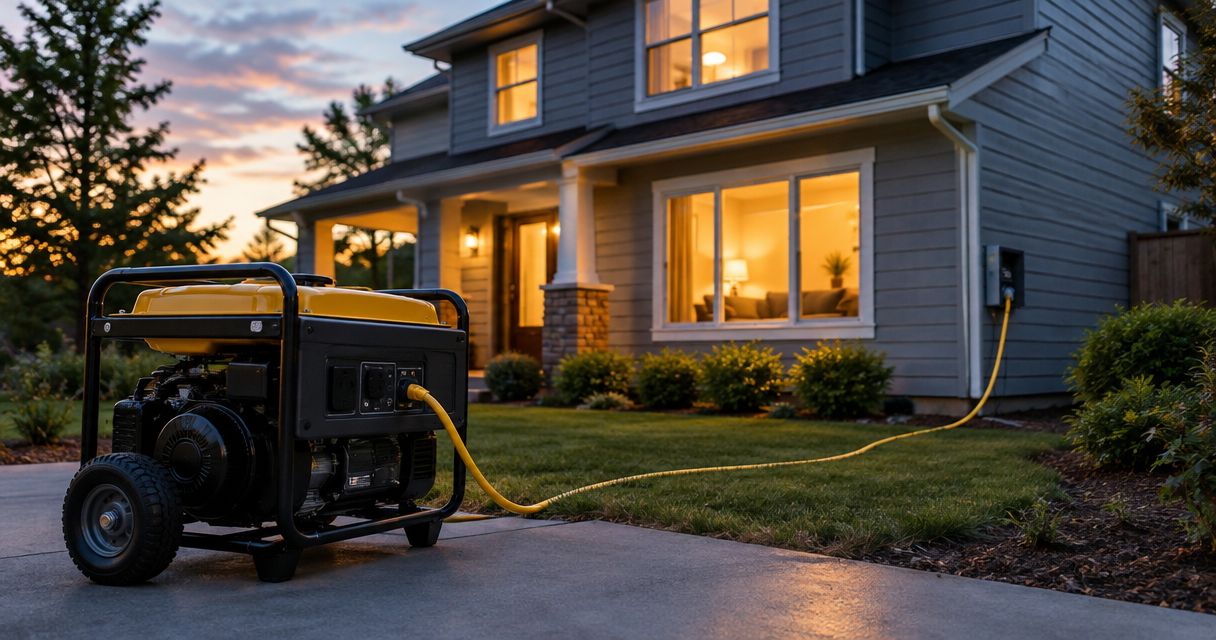
Yes, a portable generator can power a whole house during an outage if its continuous output, starting capacity, voltage, and connection equipment match the loads you intend to run. Connecting the generator to your electrical panel does not mean you can operate every appliance simultaneously; you still need safe transfer equipment and a plan for managing demand.
- Can a portable generator power a whole house? Yes, but generator capacity and simultaneous appliance demand determine the answer.
- Portable generators suit manually managed backup; standby generators suit automatic operation with properly designed transfer equipment.
- CDC guidance calls for portable generators outdoors, at least 20 feet from doors, windows, and vents.
- Choose GSHA Services for local generator and electrical installation services in Woodstock and Lake Bluff.
Can a portable generator power a whole house during an outage?
A portable generator can supply household circuits, but supplying the panel and powering every connected load are different jobs. Your equipment must support both the appliances running continuously and the extra demand when motors start. For your 2026 backup plan, compare the connection arrangement before comparing generator models.
The portable generators for home backup guide covers equipment selection. Start with the operating differences below.
| Backup arrangement | Best for | Main advantage | Main limitation |
|---|---|---|---|
| Portable generator with appliance cords | Selected plug-in essentials | Powers compatible appliances without supplying house wiring | Does not directly supply hardwired equipment |
| Portable generator with approved transfer equipment | Homeowners willing to manage household loads | Supplies selected circuits or a panel through a designed connection | Requires manual setup and attention to demand |
| Permanently installed standby generator | Homeowners seeking automatic backup | Can start and transfer power automatically when properly configured | Requires a permanent installation and planned fuel supply |
A whole-house generator also has output limits. Automatic operation does not remove the need to size the system or manage large loads.
Why this matters
During an outage, keeping a refrigerator cold and a sump pump working is different from maintaining normal household electricity use. Electric heating, water heating, cooking, air conditioning, and vehicle charging can compete for available output.
A good 2026 backup plan states what must work and what stays off. That decision determines whether a portable generator is practical or whether an automatic standby installation better matches your needs.
Choose the loads first, then choose the generator. House size alone does not describe your electrical demand, starting requirements, or willingness to switch appliances off.
Portable generator with appliance cords: selected essentials
A cord-connected arrangement is best for compatible plug-in appliances that you can reach safely. It can support essentials without energizing your home's electrical panel, provided you follow the generator and appliance instructions.
The advantage is a clear boundary: only the connected appliances draw generator power. The limitation is equally clear: a hardwired furnace, well pump, or central air conditioner does not become a cord-connected appliance simply because you need it during an outage.
Use appropriately rated, grounded cords intended for the operating conditions. Keep connections dry, protect cords from damage, and avoid routing cords where doors can crush them. Never modify an appliance connection to improvise backup power.
Choose appliance cords for selected plug-in loads, not as a substitute for a designed household connection. If essential equipment is hardwired, discuss transfer equipment with an electrician.
Portable generator with transfer equipment: managed household backup
A panel-connected portable generator is best for homeowners who accept manual setup and deliberate load management. An electrician must determine the appropriate inlet, transfer arrangement, circuit compatibility, and installation requirements.
Depending on the design, transfer equipment can supply selected circuits or allow access to a larger group of household circuits. Access is not capacity: turning on too many loads can overload the generator even when the panel connection is correct.
Many homes use 120/240-volt split-phase service. A generator that provides only 120 volts cannot directly supply equipment requiring 240 volts; the generator output and connection must match the intended loads.
A correctly installed transfer switch or permitted, panel-compatible interlock arrangement prevents generator power from feeding the utility connection. Never connect a generator through a household receptacle or a cord with exposed male plugs. That creates shock and backfeed hazards rather than a safe panel connection.
Standby generator: automatic backup
A permanently installed standby generator is best for homeowners who need an automatic response instead of setting up portable equipment. With suitable controls and transfer equipment, the system detects an outage, starts, and transfers the connected loads.
The benefit is automatic operation. The trade-off is the installation work: equipment location, electrical connections, fuel supply, and applicable local requirements all need planning.
Standby equipment still requires maintenance and adequate capacity. A system designed with load management can temporarily prevent selected equipment from operating when demand is too high.
For a 2026 purchase decision, compare the operating routine as closely as the generator rating. Choose standby backup when automatic operation matters; choose portable backup when manual operation and load selection fit your household. Neither arrangement guarantees that every appliance can run together.
How do you determine whether a portable generator is large enough?
Build the load list from equipment labels, manuals, and manufacturer specifications. Do not substitute a generic house-size estimate for the actual appliances you expect to operate.
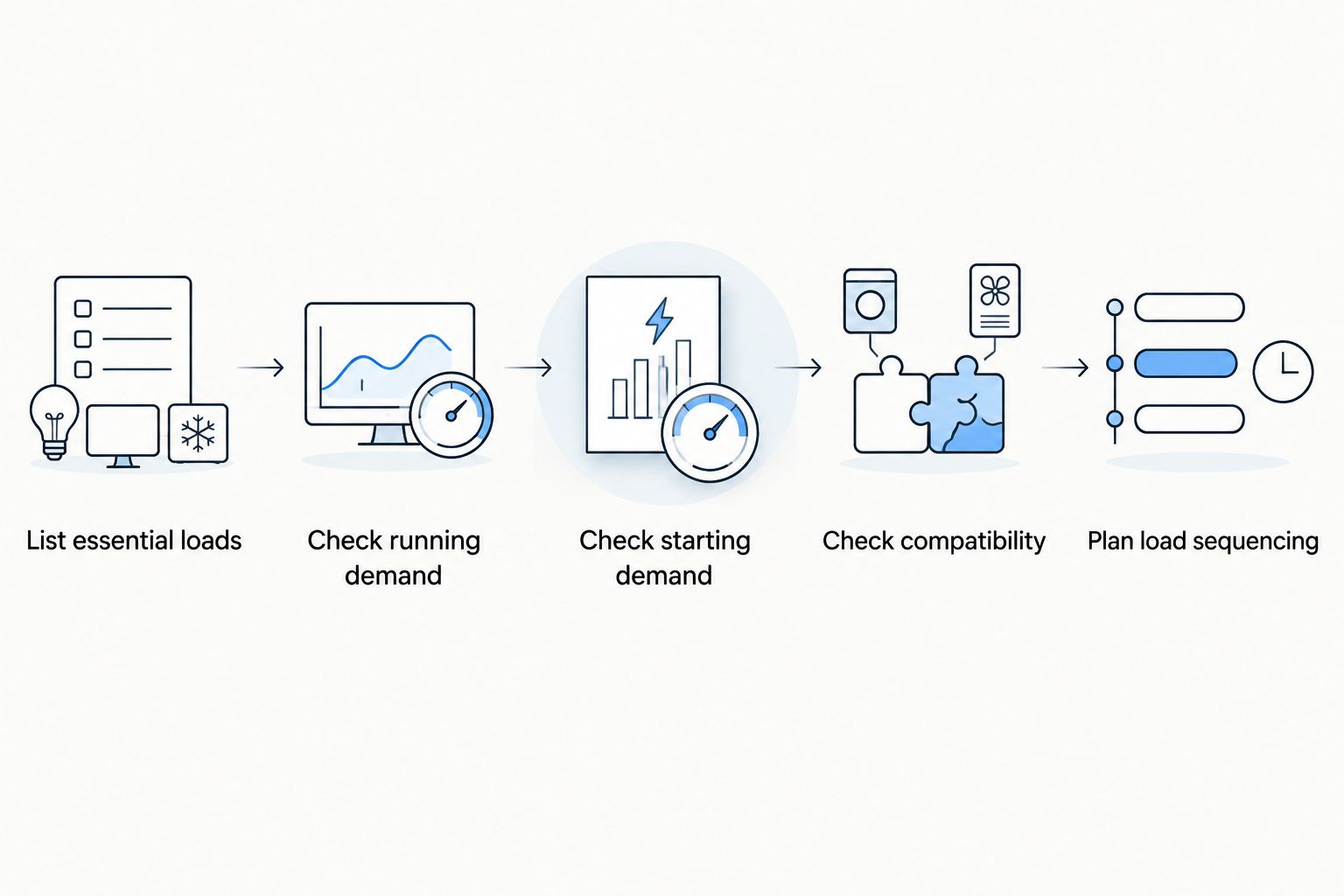
- List essential loads. Identify refrigeration, necessary heating equipment, sump or well pumps, lighting, communications, and any equipment with special backup requirements.
- Check running demand. Record the electrical input required while each selected appliance operates normally. Use electrical input, not heating or cooling output.
- Check starting demand. Motors and compressors can require additional power at startup. Use the applicable equipment data rather than an assumed multiplier.
- Check compatibility. Confirm the required voltage, generator receptacles, connection equipment, and any manufacturer restrictions on generator use.
- Plan load sequencing. Decide which appliances can operate together and which must remain off while another load starts or runs.
Generator labels commonly distinguish running output from starting or surge output. Use continuous output to judge sustained demand; a temporary surge rating is not a continuous operating allowance.
For unit conversion, 1 kilowatt equals 1,000 watts. Keep the units consistent when comparing equipment labels, and do not assume that a circuit breaker's rating equals an appliance's actual consumption.
An electrician can evaluate the proposed loads and connection together. That matters because a generator with adequate output still needs compatible transfer equipment and an installation that meets applicable requirements.
Why portable-generator coverage varies
The answer changes with your electrical loads and installation, not just the generator's advertised size. These factors determine how much of the house you can actually use:
- Simultaneous demand: Appliances running together draw from the same available output. A workable plan identifies loads that must not overlap.
- Starting requirements: Pumps, compressors, and other motors can create brief demand above their normal running load.
- Voltage compatibility: The generator must provide the voltage required by the equipment you intend to supply.
- Fuel-specific output: Some generators have different ratings for different fuels. Use the rating for the fuel you will actually use.
- Connection limits: The inlet, receptacle, wiring, and transfer equipment must suit the installation; generator output alone does not establish the connection's capacity.
- Operating conditions: Follow manufacturer guidance for conditions that affect output and safe operation, including elevation and temperature.
A home's heating fuel also changes the load list. A fuel-burning furnace still needs electricity for its electrical components, while electric resistance heat places heating demand directly on the backup supply.
What safety rules apply to portable whole-house backup?
Operate a portable generator outdoors, away from openings, and never inside a house, garage, basement, or enclosed porch. Opening a garage door does not make indoor generator operation safe.
CDC guidance specifies at least 20 feet from doors, windows, and vents. Direct the exhaust away from the home and nearby buildings, and follow the manufacturer's placement instructions. Use working carbon monoxide alarms as recommended by safety guidance; alarms do not make an unsafe location acceptable.
For your 2026 outage preparations, identify a safe operating location before bad weather arrives. Keep the generator dry using a manufacturer-approved arrangement that preserves ventilation; never move it into an enclosed space to protect it from rain.
Shut the generator down and let it cool before refueling, following the manufacturer's instructions. Store fuel in approved containers and locations consistent with applicable requirements.
Stop using equipment that has damaged cords, leaking fuel, or repeated protective shutdowns. If a carbon monoxide alarm activates or anyone develops symptoms consistent with exposure, get outside immediately and contact emergency services.
Can a portable generator run central air conditioning?
A portable generator can run central air conditioning only when its output, starting capability, voltage, and installed connection support that specific system. Cooling capacity alone does not establish the electrical requirement.
Have the air conditioner's electrical data checked alongside the other intended backup loads. Do not assume an added starting device makes an undersized generator suitable, or install accessories without checking equipment compatibility.
Can I power my furnace and sump pump together?
A portable generator can power a furnace and sump pump together when it supports their combined running demand and relevant starting demand. Both loads also need an appropriate connection arrangement.
For winter outage planning in 2026, identify the actual furnace components that require electricity and the pump's starting requirements. Do not rely on a generic appliance list when basement protection and heating depend on the result.
Will a panel connection let me use every circuit?
A panel connection provides access only to the circuits included in its design, and available circuits still share the generator's capacity. A selected-circuit transfer switch and a panel-interlock arrangement do not necessarily provide the same circuit access.
Ask which circuits receive backup power and which combinations must remain off. Keep the operating instructions with the transfer equipment so another household member can follow the same plan.
When should you arrange a local installation assessment?
Arrange an assessment before purchasing equipment if you need hardwired loads, are unsure about your panel, or want automatic backup. Bring appliance information and a clear list of priorities rather than selecting equipment from house size alone.
GSHA Services is best suited to Woodstock and Lake Bluff homeowners seeking local generator and electrical installation services. Discuss both the generator installation and the electrical connection; neither should be treated as an afterthought.
GSHA Services also provides HVAC services, making heating and cooling requirements relevant to the backup discussion. Confirm the installation scope, maintenance requirements, and equipment operating limitations before deciding.
Plan your generator installation
Discuss generator and electrical installation services for your Woodstock or Lake Bluff property.
FAQ
Can a portable generator power a whole house during an outage?
Yes, a portable generator can power a whole house when its continuous output, starting capacity, voltage, and connection equipment support the intended loads. That does not necessarily mean every appliance can run simultaneously.
What size portable generator do I need for my house?
The required size depends on your selected appliances’ running demand, starting demand, and voltage requirements. Build an equipment-specific load list rather than choosing by square footage alone.
Can I plug a portable generator into a wall outlet?
No. Connecting a generator through a household wall outlet can energize wiring unsafely and create backfeed hazards. Use an electrician-designed connection with appropriate transfer equipment.
How far should a portable generator be from the house?
CDC guidance calls for portable generators to operate outdoors at least 20 feet from doors, windows, and vents. Direct exhaust away from buildings and follow the manufacturer’s placement instructions.
Is a portable generator better than a standby generator?
A portable generator suits manually managed backup, while a properly configured standby generator suits automatic operation. Both need adequate capacity, safe connections, and maintenance.
Can a generator run inside a garage with the door open?
No, a portable generator must not run inside a garage, even with the door open. Operate it outdoors with the required separation from openings.
Who provides generator installation services in Woodstock and Lake Bluff?
GSHA Services provides generator and electrical installation services to homeowners and businesses in Woodstock, Lake Bluff, and surrounding areas. Discuss your essential loads and existing electrical setup when planning backup power.
One last thing
A generator can be connected to the whole panel without being able to power the whole panel's demand. Before the next outage, write down which loads stay off and how you will sequence the essentials. Keep that plan beside the approved operating instructions, not just in your memory.
Related guides
- Generator sizing and square footage
- Whole-house generators ranked by fuel type
- Propane tank to whole-house generator: fuel supply workflow


