
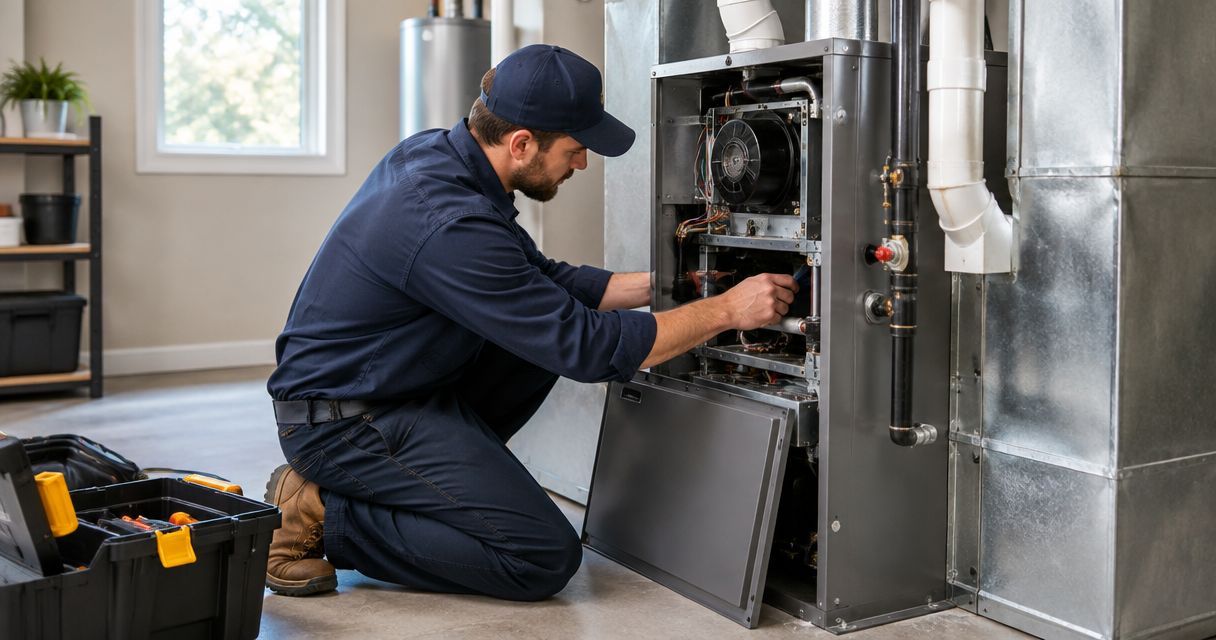
Furnace installation time depends on the work required: replacing equipment in the same location is a different job from changing venting, ducts, electrical connections, or fuel service. For a 2026 installation, get a written schedule that separates hands-on installation, time without heat, and any inspection requirements. Do not treat the crew's arrival time as a promise that your heat will be restored that evening.
- How long does furnace installation take? The answer depends on replacement scope, site access, connections, and required testing.
- GSHA Services provides HVAC installation and repair for homeowners and businesses in Woodstock, Lake Bluff, and surrounding areas.
- Ask for separate estimates for installation work, heating downtime, and inspection scheduling.
- A furnace is not ready for handover just because it starts; startup checks and operating instructions still matter.
Why this matters
A furnace replacement affects more than your calendar. You need to know when the existing heating system will be disconnected, whether someone must remain on-site, and what happens if the crew discovers a condition outside the agreed scope.
GSHA Services provides HVAC installation and repair services in Woodstock, Lake Bluff, and surrounding areas. When arranging furnace installation, ask for a schedule based on your property and the proposed equipment—not an estimate that assumes every connection can stay unchanged.
For a 2026 project, distinguish work completed from heat restored and inspection completed. Those milestones answer different questions, and your written proposal should make their relationship clear.
How long does a furnace installation take in 2026?
The useful answer is a site-specific installation window, not a universal hour count. A replacement that keeps the existing location and compatible connections has fewer work items than an installation requiring new routes for exhaust, drainage, wiring, or ducts.
Ask the installer to identify your project type before discussing completion. The comparison below shows why the scope matters; it is not a duration guarantee.
| Installation scope | What the work includes | Scheduling advantage | Main limitation |
|---|---|---|---|
| Same-location replacement | Remove the existing furnace, fit the replacement, reconnect compatible services, and test operation | Fewer changes to the surrounding system | Existing connections still need evaluation |
| Replacement with connection changes | Modify duct transitions, venting, drainage, wiring, or fuel connections as required | Addresses connections that do not suit the replacement | Additional trades or materials can affect sequencing |
| Relocated or first-time installation | Establish the equipment position and required service routes | Allows placement suited to the planned system | More work must happen before startup |
These are scope descriptions, not competing packages. Choose the work the equipment and property require; do not preserve an unsuitable connection just to shorten the appointment.
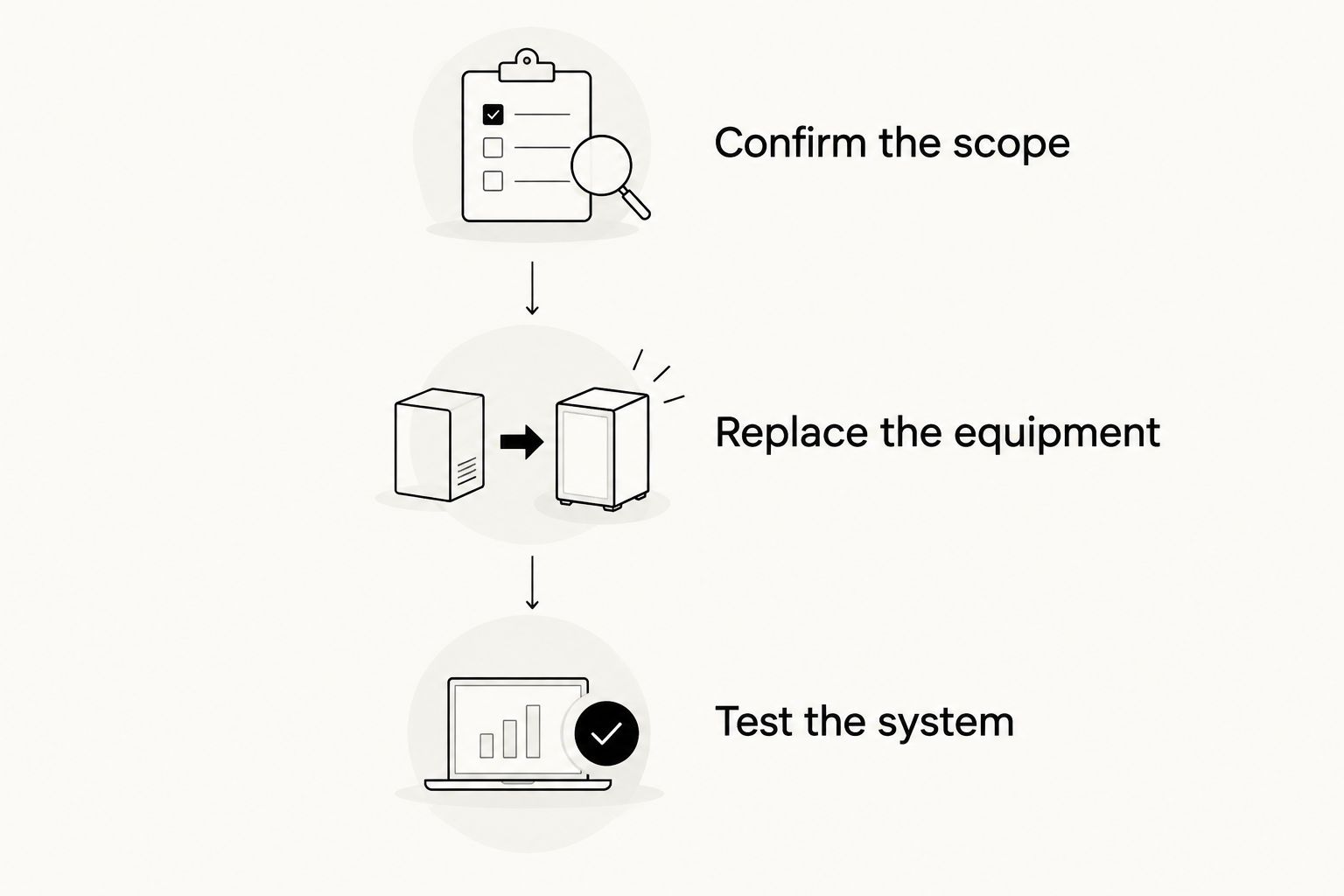
Confirm the scope
Before installation day, the contractor should establish what is being replaced and what remains. That includes the furnace location, equipment access, duct connections, exhaust arrangements, electrical supply, controls, and any condensate drainage required by the selected equipment.
Ask whether the proposal covers removal of the old equipment and disposal. Also ask how concealed problems will be handled: who approves additional work, how changes are documented, and whether those changes alter the heating-restoration plan.
Replace the equipment
The installation sequence includes safely disconnecting the existing system, removing the furnace, positioning the replacement, and completing the required connections. The exact procedure depends on the equipment and site; homeowners should not disconnect gas piping or electrical circuits to get ahead of the crew.
A clear route to the work area helps the crew handle equipment. It does not replace the need for correct clearances, suitable connections, or manufacturer-required installation procedures.
Test the system
Startup comes after the mechanical and electrical work. The installer needs to verify operation and complete the checks required for the equipment, including relevant safety controls and heating-system performance.
Ask what startup results will be documented and how you will receive operating instructions. The first warm air from a register is not, by itself, proof that the installation is ready for handover.
Same-location furnace replacement: confirm what stays
A same-location replacement has a narrower scope when existing services are suitable for the new furnace. That does not mean the old furnace can simply be removed and the new one attached without checking the surrounding system.
Have the contractor identify which connections will remain and which require modification. Cabinet dimensions, airflow requirements, exhaust arrangements, and control wiring all need to match the installation requirements of the selected equipment.
Your scheduling question should be specific: Does the proposed completion window include connection modifications, startup, cleanup, and a thermostat demonstration? An estimate that covers only setting the furnace leaves important work unaccounted for.
Furnace installation with system changes: separate the work
A furnace project becomes more involved when replacement also requires changes outside the equipment cabinet. Examples include a new vent route, revised duct transitions, a condensate drain, or changes to electrical and thermostat connections.
Ask the contractor to list these items separately in the scope. You do not need a technical design lesson; you need to know which tasks must be finished before heating can resume and which require coordination beyond the furnace crew.
For your 2026 installation, confirm whether the schedule covers only the furnace or other planned heating and cooling work. Replacing additional equipment creates a different project from replacing the furnace alone.
Why furnace installation time varies
The main scheduling factors are physical access, connection requirements, system condition, and required approvals. Review these before accepting a completion estimate:
- Equipment access. Stairs, narrow doorways, and restricted work areas affect how the old furnace comes out and the replacement goes in. Tell the contractor about access restrictions before installation day.
- Duct connections. Existing supply and return connections must suit the replacement. Fabricating or modifying transitions adds work beyond positioning the furnace.
- Venting and drainage. The selected furnace determines the applicable exhaust and condensate requirements. A new route requires planning that an unchanged, suitable route does not.
- Fuel, electrical, and control connections. Existing connections need evaluation for the proposed equipment. Required changes belong in the installation scope, not in an assumption that everything will reconnect unchanged.
- Conditions discovered during removal. Concealed damage or unsuitable existing work can change the agreed task list. Establish the approval process before disconnection begins.
- Permits and inspections. Requirements depend on the jurisdiction and scope. Confirm who handles them and whether inspection timing affects the planned handover.
For Woodstock, Lake Bluff, and nearby properties, ask about the requirements for your actual address. Do not assume another homeowner's installation followed the same approval process.
What should I ask before booking a furnace installation?
Ask for a written plan covering the work, the interruption to heating, and the conditions attached to completion. A useful answer explains what the contractor expects to finish and what would change that expectation.
Use these questions when reviewing a 2026 proposal:
- What work is included besides replacing the furnace itself?
- When will the existing furnace be disconnected?
- What is the expected heating-restoration window for this property?
- Which connections have already been evaluated?
- Are permits or inspections required, and who arranges them?
- What happens if additional work is discovered after removal?
- Which startup checks and operating instructions are included?
- Who should I contact if the schedule changes?
Send equipment photos or access details if the contractor requests them, but do not assume photos replace every site assessment. Mention any existing heating problems so the replacement plan does not overlook an issue elsewhere in the system.
For a local installation discussion, contact GSHA Services with your location, current equipment details, and any known access concerns. Ask for the scope and heating-restoration plan together.
Will I be without heat during furnace installation?
Expect a heating interruption while the existing furnace is disconnected and the replacement is installed and tested. Ask the contractor when that interruption begins and what must happen before the new system can operate.
Do not equate a scheduled appointment with continuous heating. In cold weather, arrange a plan for occupants who cannot remain comfortably in the property without heat, and discuss concerns about freezing conditions before work starts.
If temporary heating is necessary, follow the heater manufacturer's instructions and applicable safety guidance. Never use an oven, grill, or outdoor combustion appliance to heat an occupied indoor space.
Can I stay home while my furnace is being installed?
You can discuss remaining in the property with the installer, provided the work area and equipment route stay clear. Ask whether you need to be present throughout the appointment or only for access, decisions, and handover.
Keep children and pets away from the work zone. For business premises, identify affected occupied areas and agree on access arrangements so the installation does not conflict with normal activity.
How to prepare without doing the installer's work
Preparation should remove access problems, not involve dismantling equipment. Before your 2026 appointment, clear stored items from the agreed work route and tell the contractor about locked rooms, parking restrictions, stairs, or building-access rules.
Leave the furnace, wiring, gas connections, venting, and thermostat connections intact unless the contractor gives specific instructions. Photographing the existing thermostat settings and noting rooms with heating problems can make the handover discussion more useful.
At completion, ask where the filter goes, how to operate the thermostat, and which shutdown or maintenance instructions apply. Keep the equipment information, installation documents, and any inspection records together for future service.
FAQ
How long does furnace installation take from arrival to finished work?
Furnace installation time depends on the equipment, access, connection changes, and required testing. Ask for a property-specific window that includes removal, installation, startup, and handover rather than only the time needed to position the furnace.
Can a furnace installation be finished the same day?
Same-day completion is not a promise you should assume when booking. Ask the contractor whether the assessed scope supports that schedule and what happens if additional work is discovered.
Does a new furnace mean I need new ductwork?
A new furnace does not automatically mean replacing all your ductwork. The contractor needs to evaluate whether the existing ducts and connections suit the selected equipment and identify any required modifications.
Will my thermostat need to be replaced with the furnace?
Thermostat replacement depends on compatibility with the new furnace and its controls. Ask whether the existing thermostat and wiring support the intended operation before deciding to keep them.
Do I need to be home for furnace installation?
Confirm attendance requirements with the contractor before installation day. Someone may need to provide access, approve scope changes, and receive operating instructions at handover.
Does an inspection happen during furnace installation?
Inspection requirements and scheduling depend on the jurisdiction and project scope. Ask who arranges the inspection and whether it affects the planned completion or heating-restoration date.
What should I check before the installer leaves?
Ask for confirmation that startup checks are complete and request a demonstration of thermostat operation and filter access. Collect the equipment documentation and clarify any remaining inspection or follow-up work.
One last thing
The most useful scheduling question is not simply when the crew will leave. Ask: When is the existing heat disconnected, what must happen before heat returns, and what remains after that?
A 2026 furnace installation plan should answer those questions separately. Keep them in the written scope so your household or business can plan around the actual interruption—not an assumed finish time.


