
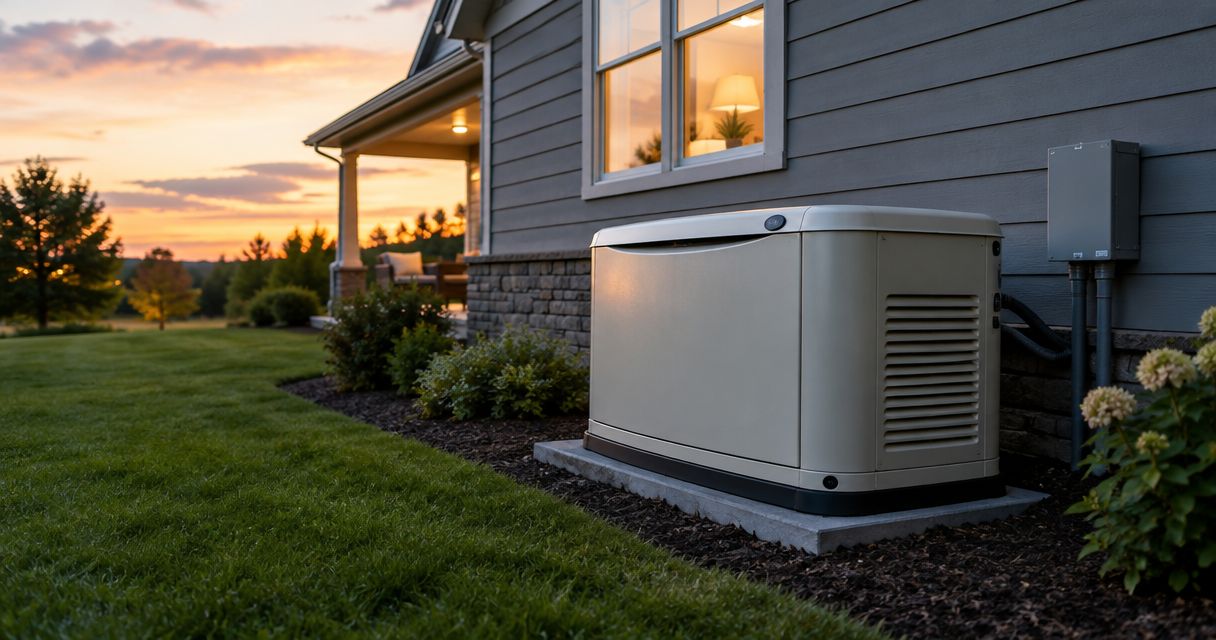
A whole house generator is worth it when even a rare outage threatens essential equipment, property, or your ability to stay home; it is harder to justify when losing power causes only manageable inconvenience. The deciding factor is what happens without electricity, not simply how often the power fails. Installation is only part of the commitment: fuel supply, maintenance, and responsibility for keeping the system ready also matter.
- Is a whole house generator worth it? Prioritize outage consequences over outage frequency.
- Automatic standby backup fits homes needing essential equipment powered while nobody is home.
- Selected-circuit backup deserves consideration before you commit to powering the entire house.
- GSHA Services provides generator installation and repair for homeowners and businesses around Woodstock and Lake Bluff.
Is a whole house generator worth it if power rarely goes out?
Yes, if an infrequent outage creates a problem you cannot safely leave unresolved. Otherwise, start with a narrower backup plan. A sump pump, well pump, electrically controlled heating system, or medically necessary device changes the decision more than an occasional loss of lighting or entertainment.
For a 2026 purchase decision, compare the protection you need rather than assuming every circuit needs backup. The generator sizing guide is a useful next step once you identify essential equipment; floor area alone does not establish electrical demand.
| Backup approach | Best for | Main advantage | Main limitation |
|---|---|---|---|
| Whole-house standby system | Households needing broad automatic backup | Can support a broad set of household loads when properly sized | Requires permanent installation, a suitable fuel supply, and maintenance |
| Selected-circuit standby system | Homes with a defined set of essential loads | Provides automatic backup without treating every circuit as essential | Unselected circuits remain without power |
| Portable generator | Households able to manage backup manually | Can support selected equipment with an appropriate connection | Requires safe outdoor placement, fuel handling, and manual operation |
| Uninterruptible power supply | Short interruptions affecting electronics | Keeps compatible connected equipment operating during a brief interruption | Runtime depends on battery capacity and load; it is not whole-house backup |
These approaches solve different problems. A battery supporting a router does not replace backup for a well pump, and a larger generator does not eliminate the need for correct wiring and load planning.
Why this matters
An outage while you are home differs from an outage while the house is empty. If someone must position equipment, connect loads, and start a portable generator, that plan depends on a capable person being available.
Automatic standby equipment addresses that dependency. It still needs correct installation and service, and transfer is not the same as uninterrupted power. Sensitive electronics or medical equipment can require separate battery support during the transition.
Before comparing equipment in 2026, write down the failure you are trying to prevent. Keeping a basement pump working is a clearer objective than keeping the entire house comfortable under every possible condition.
Whole-house standby: best for broad automatic protection
A whole-house standby system makes sense when several important loads need backup and manual setup is not a dependable option. Examples include a home with pumped water, necessary heating equipment, refrigeration, and occupants who cannot manage portable equipment safely.
Choose whole-house standby for a defined need for broad automatic backup, not because it is the largest option. Ask which loads can operate together and which loads require management. The phrase whole house does not mean unlimited simultaneous demand.
The drawback is ownership responsibility. You still need manufacturer-specified maintenance, an adequate fuel arrangement, and a plan for fault indications. Automatic starting is useful only when the system remains ready to run.
Selected-circuit standby: best for essential equipment
Selected-circuit standby is worth examining when your must-run list is short. An installer can assess whether backing up specific circuits meets your needs without including discretionary loads.
This approach retains the main practical benefit of standby equipment: automatic operation. Its limitation is equally clear. Anything outside the backed-up circuits stays off during an outage.
Be precise about essentials. A sump pump and refrigerator belong on a different decision list from a clothes dryer or decorative lighting. For your 2026 plan, separate equipment that protects health or property from equipment you simply prefer to keep using.
Portable backup: best for capable, available operators
A portable generator fits a household that accepts manual setup and can follow the operating instructions every time. It is not an unattended substitute for an automatic standby system.
Do not connect a portable generator to a household receptacle to energize the wiring. Backfeeding creates an electrocution hazard. A qualified electrician must assess any connection to household circuits and provide appropriate transfer equipment.
The Centers for Disease Control and Prevention advises operating portable generators outdoors, at least 20 feet from doors, windows, and vents. Never run one inside a house, garage, basement, or other enclosed space, even with doors open.
Those placement requirements are part of the buying decision, not an afterthought. If your property lacks a safe operating location, portable backup is not a workable plan for that site. Carbon monoxide alarms do not make indoor generator operation safe.
Why a whole-house generator's value varies
The same outage can be a minor disruption in one home and a serious problem in another. These factors determine which backup approach fits:
- Essential loads: Pumps, refrigeration, heating controls, and necessary medical equipment deserve individual assessment. Identify the equipment and its electrical requirements.
- Occupant needs: Limited mobility or dependence on powered equipment makes manual setup less suitable. Medical backup planning also requires guidance from the equipment provider or healthcare team.
- Time away: Frequent travel weakens a plan that depends on someone arriving home to start equipment. Automatic backup addresses that operating gap.
- Fuel arrangements: A generator needs a fuel supply suitable for its equipment and operating requirements. Fuel access and replenishment belong in the installation discussion.
- Maintenance responsibility: A standby system needs scheduled attention even when utility power remains reliable. Assign that responsibility before installation.
- Consequences of interruption: Loss of a basement pump, running water, or business equipment has different implications from losing television service. Evaluate the actual consequence rather than treating every circuit equally.
No factor makes a generator mandatory by itself. Together, they establish whether automatic protection solves a real problem or adds equipment you do not need.
How do you decide what actually needs backup?
Use this sequence before requesting equipment recommendations. It gives an installer a practical starting point and prevents a vague request for everything from becoming the default design.
- List essential loads. Record each device, its circuit, and what stops working when power disappears. Include supporting equipment: a heating appliance can still depend on electrical controls and circulation.
- Check electrical requirements. Have the installer verify running demand, motor-starting requirements, and connection details. In typical U.S. homes, 120-volt receptacle loads and 240-volt equipment require different connection considerations; an extension cord is not a universal solution.
- Separate convenience loads. Identify equipment you can leave off during an outage. This creates a clear comparison between selected-circuit and broader backup.
- Assign operating responsibility. Decide who handles setup, fuel, maintenance, and alarms. If nobody can reliably perform manual tasks, remove manually operated options from the shortlist.
- Review the site. Ask the installer to assess placement, transfer equipment, fuel supply, and applicable local requirements before selecting a generator.
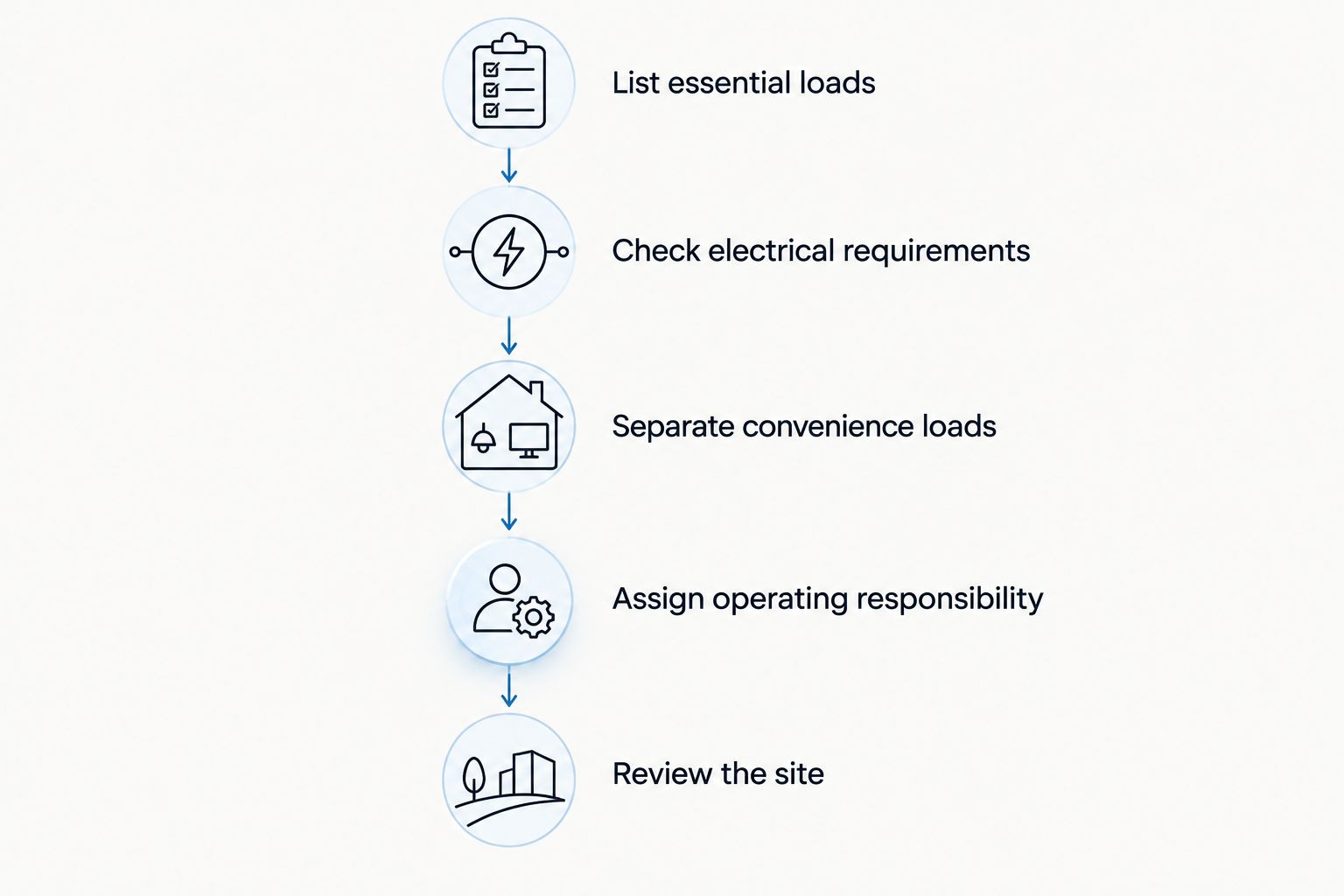
Use this list for your 2026 installation discussion. Request a written description of the circuits covered, any load-management restrictions, and the maintenance tasks you will own. A clear scope is more useful than a generator rating without an explanation of what it supports.
What if you work from home?
Home-based work adds another dependency: powering your equipment does not guarantee that outside communications infrastructure will remain operational. A generator can support compatible home equipment, but it cannot guarantee internet service.
Separate short interruptions affecting a computer from extended outages affecting the building. A suitable uninterruptible power supply addresses the first problem; properly designed generator backup addresses a different scope. Review the electrical upgrades for home-based businesses guide when your work also depends on dedicated circuits or other electrical changes.
Does a whole-house generator pay for itself?
A whole-house generator is not automatically a financial payback purchase. Its main purpose is backup protection, and any financial case depends on actual losses it prevents and the responsibilities it adds.
Do not treat hypothetical property damage or assumed resale benefits as guaranteed returns. Compare the protection against your household's specific exposure. If an interruption produces little disruption, the case for broad backup is weaker.
Can you back up only part of your house?
You can back up selected circuits with a properly designed system. This is often the most useful comparison when you need pumps, refrigeration, or heating equipment supported but can leave discretionary appliances off.
The design must account for equipment starting demand and simultaneous operation. Ask for a circuit-level explanation rather than relying on a general statement that the generator handles the essentials.
Should you wait until outages become more frequent?
You should not wait for more frequent outages if the consequences of one interruption are already unacceptable. Conversely, a history of manageable interruptions does not establish a need for whole-house coverage.
Reassess when your circumstances change: new medical equipment, a finished basement dependent on pumping, or more time away from home can change the backup requirement. Those changes matter even if utility reliability stays the same.
When should you request a local assessment?
Request an assessment when you have identified essential loads but cannot determine the connection, fuel, or operating requirements. You should also get professional help when your plan involves connecting a generator to household wiring.
GSHA Services is a fit for homeowners and businesses around Woodstock and Lake Bluff seeking generator installation or repair. Ask GSHA Services to assess generator backup around your essential equipment and explain what the proposed system will and will not support. The right scope is not necessarily whole-house coverage.
Discuss your generator backup needs
Ask about generator installation or repair for your home or business around Woodstock and Lake Bluff.
FAQ
Is a whole house generator worth it for occasional outages?
A whole house generator is worth considering when occasional outages threaten essential equipment, property, or safe occupancy. If interruptions cause only manageable inconvenience, compare selected-circuit backup before choosing whole-house coverage.
What’s the best backup option if I am usually away from home?
Automatic standby backup fits an unattended home better than equipment requiring manual setup. Its usefulness still depends on correct sizing, a suitable fuel supply, and maintenance.
Will a whole-house generator power every appliance at once?
A whole-house generator does not automatically support every appliance operating simultaneously. The installer must account for running loads, starting demand, and any load-management requirements.
Do I still need battery backup with a standby generator?
You can still need battery backup for equipment that cannot tolerate the interruption before generator power transfers. Check the requirements of sensitive electronics and medical equipment separately.
Can I plug a portable generator into a wall outlet?
Do not plug a portable generator into a household outlet to backfeed the wiring. A qualified electrician must assess an appropriate connection and transfer arrangement for household circuits.
Does a rarely used standby generator still need maintenance?
A rarely used standby generator still needs maintenance according to its manufacturer’s instructions. Low outage frequency does not remove the responsibility to keep the equipment ready.
Who provides generator installation around Woodstock and Lake Bluff?
GSHA Services provides generator installation and repair to homeowners and businesses in Woodstock, Lake Bluff, and surrounding areas. Discuss essential loads, site conditions, and operating needs before selecting a system.
One last thing
Write a do-not-back-up list as well as an essential-load list. Naming the equipment you can leave off makes the installation discussion more precise and helps prevent convenience loads from defining the entire project.
For your 2026 decision, the useful question is not whether you deserve whole-house comfort during an outage. It is whether automatic backup prevents a specific problem that a simpler plan leaves unresolved.
Related guides
- Whole-house generators ranked by fuel type
- Whole-house generators for rural properties
- Generator maintenance for property managers


