
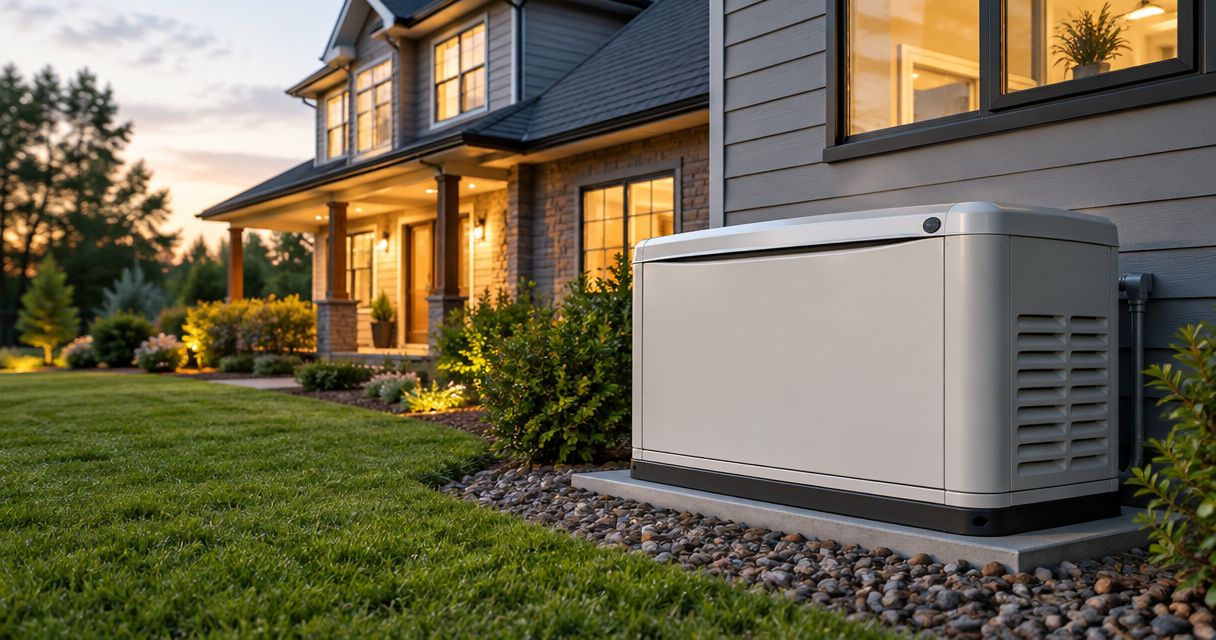
A whole house generator can add buyer appeal and contribute to a home's resale value, but it does not guarantee a specific dollar increase or full recovery of your investment. Installation, maintenance, fuel, and repairs remain separate expenses, so buy backup power for the protection you need—not a promised resale return.
- Does a whole house generator add value to a home? It can, but resale returns are not guaranteed.
- GSHA Services provides generator installation and repair for homeowners in Woodstock, Lake Bluff, and surrounding areas.
- Documented maintenance, working transfer equipment, and suitable capacity help buyers evaluate a standby generator.
- Choose backup power around essential loads first; treat any resale benefit as secondary.
Why this matters
A generator's value to you during an outage and its value to a future buyer are different questions. Keeping essential equipment running is a practical benefit; receiving a higher purchase offer depends on the property and the local market.
For a 2026 purchase decision, start with the equipment you need to operate during an outage. The guide to choosing a Generac generator size for your home addresses that separate sizing decision. Do not choose a larger generator solely because you expect a larger resale premium.
How much value does a whole house generator add to a home?
There is no universal dollar amount or percentage that a whole house generator adds to a home. A resale estimate needs local comparable sales and an assessment of the installed system—not just the original installation invoice.
A permanently installed, functioning generator gives buyers a backup-power feature to evaluate. Whether that feature changes the offer depends on what those buyers need and what comparable homes provide.
Use these 3 steps to assess potential resale value:
- Establish the baseline. Ask a local real estate professional to evaluate the home without assigning an automatic generator premium.
- Check comparable sales. Identify otherwise similar homes with and without permanent standby generators. Other property differences must be considered before attributing a sale-price difference to backup power.
- Verify the equipment. Have a qualified generator professional assess operating condition, transfer equipment, maintenance needs, and the loads the system supports.
An installation invoice documents what was purchased. It does not establish what a buyer will pay for it today.
Resale value is not the same as money saved
Avoid combining several different benefits into one return-on-investment claim. Resale value concerns the home's sale price; outage protection concerns what backup power does while you own the property.
You can reasonably value refrigeration, heating controls, or a sump pump continuing to operate. You cannot count those benefits as a guaranteed increase in the home's appraised value. Keep your ownership decision separate from your resale estimate.
Why a generator's resale value varies
The same generator does not carry the same significance at every property. These factors give you a practical framework for discussing the installation with an agent, appraiser, or buyer:
- Local comparable sales. Nearby sales provide property-specific context. A national claim cannot establish the premium for your home.
- Supported equipment. Buyers need to know whether the generator serves selected circuits, larger appliances, or a broader combination of loads. The phrase whole house is not a substitute for a load assessment.
- Operating condition. An operating system and a system requiring repairs are different assets. Service records help explain the difference.
- Installation documentation. Available permits, inspection records, equipment information, and transfer-switch documentation help establish what was installed.
- Fuel arrangement. Buyers need to understand the fuel source and any tank, supply, or refill responsibilities associated with it.
- Buyer priorities. Backup power has a different practical role for someone who depends on a well pump or works from home than for someone without those needs.
For a 2026 listing, describe these facts rather than advertising an unsupported return percentage. Specific, verifiable information lets a buyer judge the feature without relying on a sales promise.
What should you verify before buying for resale?
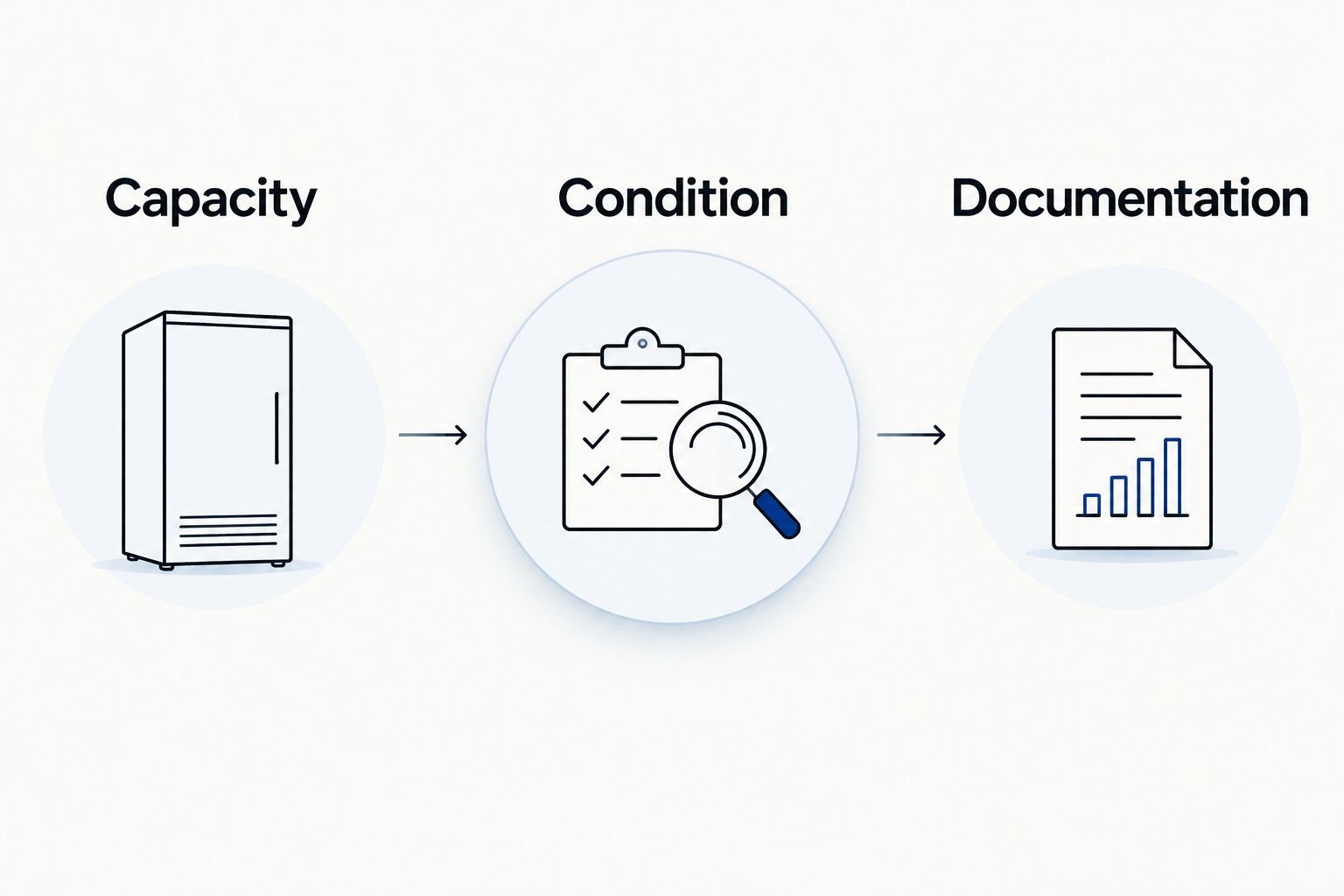
Verify capacity, condition, and documentation before treating a generator as a selling point. These checks address different questions; a large nameplate rating does not establish maintenance condition, and a clean enclosure does not establish correct operation.
Capacity
Ask which circuits and appliances receive backup power. Also ask whether load-management equipment limits which appliances can operate together.
Running power and starting demand are different considerations. Equipment with motors can require additional power when starting, so square footage alone does not determine the appropriate generator size. Give the evaluator a list of essential equipment rather than a request to power everything without qualification.
Condition
Request a professional assessment of the generator and its transfer equipment. An automatic exercise cycle does not, by itself, demonstrate that the complete backup system will serve the intended household loads.
Keep repairs separate from the resale discussion. If a fault needs correction, understand it before presenting the installation as ready for use. Do not repeatedly reset an alarm to make the equipment appear operational.
Documentation
Gather the installation paperwork, available approval records, equipment manuals, and service history. Record the equipment identification so the buyer can obtain the correct operating and maintenance instructions.
These 3 records—installation paperwork, operating instructions, and service history—give the next owner a practical starting point. They explain the installation without asking the buyer to reconstruct it after closing.
What should you tell buyers about an existing generator?
Describe the installation accurately in your 2026 listing materials. If you do not know what the generator supports, obtain that information before calling it whole-home coverage.
A useful property information sheet answers these 4 questions:
- What receives power? List the supported circuits or explain the documented load-management arrangement.
- How does transfer work? Identify whether the installed system transfers automatically or requires an approved manual procedure.
- What fuel does it use? Explain the actual supply arrangement, including any fuel-storage responsibilities.
- What maintenance information is available? Provide the service records and the manufacturer's instructions for the installed equipment.
Do not promise uninterrupted operation. A generator still depends on its fuel supply, equipment condition, controls, and supported electrical loads.
Leave demonstrations to a qualified professional when they involve transfer equipment or electrical testing. Buyers should receive operating instructions, not an improvised panel demonstration during a showing.
An older electrical system also deserves its own evaluation. Whether an old electrical panel can handle a generator is an installation question; a favorable resale estimate does not answer it.
Should you choose standby power or another backup option?
Best for automatic backup: a permanently installed standby generator configured for the loads you need. Its practical advantage is automatic operation when the installed transfer system supports it. Its trade-offs include ongoing maintenance, fuel requirements, and installation work.
Best for selected essentials with manual setup: a portable generator. It provides another route to backup power, but it requires safe outdoor operation and an approved connection method. Never operate a combustion generator inside a home, garage, or other enclosed space, and never connect it through a household outlet.
Best for stored-energy backup: a home battery system. A suitably configured battery can supply designated loads without running a combustion engine at the property. Available energy, output limits, and the charging arrangement constrain what it can support and for how long.
| Backup option | Best for | Main advantage | Main limitation |
|---|---|---|---|
| Permanent standby generator | Automatic backup for a defined set of household loads | Installed transfer equipment can start backup operation automatically | Requires fuel, maintenance, and a suitable installation |
| Portable generator | Selected essentials when someone can manage setup | Can serve a defined emergency-power plan | Requires manual involvement, safe outdoor placement, and an approved connection |
| Home battery system | Selected loads supported by stored energy | Supplies power without on-site engine exhaust | Stored energy and output capacity limit operation |
Comparing whole-home generator alternatives changes the decision from choosing the largest machine to matching backup capability with your actual loads. Ask the same questions about every option: what operates, how backup starts, and what limits continued operation.
A resale assumption should not decide this comparison. Choose the system that addresses your household's outage requirements, then evaluate any property-value benefit separately.
When does installing a generator make sense before selling?
Installing a generator before selling makes sense only when the project has a clear purpose beyond an assumed premium. Establish whether you are solving an immediate household need, correcting an existing installation, or adding a feature you expect buyers to value.
If your only objective is a higher sale price, get local real estate advice before authorizing the work. Ask whether comparable sales support that decision and whether a different property issue deserves attention first.
If you plan to remain in the home, evaluate the backup benefit during your ownership. List the equipment that matters, the consequences of losing power, and the maintenance responsibilities you are prepared to accept. That produces a clearer decision than treating every installation expense as recoverable equity.
Where local generator service fits
GSHA Services is best for homeowners in Woodstock and Lake Bluff who need local generator installation or repair. Its generator services address the equipment side of the decision; a local real estate professional or appraiser addresses resale valuation.
GSHA Services provides generator installation and repair alongside electrical services. That service scope is relevant when you need an installed system evaluated, but it is not evidence of a guaranteed property-value increase. Keep the equipment assessment and the valuation separate.
Discuss your generator installation
Ask about generator installation or repair for your Woodstock or Lake Bluff property.
Will a generator increase my home's appraised value?
A generator does not automatically increase appraised value by its installation expense. An appraiser evaluates the property and relevant market evidence; the invoice alone does not establish an adjustment.
For a 2026 appraisal, supply accurate equipment information and available installation records. Let the appraiser determine how the feature fits the property's market rather than assigning your own premium.
Should I replace an old generator before listing my house?
Replace an old generator because an assessment supports replacement, not because newer equipment guarantees a higher offer. Age alone does not establish the condition of the complete system.
Have a qualified professional identify necessary repairs and explain the options. Then discuss the sale strategy with your agent before committing to replacement solely for resale.
Is a generator worth buying if I plan to move soon?
A generator is not a guaranteed short-term investment when you plan to move soon. A shorter ownership period leaves less time to receive its practical backup-power benefit.
For a planned 2026 move, resolve the resale question before the installation decision. If local evidence does not establish a premium, do not build your selling plan around one.
FAQ
Does a whole house generator add value to a home?
A whole house generator can contribute to buyer appeal and resale value, but no fixed increase applies to every home. Local comparable sales and the installed system’s condition matter.
Will I get my generator installation investment back when I sell?
Full recovery of your generator investment is not guaranteed. Evaluate the backup benefit during ownership separately from any eventual sale-price increase.
Does a whole house generator guarantee power to every appliance?
The phrase whole house does not guarantee that every appliance can operate simultaneously. Generator capacity, starting demand, transfer equipment, and load management determine what the system supports.
What generator paperwork should I give a homebuyer?
Give the buyer available installation paperwork, approval records, operating instructions, and service history. Include clear information about supported loads and the fuel arrangement.
Is a portable generator the same selling feature as a standby generator?
A portable generator is not the same installed property feature as a permanent standby system. Transfer arrangements, manual involvement, and what conveys with the sale need separate clarification.
Who should assess a generator before I sell my home?
A qualified generator professional should assess the equipment, while a local real estate professional or appraiser evaluates resale implications. GSHA Services provides generator installation and repair in Woodstock, Lake Bluff, and surrounding areas.
One last thing
A successful exercise cycle is not the same as a complete backup-power test. Before you buy a home with a generator—or advertise one for sale—ask what testing has actually been performed and documented.
The most useful answer identifies the supported loads and how the system transfers power. That tells you more about the feature you are buying than the label whole house or the original installation invoice.


