
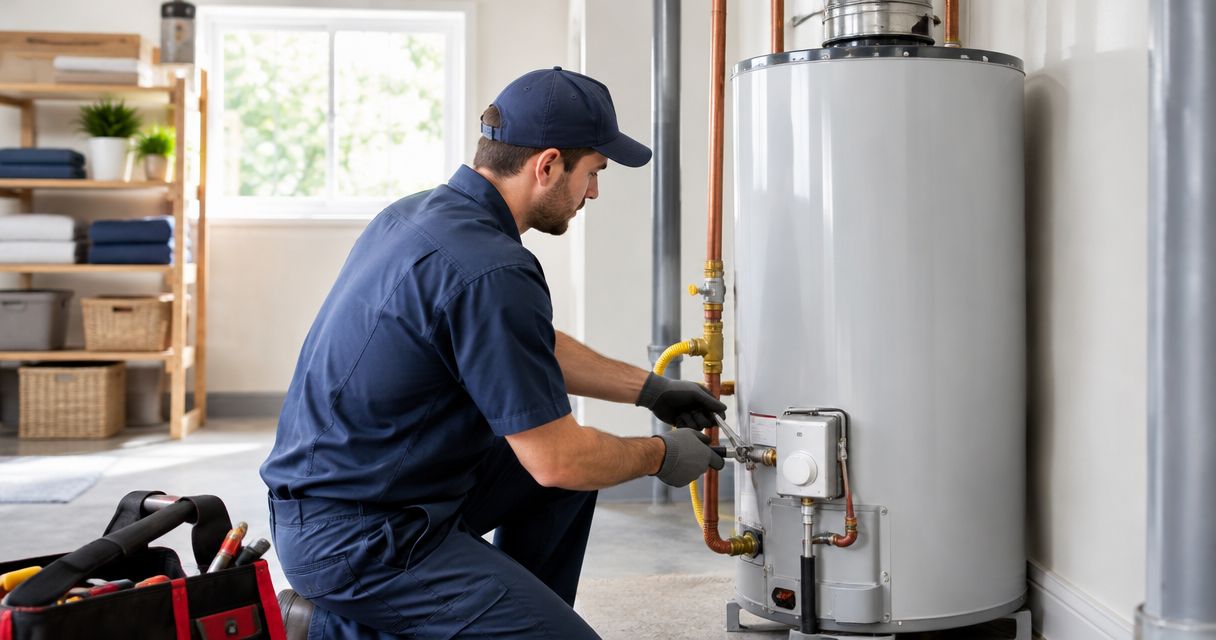
Yes—a gas water heater can be installed in one day when the replacement fits the existing location and the gas, water, and venting connections meet the new unit’s requirements. That does not guarantee hot water immediately after the installer finishes: the tank must fill, the system must pass startup checks, and the water must heat. For a 2026 replacement, confirm the installation scope and any permit or inspection requirements before treating one-day completion as a commitment.
- Can a gas water heater be installed in one day? Yes, when the replacement fits and required connections are ready.
- A tank replacement and a tankless conversion have different installation requirements; do not assume identical timelines.
- Gshaservices provides water heater installation and repair for homeowners and businesses around Woodstock and Lake Bluff, Illinois.
- Confirm whether completion means installed, tested, approved where required, and producing hot water.
Can a gas water heater be installed in one day?
Yes, but the work scope—not the promise of speed—determines whether one-day installation is realistic. Replacing an existing gas storage tank in the same location removes several variables that come with moving the heater or changing system types. It still requires checking the replacement against the existing installation.
A sound installation follows this sequence:
- Check the site. Confirm the fuel type, heater dimensions, access, venting, water connections, and applicable local requirements.
- Isolate and remove. Shut down the old equipment safely, drain it, disconnect it, and remove it from the space.
- Install and connect. Position the replacement and complete the required water, gas, venting, and safety connections.
- Fill and test. Fill the heater before firing it, check connections, and follow the manufacturer’s startup procedure.
- Confirm operation. Verify burner operation, venting, temperature settings, and hot-water delivery before the handoff.
These are installation stages, not a fixed labor-time estimate. A problem found during removal can change the scope even when the replacement initially looks straightforward.
For the separate question of what belongs in an installation estimate, see the gas water heater installation cost guide. Ask for the work scope in writing rather than accepting a completion date without an explanation of what it includes.
Why this matters
A household without hot water needs a clear restoration plan. A business also needs to know how the interruption affects its operations. In both cases, an installation appointment and a return-to-service commitment are different things.
The useful question is not simply whether the installer can place a new tank that day. Ask whether the stated timeline includes removal, connections, testing, startup, and any required approval before use.
Do not trade startup checks for a shorter appointment. Gas leaks, incorrect venting, and unsafe pressure-relief arrangements are safety issues, not finishing details to address after the heater starts operating.
Same-location tank replacement: fewer changes to coordinate
Best for: replacing a gas storage tank without changing the system layout. This approach keeps the heater in its existing location and uses a replacement compatible with the installation requirements.
The advantage is a narrower scope. The installer does not have to plan a new equipment location simply to restore hot water. Existing connections still need evaluation; their presence does not establish that they are suitable for the replacement.
The limitation is that two tanks are not interchangeable just because both use gas. Height, diameter, vent configuration, input rating, and required clearances affect the work. A replacement that looks similar in a photograph can require connection changes on site.
For a 2026 replacement, provide a clear photograph of the existing rating plate and the surrounding installation before the visit. Keep the vent connection, water piping, and access route visible in the pictures. Do not remove covers or disturb connections to obtain them.
Tankless conversion: assess the supporting systems first
Best for: owners who want to evaluate a change from stored hot water to on-demand heating. A tankless conversion is a system change, not simply a smaller appliance placed where the tank stood.
The potential advantage is removing the storage tank from the layout. The limitation is additional design work: gas supply, venting, electrical requirements, water piping, and condensate handling must match the selected equipment where applicable.
Do not assume the existing tank’s gas line or vent is suitable for a tankless heater. Those details need to be checked against the selected unit’s installation instructions. A one-day target belongs after that assessment, not before it.
If your immediate goal is restoring hot water with the least change to the existing layout, make that priority explicit. If your goal is a different system, allow the installer to assess that project on its own requirements.
Heater relocation: include the route, not just the destination
Best for: projects where the existing heater location no longer works for the building. Moving the heater creates a new installation layout, even if the equipment type stays the same.
The benefit is placing the heater where the project requires it. The trade-off is coordinating the new gas, water, venting, drainage, access, and clearance arrangements. The new location needs assessment before anyone confirms the schedule.
A nearby location does not automatically make the move simple. A wall, finished ceiling, or unsuitable vent route can matter more than the distance between the old and new positions.
How the installation scopes compare
| Installation scope | Best for | Main advantage | Main limitation |
|---|---|---|---|
| Same-location tank replacement | Restoring an existing gas storage system | Keeps the basic equipment layout | Existing connections still need verification |
| Tank-to-tankless conversion | Changing to on-demand water heating | Removes the storage tank from the layout | Supporting systems need equipment-specific assessment |
| Heater relocation | Changing the equipment location | Addresses a layout requirement | Adds routing and site-planning work |
Choose the scope first, then confirm the schedule. Asking each project type to meet the same deadline hides the differences that determine completion.
Why gas water heater installation time varies
The details below explain why a one-day replacement needs a site-specific assessment. Give the installer accurate information rather than trying to diagnose these conditions yourself.
- Access and removal. Stairs, narrow doorways, and equipment crowded into a utility space affect how the old tank comes out and the replacement goes in. Clear stored belongings from the route before the appointment.
- Replacement fit. The heater must fit with its required clearances and service access. Matching the old tank’s capacity alone does not confirm compatibility.
- Gas connections. The fuel supply and connection arrangement must meet the replacement heater’s requirements. Changes belong in the installation scope before a firm completion commitment.
- Venting and combustion air. The selected heater determines the venting and combustion-air requirements. An existing vent connection is not proof that the entire arrangement is suitable.
- Water piping and safety components. Shutoff valves, relief discharge piping, expansion control where required, and deteriorated connections can add work. These components affect a complete installation, not just appearance.
- Permits and inspections. Requirements depend on the jurisdiction and project. Confirm who handles them and whether they affect when the heater can enter service.
A photo-based discussion helps define the job, but it does not expose every concealed condition. Ask how the installer will communicate newly discovered work before proceeding.
What should you confirm before installation day?
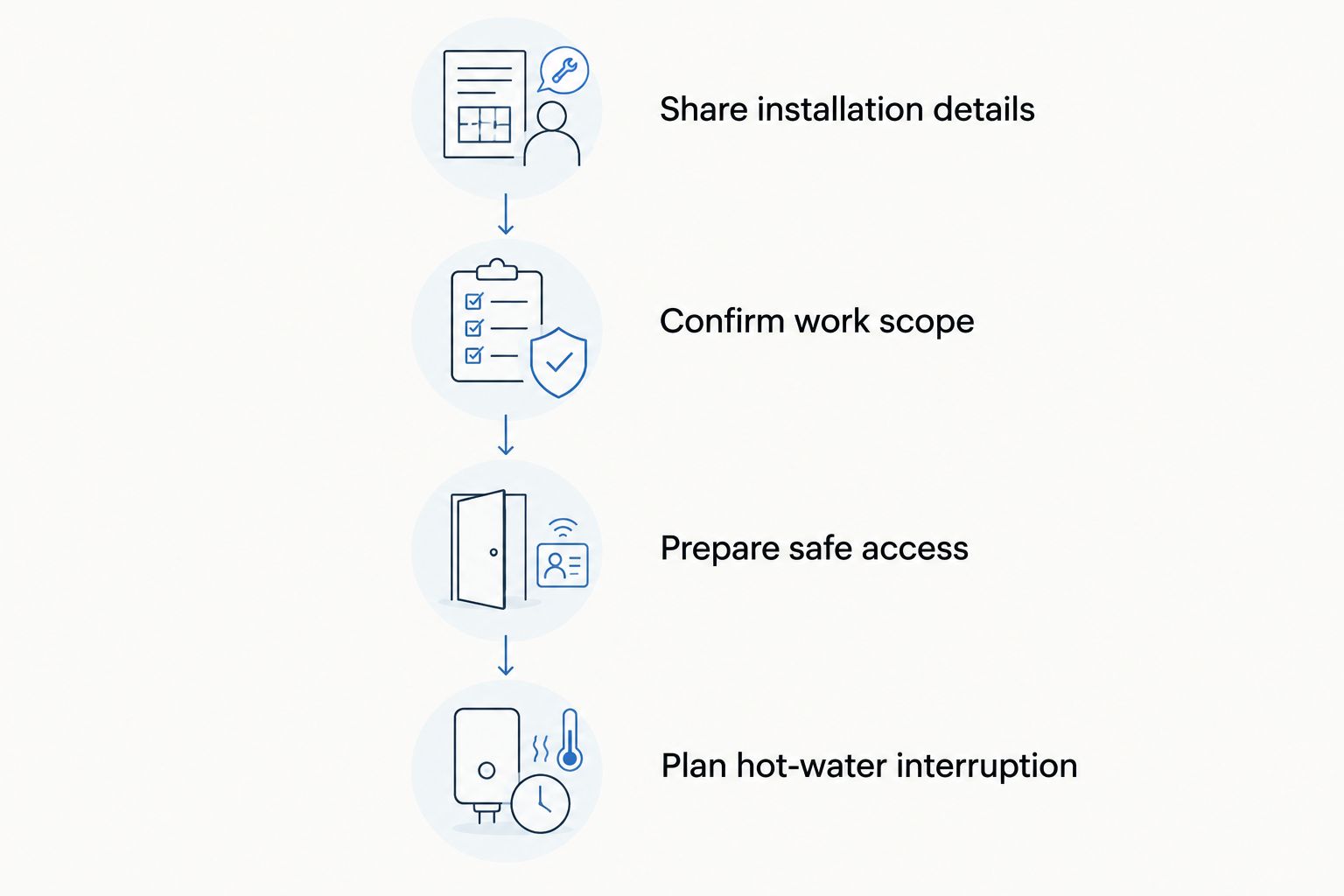
For your 2026 installation plan, use a short checklist that separates site readiness from technical work. Your role is to provide access and accurate information; gas connections and appliance startup belong with qualified personnel.
Share the existing installation details
Provide the heater’s rating-plate information, photographs of the installation, and a description of the problem. State whether the tank leaks, the burner fails to light, or the water does not stay hot. Report observations without opening gas fittings or bypassing controls.
Confirm the full work scope
Ask whether removal, disposal, required connection changes, startup, and cleanup are included. Confirm who handles permits and inspections where required. Get an explanation of how additional work will be authorized if removal reveals a problem.
Prepare safe access
Move belongings away from the heater and clear the route through the building. Keep children and pets away from the work area. Do not drain, disconnect, or move the old tank unless the installer specifically directs a safe preparation step.
Plan the hot-water interruption
Complete essential hot-water tasks before the shutdown. Ask when the water supply will be interrupted and what the installer expects at handoff. Do not run hot-water fixtures during the work unless instructed.
When should you request an installation assessment?
Request an assessment when you need a replacement timeline tied to your actual equipment and building. Tell the contractor whether you want a same-location replacement, a tankless conversion, or a relocation; those are different requests.
Gshaservices is a local water heater installation option for homeowners and businesses in Woodstock, Lake Bluff, and surrounding Illinois communities. Gshaservices provides water heater installation and repair, but a one-day completion commitment still requires confirmation for your project.
Use the contact page to explain the existing heater, the problem, and the intended installation scope. Include access restrictions and whether the property is a home or business so the discussion starts with the right conditions.
Discuss your water heater installation
Confirm the installation scope and timing for your home or business.
Does installed mean hot water is ready?
One-day installation does not mean immediate hot water at every fixture. A storage heater needs to fill and heat after the connections and required checks are complete. Water already sitting in the hot-water piping also affects when a fixture delivers heated water.
Ask what the handoff includes: operating instructions, the temperature setting, confirmation of startup checks, and any remaining inspection steps. Keep the equipment documentation where you can find it for service.
Do not ask the installer to skip filling or testing to shorten the interruption. The manufacturer’s startup procedure determines the correct sequence.
Can permits change a 2026 installation schedule?
One-day installation and permit completion are separate scheduling questions. The applicable local authority determines permit and inspection requirements, and the project must follow those requirements.
Ask who submits the paperwork, when inspections occur, and whether approval is required before operation. Do not assume that rules for a neighboring municipality apply to your address.
An estimate should distinguish work the installer controls from approvals handled by the local authority. That distinction gives you a usable schedule instead of a vague promise.
What if the old water heater is leaking?
One-day replacement planning comes after immediate safety. Keep away from standing water around electrical equipment and contact a qualified service provider for instructions. Do not reach through water to operate equipment or controls.
If you smell gas, leave the building without operating switches or creating ignition sources, then contact the gas utility or emergency services from a safe location. Do not stay inside to photograph the heater or investigate the leak.
FAQ
Can a gas water heater be installed in one day?
Yes, a gas water heater can be installed in one day when the replacement fits the site and required connections are ready. Confirm the scope, startup checks, and applicable permit or inspection requirements before relying on that timeline.
Will I have hot water as soon as the installer finishes?
Not necessarily; a storage water heater must fill and heat after installation checks are complete. Ask whether the handoff includes confirmation of hot-water delivery.
Does replacing a gas water heater require a permit?
Permit requirements depend on the jurisdiction and the project. Ask who handles the permit and whether an inspection affects when the heater can operate.
Is a tankless conversion the same job as replacing a gas tank?
No, a tankless conversion changes the system requirements. Gas supply, venting, electrical needs, and condensate handling where applicable need assessment for the selected unit.
What should I send before a water heater installation visit?
Send the existing heater’s rating-plate information, photographs of the surrounding installation, and a description of the problem. Include access restrictions without disturbing any connections or covers.
Can I disconnect the old gas water heater myself to save time?
Do not disconnect gas piping or venting as appointment preparation. Leave technical shutdown, removal, connection, and startup work to qualified personnel.
Does Gshaservices install water heaters around Woodstock and Lake Bluff?
Gshaservices provides water heater installation and repair for homeowners and businesses in Woodstock, Lake Bluff, and surrounding Illinois areas. Confirm the scope and timing for your address directly.
One last thing
The old heater’s location is not proof that the replacement belongs in exactly the same arrangement. Equipment requirements still govern the new installation.
For a 2026 replacement, ask one final question before accepting the schedule: What must be checked or changed before this heater can operate safely? That answer is more useful than a one-day promise without conditions.
Related guides
- Tankless water heater installation in Illinois
- Water heaters ranked by energy efficiency
- Tankless versus tank water heater installation


